Rock Excavation Solutions for Saudi Arabia's Vision 2030 Mega-Projects: Why Contractors Are Switching from Traditional Blasting
Introduction: The Unprecedented Scale of Saudi Arabia's Construction Boom
Saudi Arabia is building faster and bigger than any country in modern history. Under Vision 2030, the Kingdom has launched a constellation of giga-projects that will reshape not just the Gulf region — but global expectations of what construction can achieve.
NEOM ($500B+ investment). The Red Sea Project. Qiddiya. Diriyah Gate. Mukaab (New Murabba). Riyadh Metro expansion. Jeddah Central Development. Green Initiative mining expansion. Dozens of highway, railway, and industrial city projects stretching from the Gulf of Aqaba to the Eastern Province.
What all these projects have in common? Massive rock excavation.
Whether it's cutting through granite mountains for The Line's foundation, tunneling 28+ kilometers beneath NEOM's terrain for high-speed rail, quarrying dimension stone for Riyadh's new skyline, or trenching for cross-desert pipelines — every single one of these projects must break hard rock at scale.
And the method you choose to break that rock determines everything: your cost structure, your regulatory burden, your safety record, your project timeline, and ultimately your profitability.
This article examines why a growing number of Saudi contractors and project developers are moving away from traditional explosives toward next-generation rock splitting technology — specifically the O2 Rock Blasting System (Liquid Oxygen Rock Splitting) — and why 2026 is the inflection year for this transition.
Chapter 1: The Rock Excavation Challenge Across Saudi Mega-Projects
1.1 NEOM — The World's Biggest Excavation Undertaking
NEOM alone represents perhaps the most ambitious earthworks program ever attempted. Spanning 26,500 km² in northwest Saudi Arabia (larger than many countries), the project encompasses:
The geotechnical reality: NEOM's terrain spans volcanic rock, granite formations, sedimentary layers, and areas with complex groundwater conditions. As engineering analysis from GeoEngineer.org notes, engineers face "variable rock conditions" across vast distances, making flexible and adaptable rock-breaking methods essential.
In January 2025, NEOM officially awarded drill-and-blast tunneling contracts for its rail infrastructure — confirming that conventional blasting remains part of the picture. But here's the critical question every contractor should be asking:
Is traditional blasting the most cost-effective and compliant option, or are there alternatives that reduce overhead, accelerate approvals, and improve safety margins?
1.2 Beyond NEOM — The Full Mega-Project Portfolio
NEOM dominates headlines, but it's only one piece of Saudi Arabia's transformation:
The Saudi Ministry of Industry and Mineral Resources announced in January 2026 that it would offer major new mining exploration opportunities through 2026-2027 — signaling a new wave of quarry and mining development that will require rock-breaking capacity nationwide.
Chapter 2: Why Traditional Blasting Is Becoming a Bottleneck
2.1 The Regulatory Squeeze
Saudi Arabia's approach to explosives governance has grown significantly stricter under Vision 2030's safety-first framework:
General Authority for Military Industries (GAMI) maintains tight control over explosive import, storage, and use
Ministry of Interior oversees licensing with extended approval timelines
Storage magazine requirements mandate minimum distances from roads, buildings, and population centers — increasingly difficult to satisfy on dense mega-project sites
Certified blaster mandates require specialized personnel on every blast operation
Environmental impact assessments now scrutinize blast-induced vibration, air quality, and ecosystem disruption more heavily
Audit frequency has increased, with unannounced inspections becoming common
For a contractor working on a fast-track giga-project schedule, each of these requirements translates into delay risk. One delayed permit approval can cascade into a week of idle equipment and standby crews.
2.2 The Hidden Cost Stack
Let's quantify what "blasting costs" really means on a Saudi mega-project:
2.3 The Urban Proximity Problem
Many Vision 2030 projects break ground in or near existing urban areas:
Mukaab (New Murabba) sits in downtown Riyadh — surrounded by active traffic, operating businesses, and residential neighborhoods
Riyadh Metro expansion tunnels directly beneath the capital
Jeddah Central Development operates in one of the Kingdom's most densely populated cities
Qiddiya is close enough to Riyadh that vibration and noise complaints are a real regulatory risk
Traditional blasting requires exclusion zones of 200–500 meters. In urban contexts, this means:
Halting adjacent construction activities
Coordinating with multiple subcontractors
Notifying residents and businesses in advance
Post-blast inspection before anyone resumes work
Vibration monitoring and documentation
Every blast becomes a mini logistics operation.
Chapter 3: Enter the O2 Rock Blasting System — Built for This Moment
3.1 What It Is (and What It Isn't)
The O2 Rock Blasting System (Liquid Oxygen Rock Splitting Technology) uses liquid oxygen (LOX) as the energy medium instead of chemical explosives. Developed by Yantai Gaea Rock Split Machinery Technology Co., Ltd., it represents a generational upgrade from earlier CO₂ rock splitting systems.
Critical distinction: Liquid oxygen is classified globally as an industrial gas — the same category used in medical applications, welding, and metal fabrication. It is not a classified explosive substance.
This classification difference changes everything for Saudi operators.
3.2 How It Works — Step by Step
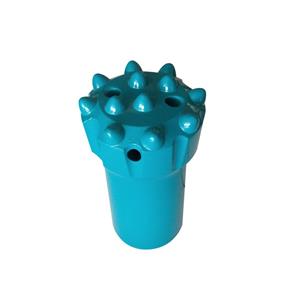
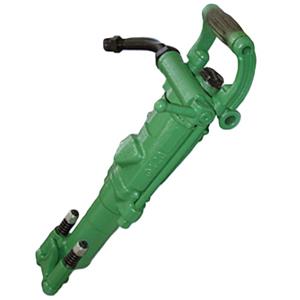
Drill — Use your existing drill rig. Standard hole diameters 60–150mm. Same drilling pattern you'd use for conventional blasting.
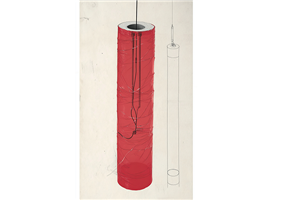
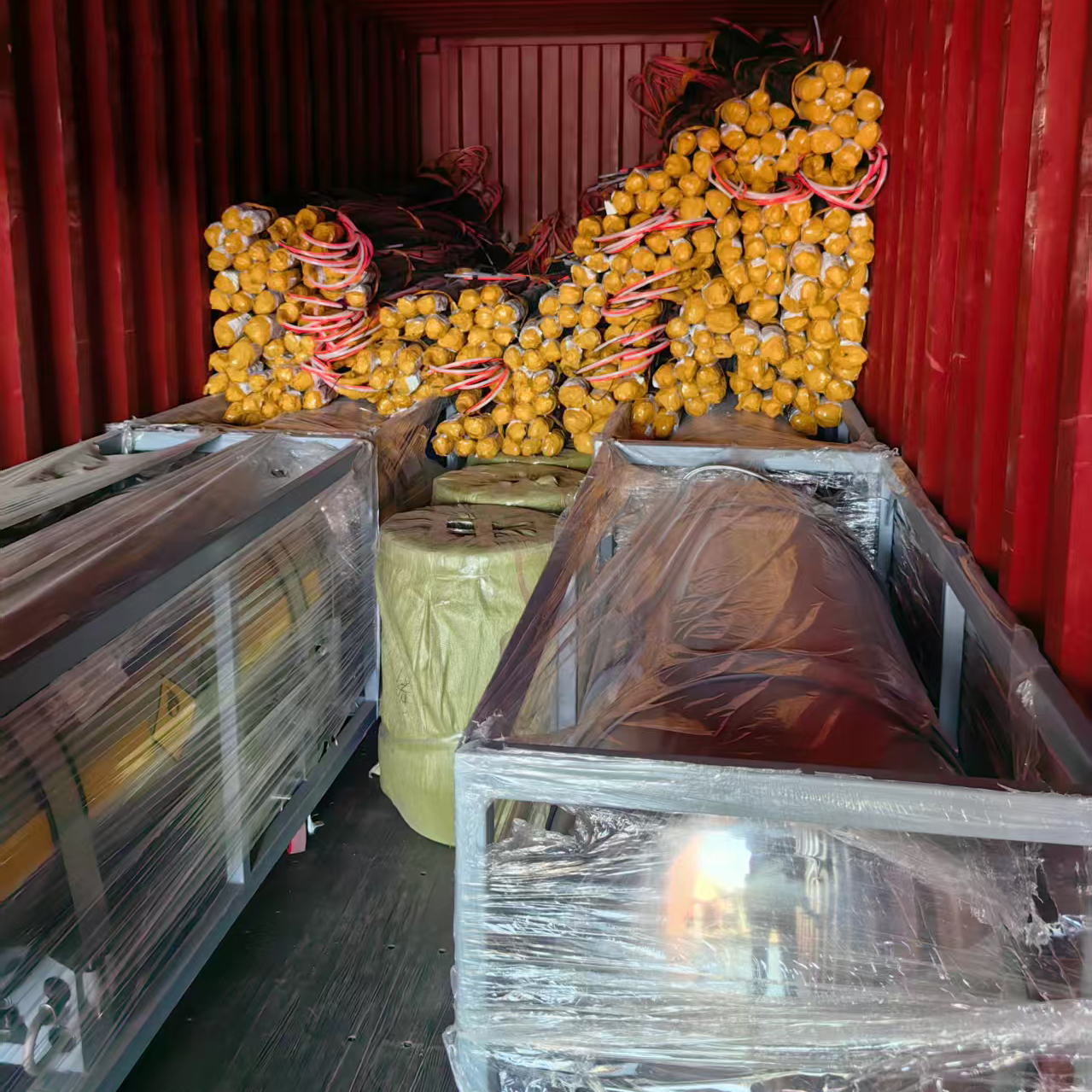
Insert paper splitting tubes — Custom-length consumable tubes (2–15 meters) made of paper/glass outer casing with flexible aluminum inner liner. Lower into pre-drilled holes.
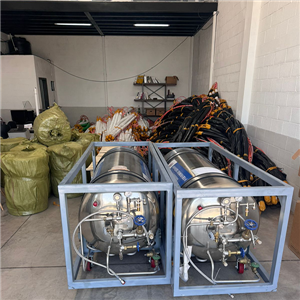
Connect to O2 filling tank — Insulated portable tank links to tubes via flexible hose assembly.
Fill with liquid oxygen — Approximately 6 kg of LOX per meter of tube length. Fast fill process.
Seal the hole — Clay, sand, or stemming material prevents flyrock.
Initiate remotely — Operator triggers from a safe distance. LOX rapidly expands (~860× volume increase from liquid to gas), creating controlled fracture pressure along natural rock planes.
Total cycle time per blast round: significantly faster than traditional methods because there's no complex initiation circuit wiring, no magazine sign-out procedure, no extensive evacuation coordination.
3.3 The Cost Revolution
For a mid-sized mega-project package excavating 100,000 m³ of rock annually, switching to O2 could mean 600K–900K in direct annual savings.
3.4 Safety Advantages That Matter on Saudi Job Sites
Chapter 4: Mapping O2 Technology to Specific Saudi Project Types
4.1 Remote Mega-Project Sites (NEOM Regions, Desert Infrastructure)
Best use case for maximum value extraction.
On remote sites like NEOM's outlying regions, Red Sea island developments, or cross-desert pipeline routes:
No magazine construction needed — eliminate 20K–30K upfront + ongoing maintenance
Mobile operation — tank-and-tube system moves with your advance face
LOX supply available from industrial gas suppliers serving Jubail, Yanbu, Jeddam, and NEOM support industries
Faster mobilization — start breaking rock days earlier than competitors waiting for explosive license approval
4.2 Urban / Near-Population Sites (Downtown Riyadh, Jeddah, Dammam)
Where safety and proximity compliance matter most.
For Mukaab, Riyadh Metro expansion, Jeddah Central Development, and similar:
2–3 meter exclusion zone vs. 200–500m for explosives = keep adjacent work running
Vibration-safe = no neighbor complaints, no structural damage claims
No toxic fumes = compliant with Saudi environmental regulations in urban settings
Same-day permitting possible = no multi-day approval waits
4.3 Tunneling & Underground Works (NEOM Rail Tunnels, Metro Extensions)
Where cycle time and crew safety are paramount.
For the 28+ km of NEOM tunneling already under contract and metro expansions:
Fast round cycle — drill, load, fire, muck out quickly
No shrapnel risk in confined tunnel space = safer for crews
Flexible tube lengths adapt to varying hole depths
Reduced ventilation demand (no toxic blast fumes) = faster re-entry after blast
4.4 Quarry & Mining Operations (New Saudi Mineral Exploration Wave)
Where unit cost drives profitability.
With the Ministry of Industry & Mineral Resources opening new exploration opportunities in 2026-2027:
1/m3 consumable cost∗∗vs.3–$9 for explosives = direct margin improvement
No licensing bottleneck = start production faster on newly permitted sites
Works on all rock types — granite, limestone, basalt, sandstone, marble
Lower insurance costs = ongoing operational savings
Chapter 5: The Competitive Edge — Winning Saudi Bids with Better Technology
5.1 How Rock-Breaking Method Affects Your Bid
When Saudi developers (RCRC, PIF-owned companies, international joint ventures) evaluate excavation bids, they're increasingly looking beyond the headline cubic-meter price:
| Evaluation Factor | Traditional Blasting Bidder | O2-Equipped Bidder | Advantage |
|------------------|--------------------------|--------------------|----------|
Base excavation price (/m3)∣10–14∣4–$5 | O2 wins on price | | Regulatory risk | License-dependent, permit delays possible | No explosives license needed | O2 eliminates risk | | Safety track record | Industry-average incident rate | Near-zero incident profile | O2 differentiates | | Environmental compliance | Fume monitoring, vibration documentation required | Minimal compliance burden | O2 simplifies | | Schedule reliability | Subject to permit approval cycles | Self-controlled timeline | O2 more predictable | | Urban/proximity capability | Limited by exclusion zone | Works in dense environments | O2 unlocks more opportunities |
5.2 The 2026 Window of Opportunity
Three converging factors make 2026 the optimal time for Saudi contractors to adopt O2 technology:
Factor 1: Mega-project construction is at peak intensity. NEOM's tunneling program is underway. Red Sea Phase 1 is delivering. Qiddiya is accelerating. Diriyah Gate packages are awarding. Riyadh Metro continues expanding. The volume of rock work happening right now is unprecedented — and contractors who bring better technology win more work.
Factor 2: Regulatory pressure on traditional explosives is increasing, not decreasing. Each passing year brings tighter Saudi safety standards, longer approval timelines, and higher compliance costs. Early adopters of non-explosive alternatives build experience and reputation while laggards face growing headwinds.
Factor 3: Industrial gas infrastructure in Saudi Arabia is mature and expanding. Liquid oxygen supply chains already serve medical, welding, and industrial sectors throughout the Kingdom. The same distribution networks that supply hospitals and factories in Riyadh, Jeddah, Dammam, Jubail, and Yanbu can supply LOX for rock-splitting operations. No new infrastructure needs to be built — it already exists.
Chapter 6: Practical Implementation Guide
6.1 What You Need to Get Started
6.2 Liquid Oxygen Supply in Saudi Arabia
A common first question: "Where do I get LOX in the Kingdom?"
Good news — the supply chain already exists. Major industrial gas suppliers operate throughout Saudi Arabia:
Riyadh & Central Region — Multiple suppliers serving the industrial belt
Jeddah & Western Region — Port-served, covers Red Sea Project area
Dammam / Eastern Province — Industrial City suppliers
Jubail & Yanbu — Major industrial hub coverage
NEOM support area — Supply chains developing alongside project growth
These are the same suppliers providing oxygen for welding workshops, medical facilities, water treatment plants, and manufacturing operations across Saudi. Purchasing liquid oxygen as an industrial user does not require an explosives permit — it's a standard industrial gas transaction.
6.3 Integration with Existing Operations
The O2 system is designed as a drop-in replacement for the rock-breaking step in your existing workflow:
Your Current Workflow:
Survey → Drill → [LOAD EXPLOSIVES] → Evacuate → Blast → Inspect → Resume → Muck out

With O2 System:
Survey → Drill → [INSERT TUBES + FILL LOX] → Minimal evacuation → Initiate → Resume → Muck out
             ↑
          This step replaces explosives
          Everything else stays the same
Your drill rigs, excavators, haul trucks, and survey team continue doing exactly what they do today. Only the rock-breaking method changes — and everything around it gets simpler, cheaper, and faster.
Chapter 7: Frequently Asked Questions
Is the O2 system approved for use in Saudi Arabia?
Yes. The O2 system uses liquid oxygen (industrial gas), not classified explosives. It falls under Saudi industrial safety regulations rather than explosives control frameworks. No explosives handling license is required.
Does it work in Saudi's extreme summer temperatures?
Yes. The system is engineered for field deployment in hot climates. Insulated tanks minimize LOX loss, and the rapid-fill-to-initiate workflow means liquid oxygen doesn't sit in tubes for extended periods. Standard operating procedures include precautions for extreme heat conditions (above 45°C).
What rock types found in Saudi Arabia can it handle?
The O2 system is effective on virtually all hard rock types present in the Arabian Peninsula: granite (Riyadh region, Asir), limestone (Eastern Province), basalt (volcanic areas in western Saudi), sandstone, marble, and mixed formations. NEOM's variable geotechnical conditions are well within the system's operating envelope.
How does the power compare to traditional explosives?
Output power is 50–150% greater than equivalent ANFO charge for the same borehole diameter. In practical terms: you typically break the same or more rock per hole compared to conventional explosives.
What's the minimum project size?
The system scales efficiently from small-scale urban demolition (single building foundation) to production quarrying (thousands of cubic meters per day). Contact us to discuss your specific project requirements — we tailor solutions from single-site trials to full-scale quarry and mega-package operations across the GCC.
Can we do a trial before committing to full-scale adoption?
Absolutely. We recommend starting with a controlled field trial at your site to demonstrate performance, train your crew, and validate cost projections against your actual rock conditions. Most Saudi operators convert to full-scale deployment after seeing first-hand results.
Conclusion: The Projects Being Built Today Will Define Tomorrow's Contractors
Saudi Arabia's Vision 2030 is not a distant aspiration — it's being built right now. Tunnels are being bored through NEOM's mountains. Foundations are being cut into Riyadh's bedrock. Quarries are opening to feed the Kingdom's construction appetite. And every cubic meter of that rock must be broken by someone, using something.
The question for contractors is simple:
Will you be the operator who breaks rock at 4–5/m³ with minimal regulatory burden, superior safety, and faster cycle times?
Or the one still paying 10–14/m³, waiting for permits, managing magazine security, and coordinating 500-meter evacuations?
The technology exists. The supply chain is in place. The projects are demanding better solutions.
The only missing piece is the decision to upgrade.
Ready to Explore O2 Rock Blasting for Your Saudi Project?
? Email: admin@stonedemolition.com
? WhatsApp: +86 135 9953 8894
? Website: https://www.stonedemolition.com/product/o2-gas-energy-rock-splitting-system-co2-rock-blasting-system-rock-demolition
? العربية: https://ar.stonedemolition.com
Request a free consultation, site assessment, or field trial — we'll help you calculate exactly what O2 technology can save on your specific project or operation.