7 Steps to Complete Coal Mine Tunneling Drilling: From Pre‑shift Meeting to Closeout — Ensuring Both Safety and Precision
Drilling for blasting is a pivotal operation in underground coal tunneling. Its proper execution affects subsequent blasting outcomes, support quality, and—most importantly—the safety of personnel. This document breaks down the full drilling workflow into seven steps, outlining key actions and safety rules for each stage to provide clear on‑site guidance.

Pre‑shift meeting: the first line of defense for safe work The pre‑shift meeting is the primary preparation for drilling operations and the main venue for safety management and task assignment. Personnel must arrive on time at the designated location. The session, led by the team leader or technician, should focus on three areas:
Task briefing: state the day’s advance targets; specify exact drilling locations, quantities, depths, and angle requirements so every worker understands their responsibilities and operating standards.
Safety disclosures: report hazards left from the previous shift such as roof fissures or abnormal gas readings; explain the day’s risk points and emphasize core safety procedures including gas monitoring and roof protection.
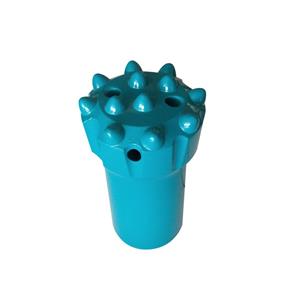
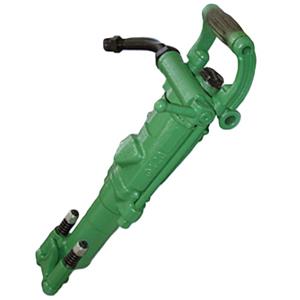
Equipment and personnel check: inspect pneumatic drills, drill rods, drill bits and other equipment for integrity; confirm workers’ fitness for duty—no fatigue or alcohol impairment; review emergency contacts and evacuation routes.
On‑site handover: seamless continuity between shifts Upon arrival at the face, the incoming crew must conduct a face‑to‑face handover with the outgoing crew to prevent information gaps and maintain continuity:
Environmental walkthrough: the outgoing team should lead a full inspection of the face, checking roof and rib stability, temporary supports, ventilation performance, and gas sensor readings (safety threshold ≤ 0.5%).
Equipment status handover: describe drill air pressure stability, drill rod wear, and other equipment conditions; indicate tool storage locations; mark any equipment failures and report repair progress.
Written confirmation: both parties must record actual work progress, safety hazards, and equipment status in the tunneling work handover log and sign to close the responsibility loop.
Safety confirmation: the last checkpoint before starting work After the handover, the on‑duty crew must independently verify safety across people, machines, environment, and management:
Environmental checks: reconfirm adequate ventilation and airflow; clear loose coal and standing water; ensure the face is free of obstructions. Re‑measure gas concentration—if it exceeds limits, stop work and take ventilation measures.
Equipment checks: verify all pneumatic drill connections are tight and leak‑free; test drill rod and bit fit to ensure no looseness or deformation; confirm dust suppression systems (e.g., water spray) are functioning to reduce dust hazards.
Personal protection: workers must wear helmets, dust masks, protective gloves, and non‑slip boots as required; check self‑rescuers for integrity and expiration dates; ensure emergency protective measures are in place.
Roof and rib tapping: a core action to eliminate roof risk “Tapping the roof and ribs” is key to preventing roof falls and must be performed by experienced workers:
Tool preparation: use long‑handled tools at least 2 m in length (crowbars, tapping hammers) to avoid close contact with the roof and ribs and reduce collapse risk.
Operation technique: follow the principle “outside to inside, top to bottom.” Lightly tap the roof and ribs; a hollow sound indicates loose rock or floaters—use a crowbar to pry them down slowly; a solid sound indicates stability.
Supervision: assign a dedicated observer during tapping to monitor roof behavior and operator safety. If fissures widen or rock movement is observed, order immediate evacuation.
Temporary support: building a protective screen for the work area After tapping removes immediate hazards, install temporary supports to prevent roof collapse during drilling:
Support method selection: choose supports appropriate to roof lithology—common options include single‑unit hydraulic props, metal friction props with metal beam supports, or advance probe beams.
Support standard compliance: strictly control support spacing and initial support force (e.g., single hydraulic prop initial thrust ≥ 50 kN). Support must cover the entire drilling area; eliminate unsupported roof zones.
Quality check: tap the top of props with a hammer to ensure they are firm and not tilted or loose. If any support is found defective, correct it immediately until it meets safety standards.
Drilling operations: controlling accuracy and safety of the core process With temporary support in place, proceed to drilling while strictly following technical parameters:
Equipment setup: connect the pneumatic drill lines and test air pressure (0.5–0.7 MPa). Adjust drill rod angles to match design requirements for cutting/slot holes, auxiliary holes, and perimeter holes.
Standard operating procedure: use a two‑person team—one operates the drill, the other supports the drill rod and clears cuttings. Maintain steady operation and uniform feed; prohibit overpressure to avoid drill rod breakage and injuries.
Continuous safety monitoring: record gas concentration every 30 minutes during drilling; if it exceeds 0.5%, stop work and ventilate. Continuously observe roof and support conditions; if abnormal noises or support deformation occur, evacuate the face immediately.
Closeout and handover: completing the process and linking to the next shift After drilling ends, complete closeout tasks to prepare for the next shift:
Site cleanup: close drill air valves, disassemble drill rods and bits, clean cuttings and debris from the face, and store equipment and tools neatly in designated locations.
Equipment wear inspection: check for bent drill rods or worn bits; note any problems in the handover log and, if necessary, send items to maintenance.
Complete information handover: compile the day’s drilling records (number of holes, depths, angles, and any safety hazards). When the next shift arrives, conduct a formal handover following the established procedure to ensure full information transfer.

Drilling in coal tunneling is an interlinked process in which lapses at any step can lead to accidents. Only by rigorously following the procedure and carefully executing each operational detail can both work quality and worker safety be ensured.