A Simple Guide to Mechanical Coal Seam Cavity-Making Pressure Relief Machines
During underground coal mining, there is an invisible but serious threat: coal seam gas, especially methane. It not only affects mining efficiency, but when gas concentration exceeds safe limits, it can trigger explosions, outbursts, and other major safety accidents, posing a severe danger to underground workers.
For soft, outburst-prone coal seams that are sensitive to water softening, gas control becomes even more difficult. Traditional hydraulic cavity-making technology often causes the coal body to soften or the borehole to collapse in such formations, which may actually increase safety risks instead of reducing them.
To solve this problem, the industry has developed a specialized solution: the mechanical coal seam cavity-making pressure relief machine. In this article, we will explain what it is, how it works, and why it is becoming an important tool in modern coal mine gas control.
What Is a Mechanical Coal Seam Cavity-Making Pressure Relief Machine?
Simply put, this machine acts like a professional underground pressure-relief drilling tool. Its job is to loosen the coal seam, release pressure, and create better pathways for gas drainage, allowing methane trapped inside the coal seam to escape in a safer and more efficient way.
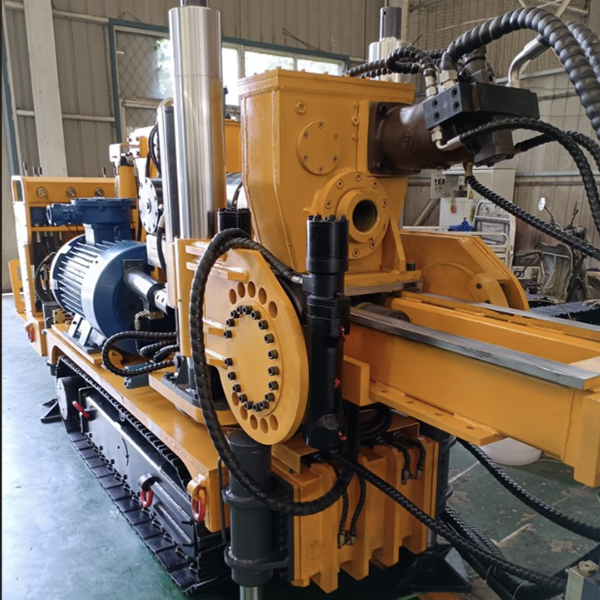
Unlike hydraulic cavity-making systems, this machine does not rely on high-pressure water to break the coal. Instead, it uses a crawler-mounted fully hydraulic tunnel drilling rig as its power base, together with:
a special mechanical reaming tool,
a hydraulic control system,
and matching drilling tools.
By means of pure mechanical cutting, it creates large-diameter cavities inside the coal seam, improving permeability and relieving stress so that gas can be extracted more efficiently.
The Biggest Advantage: Water-Free Operation
Compared with traditional hydraulic cavity-making technology, the greatest advantage of the mechanical cavity-making pressure relief machine is its water-free operation.
Instead of using high-pressure water to impact the coal seam, it relies on mechanical cutter wings to actively cut the coal, much like a tool precisely shaping material in a controlled way. This makes the process more stable and targeted.
This feature is especially valuable in soft coal seams that are prone to water softening and gas outburst, because it helps avoid common problems caused by hydraulic methods, such as:
coal softening,
borehole collapse,
tool sticking,
hole blowout,
secondary formation damage.
As a result, the machine greatly improves both hole-forming success rate and operational safety.
How the Machine Works
The working process of a mechanical coal seam cavity-making pressure relief machine can be compared to a precise underground engineering operation. The steps are clear, efficient, and highly controlled.
Step 1: Drill to the Target Position
First, operators use the crawler-mounted fully hydraulic tunnel drilling rig to advance the drill rod to the planned position in the target coal seam. This is the preparation stage that ensures the cavity will be created in the right location.
Step 2: Open the Mechanical Reamer
Next, the hydraulic control system outside the borehole is used to remotely open the cutter wings of the mechanical reaming tool. Once expanded, the tool is ready to begin cavity formation.
Step 3: Mechanically Cut the Coal Seam
The drilling rig then provides rotation and feed force, driving the cutter wings to mechanically cut into the coal seam and form a large cavity underground.
Depending on project requirements, the cavity diameter can generally range from 200 mm to 580 mm, and customized sizes may also be possible.
Step 4: Remove the Cuttings
During the cavity-making process, low-pressure air or a small amount of water is used to remove cuttings from the hole. This helps keep the working area clean while avoiding damage to the coal seam.
Step 5: Close the Tool and Withdraw
After the cavity is completed, the cutter wings automatically close, and the drilling rig withdraws the tool or moves to the next cavity-making point for continued pressure relief work.
Core Components Behind the Technology
Although the working process appears straightforward, the machine includes several advanced technical components.
Crawler-Mounted Fully Hydraulic Tunnel Drill Rig
This serves as the power source of the system, providing the rotation, thrust, and stability needed for underground cavity-making operations.
Mechanical Reamer
The mechanical reamer is the key execution tool. Its cutter wings can be opened and closed accurately from outside the hole. According to the coal seam’s hardness and thickness, the size and depth of the cavity can be adjusted to achieve the desired pressure-relief effect.
Independent Hydraulic Control System
The independent hydraulic control system allows operators to control the cavity-making process remotely, reducing the need for personnel to enter high-risk areas. This not only improves operator safety, but also enhances precision and control during the job.
Why It Matters for Modern Coal Mine Safety
Coal mine safety requires extremely reliable gas control solutions, and the mechanical coal seam cavity-making pressure relief machine represents an important step forward in this field.
By solving the weaknesses of traditional gas control methods, especially in soft and water-sensitive coal seams, it helps move coal mine gas management toward:
greater precision,
higher safety,
better efficiency.
In practical terms, this machine acts like a silent underground protector. By using mechanical force to relieve coal seam pressure and create gas release channels, it provides an extra layer of safety for underground workers while also improving the efficiency and reliability of coal production.
Conclusion
The mechanical coal seam cavity-making pressure relief machine is more than just a drilling system. It is a specialized solution designed to meet the real challenges of gas control in difficult coal seams.
With its water-free cavity-making method, precise mechanical cutting, remote hydraulic control, and high adaptability to outburst-prone coal seams, it offers a safer and more efficient alternative to traditional hydraulic cavity-making technology.
As coal mines continue to pursue safer and more advanced production methods, this machine is becoming an increasingly valuable tool for pressure relief, permeability enhancement, and gas drainage improvement underground.