A Simple Guide to Tricone Drill Bits for Coal Mining
Throughout the entire coal mining process, drilling remains a critical operation at every stage. Whether it is underground gas drainage, water exploration, open-pit blasting preparation, or slope reinforcement, all of these tasks rely on one core rock-breaking tool: the tricone drill bit for coal mining.
Designed specifically for coal mine drilling applications, this specialized bit has become an indispensable tool thanks to its combined impact, crushing, and cutting rock-breaking mechanism. It can drill through both soft formations such as coal seams and mudstone and harder formations such as sandstone and limestone, making it a quiet but essential contributor to safe and efficient coal mining.
What Is a Tricone Drill Bit?
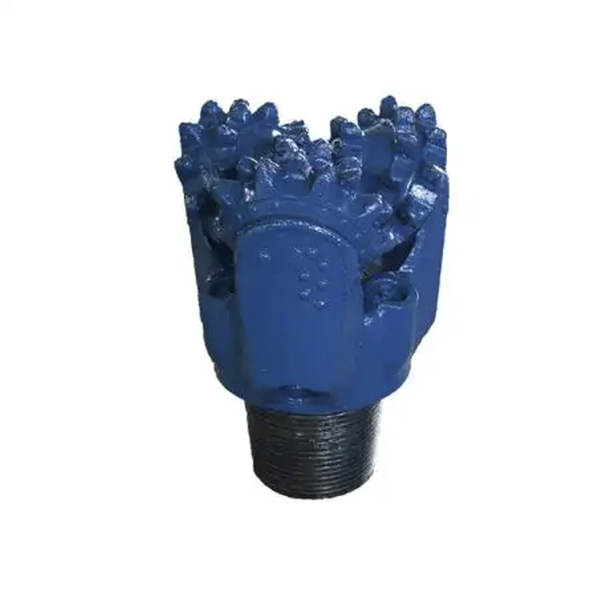
The term “tricone” refers to the three cone-shaped rollers located at the bottom of the bit. These three cones are evenly distributed at 120-degree intervals, forming the bit’s most distinctive structural feature.
More importantly, these rolling cones are the key to its highly effective combined rock-breaking action.
Unlike ordinary drill bits that rely mainly on either cutting or impact, a tricone bit works through a more coordinated drilling process. When the drilling rig applies axial weight and rotates the bit, the three cones roll and slide simultaneously at the bottom of the hole. During this process, they generate three types of rock-breaking force:
Impact force, which crushes the rock vertically like a hammer;
Crushing force, produced by rolling contact, which further breaks down the rock fragments;
Cutting force, generated by tooth sliding action, which shears the rock like a blade.
These three forces work together seamlessly, allowing the bit to break coal and rock more efficiently and significantly improve drilling performance.
The Teeth Are the Real Working Tools
If the combined rock-breaking principle is the “core method” of a tricone bit, then the teeth on the cones are its actual working weapons.
According to tooth structure and material, coal mining tricone bits are generally divided into two main types:
milled tooth tricone bits
tungsten carbide insert (TCI) tricone bits
Each type is designed for different geological conditions and helps solve drilling challenges in formations with different hardness levels.
Milled Tooth Tricone Bits
Milled tooth bits, also called steel tooth bits, feature teeth that are machined directly from the cone body itself. In other words, the teeth and the cone form a one-piece integrated structure made from high-strength alloy steel.
This integral design provides strong structural integrity and allows the teeth to withstand impact and vibration during drilling without easily breaking off.
To improve wear resistance, the tooth surfaces are usually hard-faced with a wear-resistant alloy layer. This acts like a protective armor, helping the teeth resist abrasion and maintain hardness during rock contact.
In common coal mine formations such as:
mudstone,
shale,
coal seams,
milled tooth tricone bits perform very well. They act like sharp steel combs, cutting and breaking soft to medium-soft formations quickly and efficiently.
Because they offer:
high penetration speed in soft formations,
relatively low manufacturing cost,
practical drilling efficiency,
they are often the preferred choice for coal seam drilling and water exploration holes in soft rock zones.
Tungsten Carbide Insert Tricone Bits
When drilling moves into harder formations such as sandstone or limestone, the cutting ability of milled tooth bits may no longer be sufficient. In these situations, tungsten carbide insert tricone bits, often called TCI tricone bits, show their real advantage.
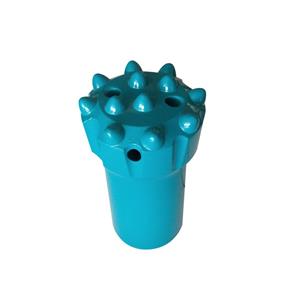
Instead of machined steel teeth, these bits use high-hardness tungsten carbide inserts mounted into the cones. Tungsten carbide is much more wear-resistant and impact-resistant than ordinary steel, making it ideal for heavy-duty drilling in hard rock.
Depending on the drilling requirements, the inserts can be designed in different shapes:
Spherical inserts: best for withstanding heavy impact and suitable for hard rock;
Conical or semi-ballistic inserts: combine impact and cutting performance for medium-hard formations;
Wedge-shaped inserts: focus more on shearing action and can improve drilling efficiency in certain medium-hard rock layers.
These design variations allow TCI tricone bits to adapt to different rock hardness levels and drilling demands more precisely.
How to Choose the Right Type
Selecting the right tricone bit depends mainly on the formation being drilled.
For soft and medium-soft formations such as:
mudstone,
shale,
coal seams,
a milled tooth tricone bit is often the best option because it provides good drilling speed while keeping cost under control.
For harder formations such as:
sandstone,
limestone,
deeper and more complex hole conditions,
a TCI tricone bit is usually the better choice. Its superior wear resistance and impact strength help ensure smooth drilling progress and longer service life.
Why Tricone Bits Matter in Coal Mining
From underground mines to open-pit operations, and from soft rock to hard rock, tricone drill bits for coal mining support nearly every important drilling process in the industry.
Their advantages come from:
the combined impact + crushing + cutting rock-breaking principle,
the ability to match different tooth structures to different formations,
reliable performance in a wide range of drilling conditions.
In this sense, the coal mining tricone drill bit is much more than a simple drilling tool. It reflects the progress of modern drilling technology, where every structural detail and every material choice is designed to handle complex geology, improve efficiency, and enhance operational safety.
Conclusion
The tricone drill bit for coal mining is a key rock-breaking tool that plays a crucial role in safe and efficient drilling operations. With its unique three-cone design and versatile tooth options, it can adapt to a wide range of formations and drilling tasks.
Whether used for gas drainage, water detection, blasting hole drilling, or slope support, this bit continues to prove its value as a reliable and high-performance solution in modern coal mining.