Yantai Gaea Air-Energy Rock Breaking: Working Principles, Applications and Project Considerations
Yantai Gaea Air-Energy Rock Breaking: Working Principles and Applications
Rock excavation projects do not always have suitable conditions for conventional explosive blasting. Mining operations, road construction, tunnel portals, foundation works and environmentally sensitive projects may face restrictions related to surrounding structures, vibration control, access, approvals or site safety requirements. In these situations, contractors may investigate controlled rock-breaking alternatives.
The source article describes “air-energy blasting” as a rock-fracturing approach that uses the rapid physical expansion of a liquid or compressed gas medium inside a prepared rock-breaking assembly. In this context, Yantai Gaea is presented as the equipment and technical-support provider instead of the original company named in the source material.
The term should be understood carefully. A controlled gas-expansion rock-breaking system is not automatically suitable for every project, and it is not a substitute for engineering assessment, site approvals or qualified safety management. Rock type, drilling conditions, free-face availability, surrounding assets, operator competence and local regulation all determine whether the approach can be considered.
Basic Working Principle
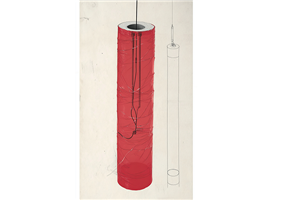
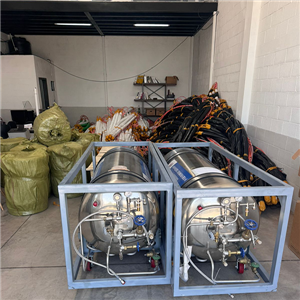
The article explains the method as relying on the phase-change or pressure-release behavior of a gas medium, such as liquid carbon dioxide or liquid oxygen, within a purpose-designed rock-splitting tube or pressure assembly. When the system is initiated under an approved process, the medium converts rapidly into high-pressure gas. The expansion creates pressure inside the borehole environment and promotes cracking along weak planes, natural joints or fracture paths in the rock mass.
Unlike conventional explosive blasting, the source characterizes this approach as a physical pressure-fracturing process rather than one driven by a conventional explosive chemical reaction. The intended result is controlled rock cracking that can make the material easier to remove with excavators, loaders or other mechanical equipment.
However, the actual outcome depends heavily on site-specific conditions. Intact hard rock may respond differently from highly fractured formations, weak rock, weathered strata or water-bearing layers. If pressure escapes through existing cracks or poorly sealed boreholes, the rock-breaking effect may be reduced. For this reason, a project should be evaluated through qualified engineering review and, where appropriate, a controlled trial before wider application.
Typical Application Scenarios
The source article identifies several potential scenarios for this type of controlled rock breaking:
Open-pit mining and quarry excavation
Road, railway and infrastructure construction
Tunnel entrance and portal excavation
Foundation pits and municipal earthworks
Ecological restoration projects
Work areas where conventional blasting is restricted
Locations with heightened sensitivity to vibration or nearby structures
In such environments, the project objective may not be maximum instantaneous rock output. Instead, contractors may need a method that supports controlled excavation planning, reduces disruption to surrounding work and fits a restricted operating environment.
For Yantai Gaea, any application decision should begin with a project-specific review. A solution that is appropriate for one mine, road cut or foundation project may not be appropriate for another. The geology, operating environment and applicable approval requirements must be confirmed independently.
The Importance of Geological Conditions
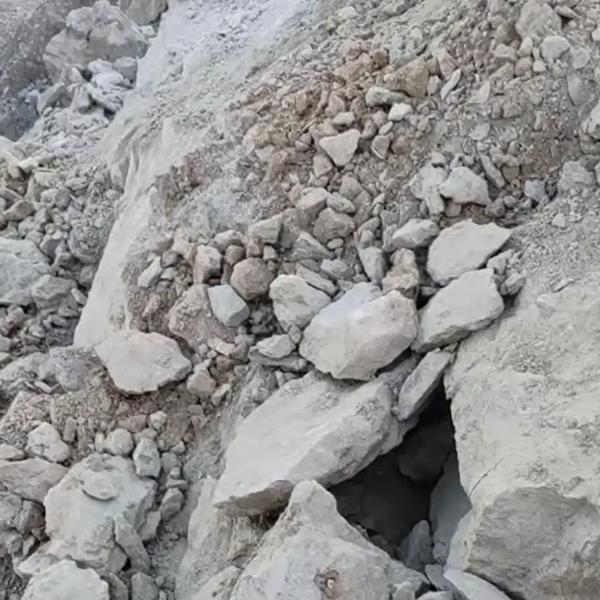
The article notes that controlled gas-expansion rock breaking has different results in different geological conditions. More complete hard rock can provide a more confined environment for pressure development and may allow fractures to propagate more effectively. By contrast, loose, highly broken or water-rich formations can permit pressure leakage, reducing the effectiveness of the intended splitting action.
This is why geological information is essential before selecting a system. The evaluation should consider:
Rock type and strength
Natural fractures, joints and bedding planes
Degree of weathering
Groundwater and water-bearing conditions
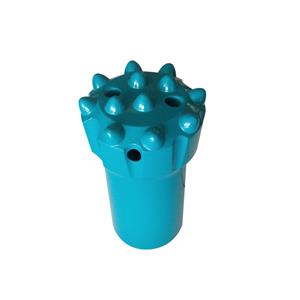
Borehole quality and drilling consistency
Excavation face and available free surface
Required fragmentation and removal method
Nearby buildings, pipelines and protected infrastructure
The source also discusses high-altitude operating conditions in the Lhasa region. High-altitude environments can introduce practical challenges for equipment performance, personnel endurance and operating procedures. Rather than assuming standard configurations will work everywhere, Yantai Gaea should assess environmental conditions and determine whether specialized equipment, training or project controls are needed.
Equipment and Project Support
A complete controlled rock-fracturing arrangement involves more than a single splitting tube. The article refers to supporting equipment, pressure-related components, monitoring, drilling coordination, operational guidance and safety management.
For a project-oriented solution, Yantai Gaea can help discuss the appropriate scope of equipment and technical support based on actual conditions. This may include evaluating compatible splitting assemblies, reviewing the information needed for a site trial, providing product documentation and supporting operator training within an agreed project scope.
The objective is to turn a site’s rock-breaking requirement into a practical and controlled workflow. This does not mean promising fixed output, cost savings or universal technical results. Productivity, fragmentation, noise, vibration and overall economics depend on the geology, drilling, equipment configuration, operating discipline and project constraints.
Comparison With Mechanical Rock Breaking
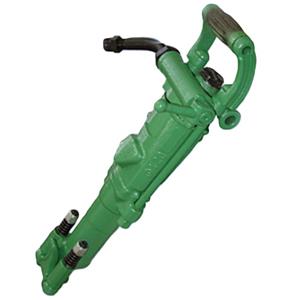
The source contrasts air-energy rock breaking with purely mechanical breaking methods. Mechanical methods generally remove rock progressively through sustained force, while gas-expansion methods seek to create a rapid pressure-driven fracture within the rock mass. In suitable hard-rock conditions, this may provide an additional excavation option when mechanical breaking alone would be slow or cause high equipment wear.
That comparison should be made carefully. A controlled gas-expansion solution is not necessarily better in every situation. It can require specialized equipment, trained operators, appropriate supply arrangements and disciplined work planning. In poorly confined rock, soft formations or highly fractured ground, other methods may be more practical.
A contractor should therefore compare alternatives based on the project’s actual constraints rather than selecting a method solely on general claims. Relevant decision factors include total project duration, access conditions, approval requirements, available equipment, workforce capability and the need to protect nearby assets.
Safety, Training and Compliance
The source article rightly acknowledges that non-explosive does not mean risk-free. Any system involving pressurized gas, cryogenic liquid oxygen, specialized tubes, electrical initiation components or pressure-related equipment requires structured safety control.
Liquid oxygen presents particular hazards, including cryogenic exposure and oxygen-enriched environments. Other pressurized media and assemblies also require proper handling, inspection and maintenance. Work should only be performed by trained and authorized personnel under an approved site plan and the applicable local regulations.
Project teams should establish their own approved procedures for exclusion areas, equipment handling, inspection, emergency planning and initiation control. These procedures must be determined by qualified engineers and site safety personnel; they should not be copied from another project without validation.
The article also refers to monitoring pressure and displacement data. Where monitoring is used, it can support project learning and parameter optimization, but it does not replace competent supervision, regulatory compliance or a formal safety-management system.
Commercial and Operational Considerations
The source suggests that air-energy rock breaking may become a more frequently considered option as environmental restrictions increase and conventional blasting approvals become more complex. At the same time, it recognizes practical challenges such as equipment investment, training requirements and supply-chain coordination for the relevant media and equipment.
This is an important point. Controlled gas-expansion rock breaking should usually be viewed as a complementary excavation option rather than a universal replacement for conventional blasting or mechanical methods. It may offer value where a project has clear restrictions, suitable geology and a strong operational case.
For Yantai Gaea, the most responsible approach is to communicate this technology in a project-specific way. The company can explain the technical concept, discuss equipment options and support evaluation, while avoiding unsupported guarantees about capacity, cost, compliance status or results.
Frequently Asked Questions
Is air-energy rock breaking legal?
Legal and regulatory requirements vary by jurisdiction, project type and operating medium. A contractor must verify local rules governing pressure systems, transport, storage, operator qualifications, construction permits and any other applicable approvals with the relevant authorities.
Is it suitable for soft rock?
The source notes that soft or heavily fractured rock can allow pressure leakage, which may reduce effectiveness. A technical evaluation is needed to determine whether the method is appropriate for the specific formation.
Does it eliminate all rock-fly or safety concerns?
No. Even if a project does not use conventional explosives, pressure-related rock-breaking work can still create hazards. Site controls, exclusion zones, trained personnel and approved safety procedures remain essential.
Can it be used at high altitude?
High-altitude conditions may affect equipment performance, operating procedures and personnel requirements. A dedicated site assessment is needed before proposing a configuration for such conditions.
What information is needed for a technical evaluation?
Useful starting information includes rock type, rock strength, joint conditions, borehole details, water conditions, site access, nearby infrastructure, project schedule and the desired excavation outcome. This allows Yantai Gaea to assess whether a controlled rock-fracturing solution may be technically suitable.