Application Scenarios of rock Drill Rods
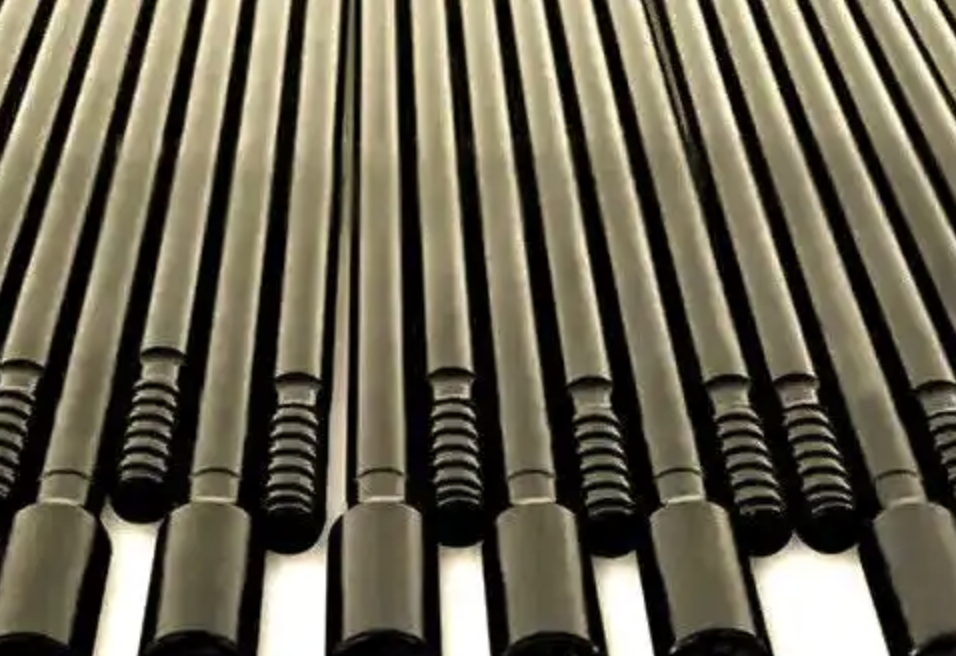
Rock drilling rods, as the primary force-transmitting elements in rock-breaking operations, are widely used across mining, construction, geological exploration, and emergency rescue thanks to their high strength, impact resistance, and wear resistance. Different rod types — integral rods, tapered-connection rods, threaded-connection rods, and hollow rods — are matched to specific equipment and job requirements to suit complex working conditions.
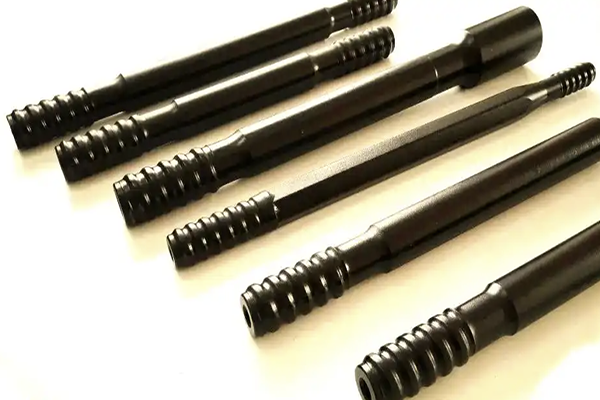
Open-pit mining In large-scale open-pit operations such as iron, copper, and limestone mines, drill rods are essential components of surface rock-drilling rigs. Threaded heavy-duty rods withstand high-frequency impact loads for deep-hole drilling used in blast-hole drilling, providing precise hole positioning for subsequent blasting and fragmentation. Tapered-connection rods, used with light rock drills in small- to medium-scale quarries, enable flexible rock splitting and edge trimming to meet different aggregate size requirements. Rods are also used in slope stabilization: drilling holes for rock-bolts and anchors helps secure slope blocks and ensure safe progression of mining activities.
Underground mining and tunnel excavation Underground metal and coal mine roadway excavation and extraction demand rods with excellent bending and fatigue resistance. In confined underground spaces, hollow rods mounted on hydraulic drill jumbos allow the passage of high-pressure water or compressed air to flush cuttings while drilling, greatly improving advance rates. In tunnel construction—highway, railway, and metro tunnels—rods are fitted to drilling jumbos for full-face or stepwise hole drilling. Whether drilling blast holes in hard rock or pre-support holes for pipe umbrella or forepoling, rods provide stable force transmission to protect schedule and quality. Corrosion-resistant rods extend service life in special tunnels with high moisture or aggressive groundwater conditions.
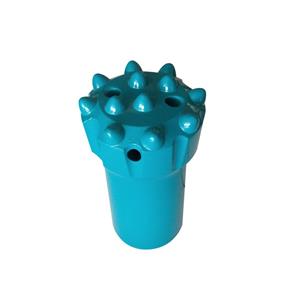
Building and foundation works Drill rods play a key role in foundation works for high-rise buildings, bridges, and wharves. Large-diameter threaded rods used with tricone/roller-cone bits perform rock-drilling for cast-in-place pile bores, enabling piles to reach competent bearing strata and improving structural stability. For excavation support, rods drill holes for soil nails and ground anchors to reinforce retaining walls and prevent slope collapse. Lightweight rods used with handheld rock drills efficiently break concrete and remove rebar during demolition and renovation, meeting the precision requirements of retrofit projects.
Road and railway maintenance In road and railway maintenance and upgrade projects, rods paired with small rock-drilling equipment accomplish various precision tasks. They are used to break deteriorated concrete pavement at cracks and potholes ahead of repair. For railway ballast cleaning and subgrade strengthening, rods drill into the formation to install reinforcing anchors, improving load-bearing capacity and ensuring train safety. In mountain road slope protection, rods drill anchor holes for rock bolts and cable anchors to stabilize hazardous rock and prevent rockfalls and landslides that would disrupt traffic.
Geological exploration and resource surveying Drill rods are core components of lightweight exploration rigs used in mineral, hydrogeological, and engineering-geology investigations. Thin-walled rods for geological surveys enable shallow and deeper sampling holes; with core bits they recover rock cores for structural analysis and reserve estimation. In hydrogeological work, rods drill aquifers for water-well construction and groundwater monitoring wells. For specialized surveys such as seismic or geothermal exploration, customized rods are designed to withstand high-temperature and high-pressure conditions to ensure reliable field operations.
Emergency rescue and contingency engineering In disaster response to earthquakes, landslides, and collapses, drill rods are vital for rapid obstacle removal. Rescue teams use handheld rock drills equipped with rods to break collapsed concrete and rock, opening corridors to reach trapped victims. In emergency hydraulic works—dike reinforcement or river channel dredging—rods can drill into embankment rock for cutoff-wall and grouting-hole construction to quickly stabilize structures and prevent overtopping. In firefighting and urban rescue, rods assist in breaching reinforced-concrete elements as part of coordinated rescue efforts.
Agricultural, forestry, and landscaping projects Drill rods also see broad use in agricultural and landscape applications. For irrigation well drilling in mountainous farmland and orchards, lightweight integral rods used with small rigs quickly penetrate soil and weathered rock to install water wells. In landscape construction, rods drill holes for anchoring rocks in artificial rockeries, and for stabilizing root balls during tree transplantation, improving efficiency and quality in horticultural and landscaping projects.