Basic Drilling Knowledge
Basic Drilling Knowledge
1. Borehole Structure
Definition:
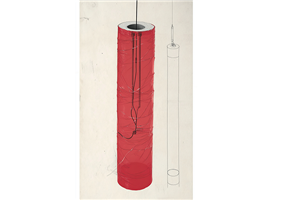
Borehole structure refers to the variation in hole diameter and length from spudding to final depth, i.e., the technical profile of the borehole.
Core components:
These mainly include hole diameter, number of diameter reductions, number of casing strings, casing diameter and length, depth of diameter change, and the waterproof sealing method at the casing shoe.
Optimization requirements:
On the premise of ensuring borehole quality and operational safety, priority should be given to high-quality drilling mud, cement slurry, or chemical grouts for wall support and lost-circulation control. The number of diameter changes should be minimized, and casing should be reduced or avoided whenever possible, so as to simplify borehole structure to the greatest extent.
Its key function is to isolate complex formations and ensure smooth drilling operations.
Situations requiring diameter reduction and casing installation:
When drilling loose sand-gravel formations or quicksand layers, groundwater effects may render mud wall support insufficient for construction needs.
When penetrating thick fractured and jointed broken zones, severe wall collapse and block fall may persist even with mud or other support measures.
When the borehole intersects water-bearing structures and large connected fractures, causing severe water loss that cannot be controlled by other sealing methods.
After reaching a planned depth, diameter reduction drilling may be performed to match the load capacity of construction equipment.
Factors in borehole structure selection:
Selection should comprehensively consider rock properties, hydrogeological conditions, final hole diameter, borehole depth, drilling method, borehole purpose, wall protection measures, and construction equipment.
Drill-string matching:
This refers to the matching relationship between drill rod diameter and borehole (bit) diameter. It directly affects annular clearance and thereby significantly influences drill rod operating condition, flushing-fluid flow performance, and drill-string rotational resistance.
2. Basic Drilling Operation Essentials
Drilling method:
A general term for the techniques and related technical measures used to break rock at the hole bottom during subsurface drilling.
Drilling process:
The complete workflow in which specific equipment and tools are used to break rock (or soil), form a smooth and regular borehole of required diameter and depth, and ensure continuous drilling through supporting technical measures.
Classification of drilling methods:
By external force and rock-breaking mode: rotary drilling, percussion drilling, and rotary-percussion drilling.
By rock-breaking tool (abrasive type): tungsten-carbide drilling, steel-shot drilling, and diamond drilling.
By circulation mode: direct circulation, reverse circulation, and localized reverse circulation at the hole bottom.
By coring requirement: coring drilling and full-face drilling.
Principles for selecting a drilling method:
The method should be chosen mainly according to the physical and mechanical properties of the rock:
For soft and some medium-hard formations, use tungsten-carbide drilling.
For some medium-hard to hard formations, use needle-type alloy, PDC, or steel-shot drilling.
For medium-hard to very hard formations, use diamond, steel-shot, or down-the-hole hammer drilling.
Pre-spud preparation:
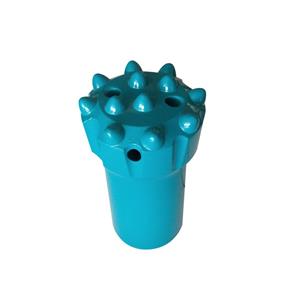
Prepare sufficient materials, including drill rods, casings, orientation pipes, bits, steel shot, lubricants, flushing fluid, make-up and break-out tools, specialized coring tools, necessary short core barrels, core boxes, and all required forms.
Conduct a full inspection of drilling equipment and installation quality. Any nonconformity must be repaired or adjusted immediately; reinstall if necessary. Forced operation is strictly prohibited.
For deep-hole spudding, to prevent hole deviation, a pit may be excavated at the collar and an orientation pipe embedded; casing is then run after drilling into bedrock. For shallow-hole spudding, mud should be used for wall support. If wall collapse is severe, artificial wall-building methods may be used before drilling into bedrock and running casing.
During spudding, the core barrel should be lengthened gradually, and operations should follow light bit pressure, slow rotation, and appropriate pump output. During diameter reduction, a combined guide assembly should be used to avoid borehole bending.
Because spudding often occurs in overburden, flushing fluid is prone to loss, which reduces wall stability; particular attention should be paid to preventing downhole incidents such as sticking, burial, bit balling, and bit burning.
Casing should be set to competent bedrock. Before running casing, clay balls should be dropped and tamped in the hole so the casing shoe is seated into clay to seal the casing bottom. The casing top should be fixed with wooden wedges and sealed with clay; cement sealing may be used when necessary. Before final casing fixation, connect the kelly (or drive rod) to the casing to verify casing verticality and alignment between borehole center and casing center.