Borehole Deviation = Project Failure? One Technique to Precisely Remedy It
Borehole deviation is a common issue in rock drilling that can compromise construction quality and efficiency. If left unaddressed, deviation may cause borehole collapse, tool damage, or even mission failure. Choosing a scientifically sound corrective strategy according to the deviation severity is therefore critical.
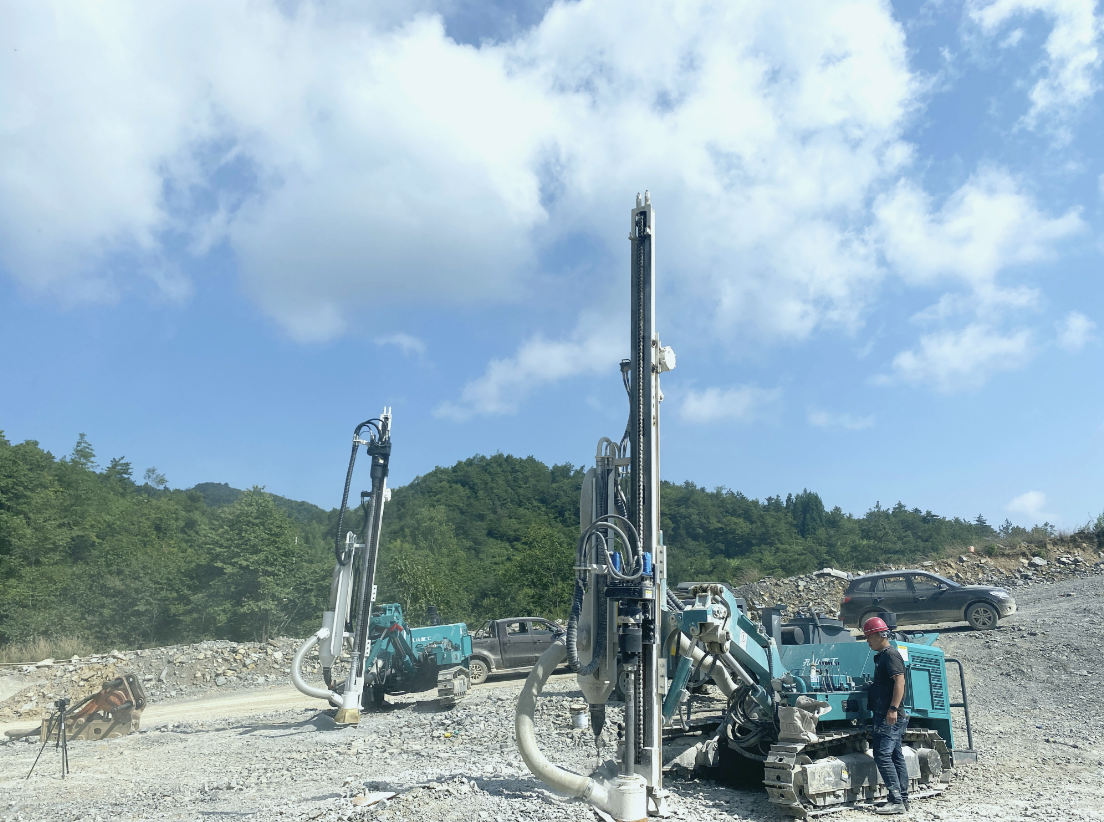
On-site correction for minor deviation When deviation is slight, quick corrections can often be made by adjusting rock drilling parameters or adding guidance hardware to prevent further drift.
Optimize rock drilling parameters
Excessive weight on bit (WOB) is a primary cause of uneven cutting and bit deflection. Reduce WOB appropriately so the bit advances under lower, more stable pressure, minimizing shock when drilling across alternating hard–soft strata. Simultaneously adjust RPM to avoid excessive centrifugal-induced vibration at high speeds. These coordinated changes help stabilize the drill string and guide the bit back toward the intended trajectory.Install a stabilizer for guidance
Adding a stabilizer (centralizer) to the drill assembly is a common corrective measure in rock drilling. By bearing against the borehole wall, a stabilizer limits radial movement of the drill string and provides stable guidance for the bit. Stabilizers are especially effective in unstable or heterogeneous formations, where they can significantly improve vertical accuracy and prevent recurrence of deviation.
Remedial treatments for severe deviation If the deviation angle exceeds acceptable limits or minor corrections fail, more comprehensive measures are needed to restore a compliant bore path for continued rock drilling operations.
Backfill-and-re-drill method
Suitable when the deviation originates at a shallow depth and the borehole walls are reasonably stable. First, thoroughly remove cuttings, mud, and debris to ensure the backfill bond. Then backfill the borehole with high-stability materials (clay, cement, or similar) up to 1–2 m above the deviation origin so the filled zone fully covers the deviated section. After the backfill cures and reaches sufficient strength, re-drill from the new starting point to restore vertical accuracy. Although time-consuming, this method eliminates the root cause and offers a reliable basis for safe subsequent rock drilling operations.Sidetracking correction technique
For deep holes or conditions where backfilling and re-drilling are impractical, sidetracking is a more efficient solution in rock drilling. Deploy downhole tools such as a bent sub or eccentric wedge at the deviation point and precisely control the tool angle to steer the bit away from the original trajectory toward the design path. Use real-time downhole inclination measurements (e.g., MWD or other directional surveying tools) to monitor borehole inclination continuously and ensure each adjustment is accurate. Sidetracking requires high-precision equipment and experienced operators but can rapidly correct deviation without halting overall operations, substantially shortening schedule impact.
Construction principles and precautions Regardless of the chosen correction method, follow the principle of “prevention first, graded response.” Conduct thorough pre-drilling formation reconnaissance and select appropriate drill bits and rock drilling parameters accordingly. Maintain continuous monitoring during operations and act immediately at the first sign of deviation. For minor deviation, prioritize low-cost options such as parameter adjustment or stabilizer installation; for severe deviation, evaluate schedule and cost trade-offs and select the remediation that best fits project requirements. Scientific diagnosis and precise intervention minimize deviation-related risk and help ensure steady progress of rock drilling projects.