Classification of Extension Drill Rods
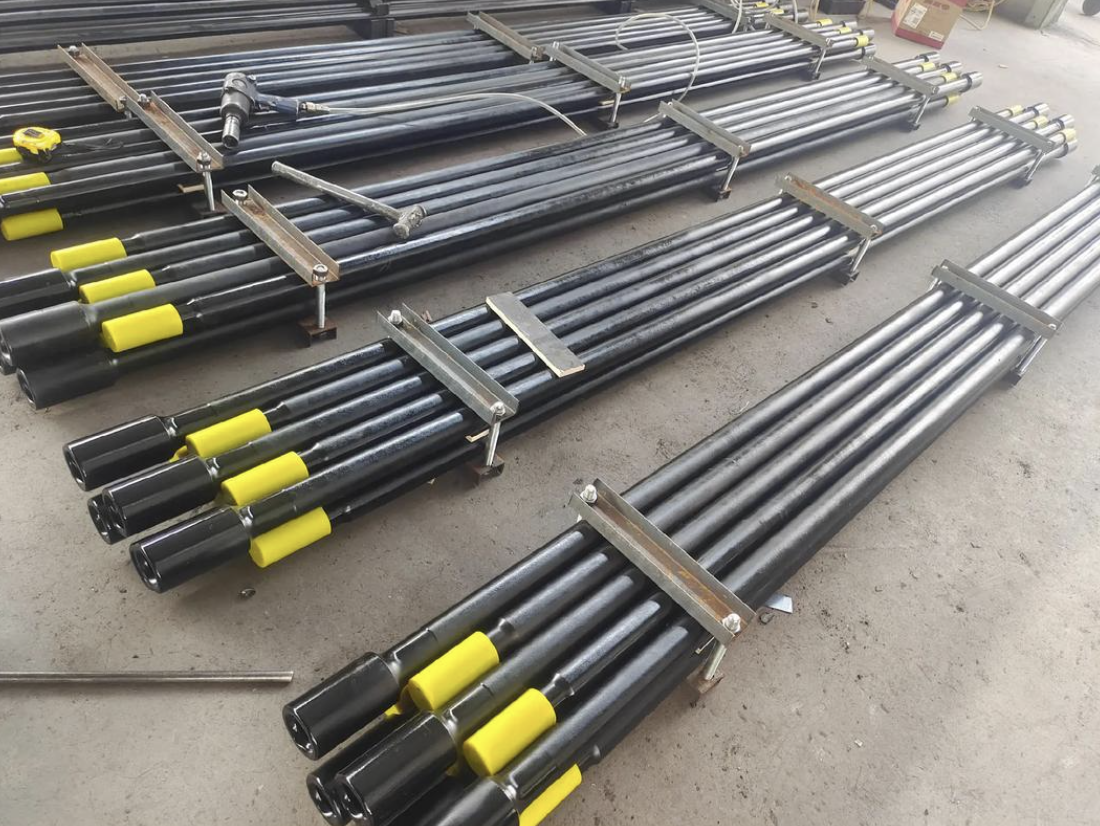
Extension drill rods can be categorized in several ways, including high-efficiency spiral rods, triangular spiral rods, geological spiral rods, wide-flight spiral rods, CFG spiral rods, and continuous-flight auger rods.
The rod body is made from high-pressure seamless alloy steel pipe. The spiral flights are formed from highly wear-resistant T-section steel strip using a prestressed winding-and-welding process. Tool joints are produced from high-quality medium-carbon alloy steel and processed through vacuum quenching and tempering plus high-pressure forming. This product line uses square or hexagonal quick-connect structures. During operation, spring pins provide automatic locking, and U-type or semi-ring retaining pins prevent disengagement, allowing torque to be transmitted at maximum efficiency.
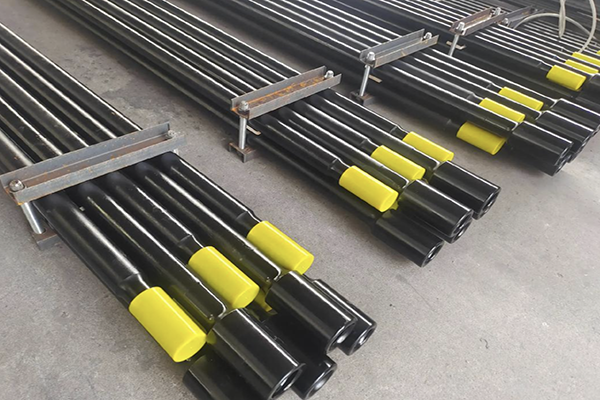
Geological Spiral Drill Rod
Geological spiral drill rods retain the high-torque performance of conventional geological rods while adopting single- or double-flight spiral designs manufactured by prestressed winding welding. They are suitable for coal mines and a wide range of drilling projects, especially deep-hole drilling in soft coal seams and coal-like formations where water-assisted cuttings removal is less effective. These rods provide reliable support for efficient deep-hole mine drilling and fill a long-standing gap in domestic applications. Their key strengths are excellent fatigue resistance and shear resistance, enabling long-term operation in complex geological conditions.
Continuous-Flight Auger Rod
Based on differences in drilling pressurization methods, continuous-flight auger rods are generally divided into friction-feed, mechanical-lock feed, and combined-feed types. Friction-feed rods are commonly used in softer formations and are suitable for silt, clay, sandy layers, and pebble strata.
Continuous-flight auger rods offer fast penetration, consistent borehole formation, high operating efficiency, high torque, and stable running performance. They use an automatic spring-pin locking structure for quick and convenient assembly and disassembly. For deep-hole applications, a cotter pin is added to enhance torque transmission and significantly reduce the risk of rod loss. The rods use an insert-type threaded connection, delivering rapid make-up and break-out, excellent sealing, high tensile strength, stable pile quality, and accurate verticality—further improving construction convenience and operational reliability.