Common Construction Faults in Rotary Drilling Rigs and Their Solutions
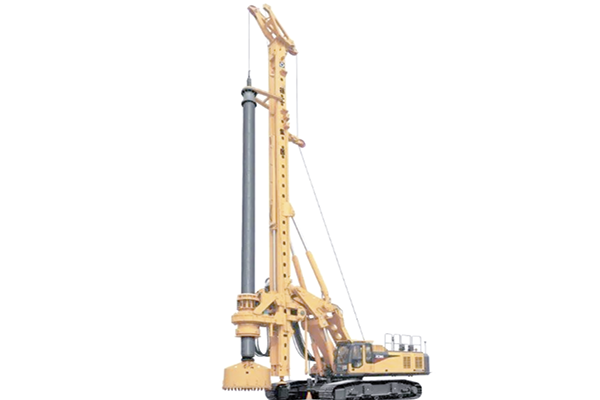
As a core piece of equipment for borehole construction in civil engineering, rotary drilling rigs are widely used in sandy soil, cohesive soil, silty soil, and other strata. They are extensively applied in foundation works such as continuous foundations and foundation reinforcement. However, during long-term construction, abnormalities are unavoidable due to geological conditions, operating practices, and equipment wear. This article summarizes common faults encountered in rotary drilling rig operations and provides targeted treatment methods for on-site reference.
Common Faults and Treatment Methods
(1) Borehole Collapse
During concrete pouring, if the slurry level inside the casing suddenly rises and overflows, then quickly drops with air bubbles emerging, borehole collapse should be suspected. Verification can be made with a depth-measuring hammer: if a hammer previously suspended at the concrete surface becomes buried and cannot be lifted, or if the measured depth deviates significantly from the actual concrete level, collapse is confirmed.
Main causes include poor sealing around the casing toe leading to water leakage and abnormal drop of water level in the borehole; in tidal river construction, rising tide reduces the water head difference and fails to maintain original hydrostatic pressure; and heavy loads or mechanical vibration around the casing disturbing the surrounding soil.
Treatment measures: first identify the cause and take targeted control actions, such as maintaining or increasing internal water head pressure, removing nearby heavy loads, and avoiding vibration, to prevent further collapse. Then use a sludge pump to remove collapsed soil from the hole. If collapse no longer continues, normal pouring can resume. For minor collapse, backfill above the collapsed zone, optimize slurry properties, increase water head, and deepen casing embedment before continuing drilling. For severe collapse, immediately backfill the entire borehole with sand or fine gravel mixed with clay, suspend construction, identify the root cause, and restart drilling only after effective protective measures are in place. If the collapse zone is shallow, a deeply embedded casing method may be used, with surrounding soil compacted before drilling resumes.
(2) Borehole Deviation
If borehole inclination or bending is observed, first analyze the cause, such as uneven hard-soft geology or unbalanced drill rod loading, then apply targeted correction. In general, the drill tool can be held at the deviated section and the hole repeatedly reamed to restore verticality. If deviation is severe, backfill cohesive soil to the deviated section and restart drilling after the soil has settled and compacted.
(3) Over-Enlargement and Necking
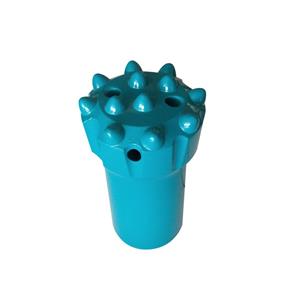
When over-enlargement or necking occurs, priority should be given to collapse prevention and controlling drill tool swing to avoid abnormal diameter variation. Necking is mainly caused by severe bit wear without timely repair, or by soft soils and clayey mudstone that swell on water exposure. For wear-related issues, inspect bit wear regularly and perform timely hardfacing repair. For swelling strata, use high-quality low-filtration-loss slurry for wall protection. If necking has already occurred, repeatedly sweep the necked section by moving the bit up and down until the diameter is restored to design requirements.
(4) Bit Balling and Bit Burial
Bit balling and burial usually occur during direct-circulation rotary drilling (including submersible rigs) and impact drilling. In such cases, promptly check slurry viscosity, cuttings inlet/outlet flow, drill pipe inner diameter, and cuttings removal equipment status, while controlling penetration rate appropriately. If bit balling is severe, stop drilling immediately, pull out the bit, thoroughly clean cuttings, and then resume operation.
(5) Bit Sticking
Bit sticking is common in impact drilling. After sticking occurs, forcible pulling is strictly prohibited. Try gentle lifting first. If unsuccessful, use a small impact tool to strike the stuck section, or use a combined impact-and-suction method to loosen cuttings around the bit. Once the bit moves freely, lift it out slowly.
(6) Dropped Bit or Foreign Objects
If a bit or object is dropped into the hole, use dedicated fishing tools such as fishing forks, fishing hooks, and rope loops immediately. If the object is buried by sediment, first clear surrounding sediment using applicable methods described above, then proceed with retrieval once the tool makes contact with the object.
Construction Safety Precautions
Under all circumstances, personnel must never enter a borehole without casing or other protective facilities to handle faults. If entry into a borehole with casing or other protection is unavoidable, harmful gas must be tested in advance, and complete safety equipment for toxic exposure prevention, drowning prevention, and collapse burial prevention must be provided. Operations may proceed only after personnel safety is fully ensured.
Rotary drilling rig construction is a relatively new technique, and continued practical experience is still essential. Problems encountered during construction should be analyzed and systematically documented to build standardized response procedures for future similar situations. As adoption of rotary drilling rigs continues to expand, related construction techniques will become more mature, and fault-handling processes will become more standardized, providing strong support for smooth foundation engineering execution.