Common Failures in Rotary Drilling Rig Construction and Practical Solutions
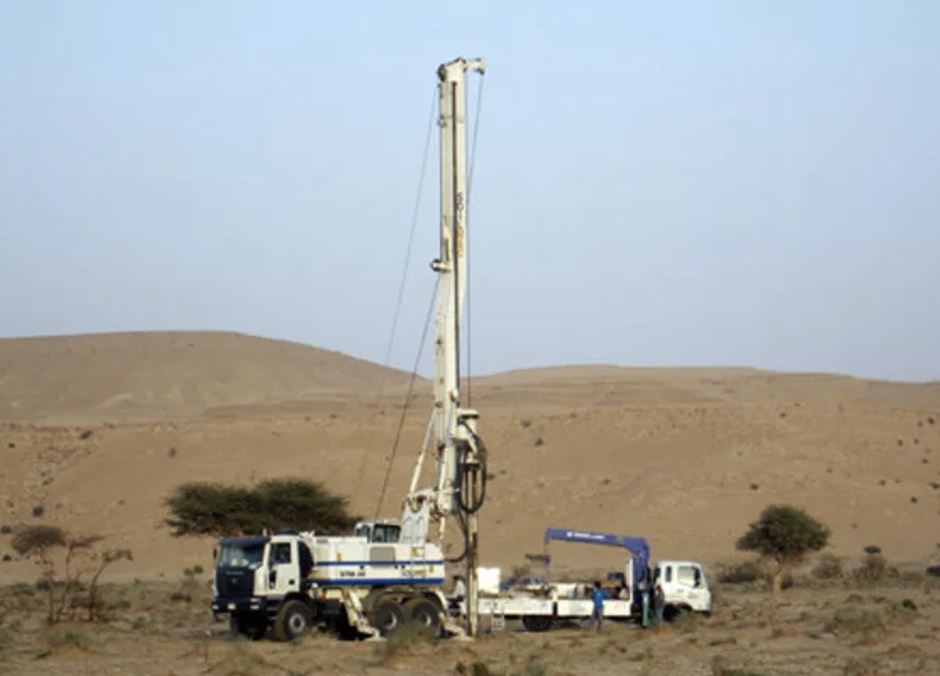
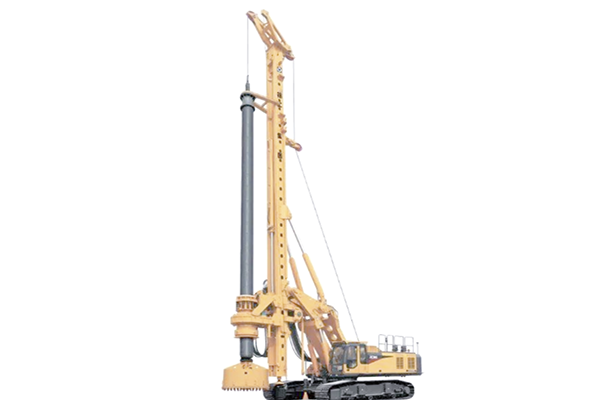
As a core piece of equipment for bored pile and hole-forming operations in construction, rotary drilling rigs are suitable for many soil types, including sand, clay, and silty soils. They are widely used in foundation systems such as continuous foundations and foundation reinforcement.
However, during long-term field operation, abnormal conditions are inevitable due to geological variability, operating practices, and equipment wear. This article summarizes common on-site failures and corresponding corrective actions for practical reference.
1. Common Failures and How to Handle Them
(1) Borehole Collapse
During concrete pouring, warning signs of collapse include a sudden rise of slurry level inside the casing (sometimes overflowing), followed by a rapid drop and bubbling. A depth hammer can be used for confirmation: if a hammer that was previously suspended at the concrete surface becomes buried and cannot be retrieved, or if measured depth deviates significantly from the actual concrete level, borehole collapse is likely.
Main causes:
Poor sealing around the casing shoe, causing leakage and abnormal water level drop in the hole.
In tidal rivers, rising tide reduces the water head difference, weakening required hydrostatic pressure.
Heavy loads stacked near the casing or vibration from machinery disturbing surrounding soil.
Corrective actions:
Identify the cause first and apply targeted controls:
Maintain or increase internal water head pressure.
Remove nearby heavy loads.
Minimize vibration disturbance.
Use a sludge pump to remove collapsed soil from the borehole.
If collapse has stopped, resume normal concreting.
For minor collapse:
Backfill above the collapsed zone,
Improve slurry properties,
Increase water head,
Embed casing deeper, then continue drilling.
For severe collapse:
Immediately backfill the entire hole with sand or fine gravel mixed with clay,
Suspend work,
Investigate root cause,
Re-drill only after effective preventive measures are in place.
For shallow collapse:
Adopt deep casing installation,
Compact soil around casing before resuming drilling.
(2) Borehole Deviation or Curvature
If the hole becomes inclined or curved, analyze causes first (such as uneven strata hardness or unbalanced drill string loading), then apply targeted correction.
Corrective actions:
Suspend the drilling tool at the deviation depth and repeatedly ream/sweep the hole to restore verticality.
If deviation is severe, backfill with cohesive soil up to the affected zone, allow it to settle and densify, then re-drill.
(3) Over-Enlarged Hole or Necking (Reduction in Diameter)
When overbreak or necking occurs, collapse prevention must be strengthened, and drill tool swing should be controlled to prevent abnormal diameter changes.
Typical causes of necking:
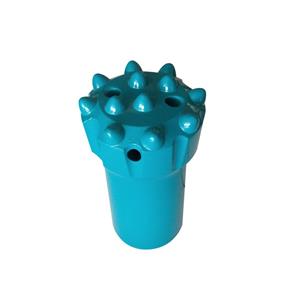
Excessive wear of drilling tools without timely hardfacing/weld repair.
Presence of water-sensitive expansive soft soils or clayey mudstone.
Corrective actions:
Regularly inspect tool wear and repair promptly by welding/hardfacing.
Use high-quality, low-filtration slurry for wall support in problematic formations.
If necking has already occurred, repeatedly sweep up and down through the narrowed zone to ream it back to design diameter.
(4) Bit Balling and Bit Burial
These problems are common in rotary drilling with positive circulation (including submersible rigs) and in percussion drilling.
Corrective actions:
Immediately check:
slurry viscosity,
inlet/outlet cuttings flow path,
inner diameter of drill pipe,
performance of cuttings removal equipment.
Control penetration rate appropriately.
If balling is severe, stop drilling at once, pull out the bit, clean off cuttings completely, then resume operation.
(5) Stuck Drill Tool
Tool sticking is common in percussion drilling.
Important rule: never forcefully yank the tool upward.
Corrective actions:
Try gentle lifting first.
If ineffective, use a smaller impact tool to free the stuck zone.
Or apply a combined impact-and-suction approach to loosen surrounding cuttings.
Once tool movement is restored, extract slowly.
(6) Dropped Tool or Foreign Object in Hole
If a tool or object falls into the borehole, retrieve it immediately using dedicated fishing tools (fishing forks, hooks, wire loops, etc.).
If buried by sediment, first remove surrounding sludge/sand according to relevant cleaning procedures, then proceed with retrieval after proper contact is established.
2. Construction Safety Precautions
Under no circumstances should personnel enter a borehole that lacks casing or equivalent protective measures to handle faults.
If entry into a protected borehole is absolutely necessary, the following are mandatory before entry:
gas detection for toxic/harmful atmosphere,
full safety provisions for:
toxic exposure protection,
drowning prevention,
collapse/burial prevention.
Work may proceed only after all safety conditions are verified.
Rotary drilling rig construction is a relatively modern method, and practical experience is still being accumulated. Problems encountered in the field should be analyzed and documented promptly to build systematic response procedures. With wider adoption of rotary drilling technology, construction techniques will continue to mature, fault-handling workflows will become more standardized, and foundation works will be executed with greater safety and reliability.