Compressed Air Cooling Drill Bits: The Dry Drilling Solution Coal Mines Have Been Waiting For
If you've ever worked on a coal mine drill site, you know the sound. The rig is turning, the rods are feeding — and then everything stops. A stuck string. A burned-out PDC cutter. Half a shift gone. You pull the drill bit and what do you find? The cutting face is scorched, the flutes are packed with wet cuttings turned to cement, and the drill rod looks like it went through a war.
This isn't a rare occurrence. In soft, fractured, or water-sensitive coal measure formations, traditional water-flush drilling creates as many problems as it solves. Water causes the formation to swell. Swelling pinches the hole. The hole pinches the rod. And suddenly you're dealing with a stuck drill string, a ruined bit, and a crew standing around waiting for the rig to get freed up.
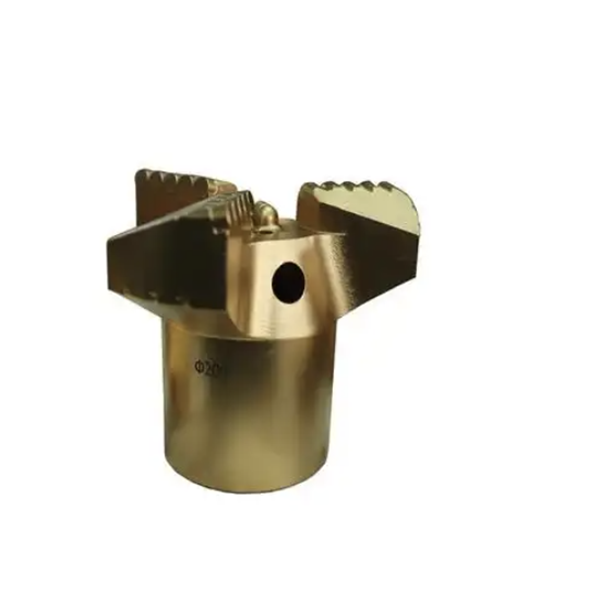
Compressed air cooling drill bits flip the script entirely. No water. No swelling. No rod lock-up. Just high-velocity air doing three jobs at once: cooling the bit, clearing the cuttings, and keeping the hole dry.
Why Water Became the Problem, Not the Solution
For decades, water flushing has been the standard method for cooling bits and transporting cuttings in underground drilling. It works fine — until it doesn't. The trouble shows up in specific geology, and unfortunately, coal measure formations are exactly the type that punish water-based systems the hardest.
Soft mudstone swells on contact with water. Shale disintegrates into paste. And when you lose circulation or stop drilling, those wet cuttings settle and harden around the drill rod like low-grade concrete. The morning shift shows up, fires up the rig, and the rod won't budge. Now you're fishing — or worse, redrilling the hole.
Then there's the bit itself. PDC cutters generate intense friction heat at the rock face. Without consistent cooling, temperatures spike past 350°C at the cutting edge. The diamond table oxidizes. The carbide substrate softens. The cutter edge chips. A drill bit that should last 300 meters might be done at 80, and nobody on the surface knows until the penetration rate drops off a cliff.
How Compressed Air Cooling Bits Work: Three Things at Once
The design concept is straightforward, but the execution is what separates effective bits from marketing gimmicks. The bit body carries internal air channels that deliver compressed air — typically at 0.7 to 1.2 MPa — through precision-machined nozzles at the bit face, each nozzle measuring 2 mm or less in diameter. When that compressed air exits through such a small orifice, it accelerates into a high-velocity jet aimed directly at the cutting zone.
That does three things simultaneously.
First, targeted cooling. The air jet strips heat off the PDC cutter face in real time, keeping the diamond table well below its degradation threshold. No water means no thermal shock from alternating heating and quenching — a pattern that micro-fractures cutters over repeated cycles. A bit running on compressed air cooling can outlast a water-flushed equivalent by a factor of two to three in comparable formations.
Second, high-efficiency cuttings removal. A compressed air bit doesn't just push cuttings — it blasts them out. The upward air velocity in the annular space between the drill rod and borehole wall creates enough lift force to carry chips even from deep horizontal or angled holes. In practical terms, operators report four to five times the cuttings clearance rate compared to standard air-flush bits, and the difference is even starker against water systems in sticky formations.
Third, true dry drilling. No water at any stage. That means formations that swell on contact with moisture stay stable. When you stop drilling, there's no slurry settling around the rod. When you restart, there's no need to break a cemented bond. For gas drainage holes, there's an added bonus: no water contamination in the methane flow path, which keeps extraction rates higher over the life of the borehole.
Where These Bits Actually Shine
Not every hole needs compressed air cooling. If you're drilling hard, dry, competent rock with good cuttings lift, traditional air-flush or even water-flush bits work fine. But certain conditions practically demand this design:
Soft, water-sensitive formations — mudstone, claystone, swelling shale. Water turns these into glue.
Deep coal seam gas drainage holes — long holes where cuttings buildup compounds over distance, and where water in the hole reduces methane permeability.
Angled and uphole drilling — negative-angle holes where water and cuttings pool at the face instead of flowing out. Compressed air jets don't care about gravity.
Exploration drilling in fractured ground — where lost circulation makes water flushing impossible to maintain.
The bits are commonly run on ZYWL and ZDY series hydraulic underground rigs, and they're compatible with standard drill rod connections — no special tooling changes needed beyond the bit itself.
What to Look for When Specifying One
Not all compressed air cooling bits are built the same. Here are the things worth checking before you buy:
Nozzle configuration. A single central nozzle doesn't provide even cooling across all cutters. Look for bits with multiple nozzles distributed across the face, aimed at the primary cutting zones. The nozzle diameter matters too — under 2 mm gives you the jet velocity you need, but too small and you risk blockages from fine dust.
Body material and hardening. A bit body that erodes from the inside under high-velocity air flow is a bit that's going to fail early. Quality bits use hardened steel bodies with internal passages that are either machined from solid (not cast) or lined with wear-resistant inserts.
Cutter grade and layout. PDC cutter quality matters even more in dry drilling because there's no water to cushion the thermal cycling. Look for cutters rated for at least 500°C thermal stability, and pay attention to the rake angle — a slightly negative rake handles impact loading better in fractured ground than a neutral or positive setup.
Thread connection quality. The shock loading from air pulsation through the bit can work connections loose over long runs. API-spec threads with proper heat treatment at the box end will save you from mid-hole decoupling.