Diamond Directional Drill Bits: A Practical Guide to High-Precision Long-Hole Drilling
In fields such as coal mine safety drilling and trenchless engineering, it is often necessary to drill boreholes that extend hundreds or even thousands of meters while maintaining strict accuracy. In these applications, it is not enough to simply drill fast. The borehole must also stay on the intended path.
This is where diamond directional drill bits stand out. With their ability to deliver both efficient rock breaking and directional control, they have become essential tools for high-precision drilling projects.
What Is a Diamond Directional Drill Bit?
A diamond directional drill bit is a specialized drilling tool designed for accurate long-hole drilling. Its core advantages are directional guidance and deviation control.
Unlike conventional drill bits, it does not work alone. It is typically used together with:
a downhole mud motor,
an MWD system (measurement while drilling),
and the rest of the directional drilling assembly.
This combination allows the bit to break rock efficiently while the drilling system continuously monitors and adjusts the borehole trajectory. As a result, it can achieve three key goals at the same time:
accurate steering,
better borehole straightness,
high drilling efficiency.
That is why diamond directional drill bits are widely used in coal mining, geological exploration, and trenchless drilling, where borehole precision is critical.
Why Diamond Directional Drill Bits Matter
As an upgraded version of the conventional diamond bit, the diamond directional drill bit inherits the core advantages of diamond materials:
high hardness,
excellent wear resistance,
long service life.
At the same time, its structure is optimized for directional drilling. Most designs feature a one-piece body without moving parts, which gives the bit:
higher structural strength,
fewer failure points,
better reliability in complex formations.
Directional diamond drilling technology was regarded as one of the major innovations in drilling engineering introduced during the 1980s, and today these bits have become indispensable equipment for high-precision borehole construction.
Main Types of Diamond Directional Drill Bits
Different formations require different bit structures. In practical drilling, the three most common types are:
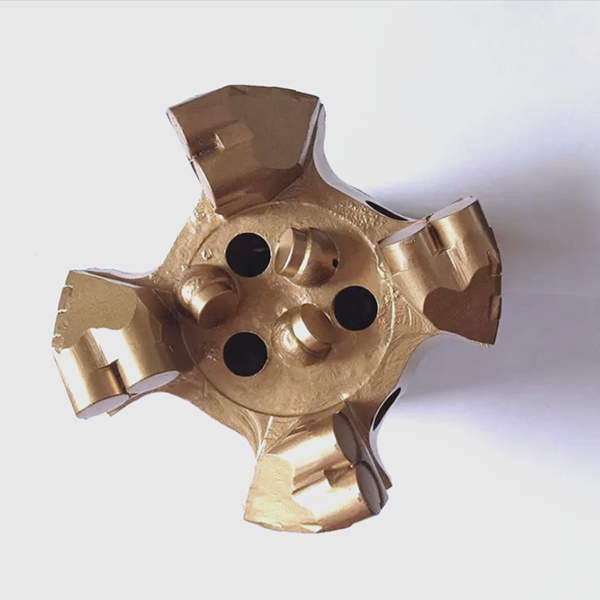
PDC directional drill bits
impregnated diamond directional drill bits
surface-set diamond directional drill bits
Each type has its own advantages and recommended application range.
1. PDC Directional Drill Bits
PDC directional drill bits are the most widely used and most common type in the market today. They are especially effective in soft to medium-hard formations.
Their cutting structure is based on PDC cutters, or polycrystalline diamond compact cutters, which combine:
the ultra-high hardness of diamond,
the toughness of cemented carbide.
This gives the bit excellent wear resistance and impact resistance.
PDC directional bits are mainly suitable for:
soft to medium-hard formations,
relatively homogeneous ground,
formations without large gravel or severe abrasive inclusions,
coal-bearing formations,
shale,
sandstone.
In real-world applications, they are often the first choice for:
gas drainage boreholes in coal mines,
water exploration and drainage holes,
other directional drilling jobs requiring high efficiency.
Their main benefits include:
fast penetration rate,
stable directional control,
long service life,
lower overall drilling cost.
Because they reduce bit trips and improve drilling speed, PDC directional bits are widely regarded as the most cost-effective option for soft to medium-hard formations.
2. Impregnated Diamond Directional Drill Bits
Impregnated diamond directional drill bits are the preferred choice for hard, highly abrasive, and broken formations. They are specially designed to handle difficult rock types such as:
flint,
quartzite,
granite,
other very hard and abrasive formations.
Their key feature is that fine diamond particles are evenly embedded throughout the matrix body. As the matrix wears during drilling, new diamond cutting edges are continuously exposed. This creates a self-sharpening effect.
Because of this design, impregnated directional bits offer:
very strong wear resistance,
excellent impact resistance,
stable drilling performance in hard formations,
lower risk of cutter chipping or cutter loss.
Although their initial penetration rate may be lower than that of PDC bits, they perform much better in formations where conventional cutters would wear too quickly or fail prematurely.
3. Surface-Set Diamond Directional Drill Bits
Surface-set diamond directional drill bits are a balanced option for medium-hard and relatively intact formations, such as:
limestone,
dolomite,
other stable medium-hard rock layers.
In this design, larger diamond particles are arranged regularly on the surface of the bit matrix, which gives the bit good cutter exposure and relatively fast drilling speed.
Their main advantages include:
efficient cutting in medium-hard formations,
good penetration performance,
easier regrinding after wear,
potential for factory repair and reuse,
lower long-term operating cost.
However, their impact resistance is relatively limited. For that reason, they are not ideal for broken formations or alternating soft-hard layers. They are better suited to directional drilling in formations with more stable geological conditions.
How to Choose the Right Diamond Directional Drill Bit
Choosing the right bit mainly depends on formation conditions. A simple rule of thumb is:
Choose PDC directional drill bits for soft to medium-hard formations.
Choose impregnated diamond directional drill bits for hard and highly abrasive formations.
Choose surface-set diamond directional drill bits for medium-hard and relatively intact formations.
Selecting the correct bit type helps avoid unnecessary wear, poor directional performance, and low drilling efficiency.
Conclusion
With their advantages in precise directional control and efficient rock breaking, diamond directional drill bits have become essential tools in modern drilling engineering.
Whether the job involves coal mine gas drainage, water control drilling, geological exploration, or trenchless construction, the right diamond directional drill bit can greatly improve drilling accuracy, efficiency, and operational safety.
By understanding the differences between PDC, impregnated, and surface-set directional bits, users can make more informed choices based on actual formation conditions and achieve safer, faster, and more reliable drilling results.