Why Your Drill Bits Keep Dying: The Four Failure Modes That Eat Your Bit Budget
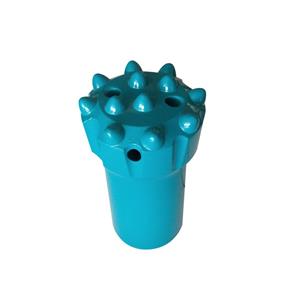
Bit failures follow patterns. Spend enough time on enough sites, and you'll see the same four culprits over and over — and they almost never have anything to do with the bit being "defective." They have to do with what the bit is being asked to do, how it's being asked to do it, and whether anyone noticed the warning signs before the carbide started flying.
Here are the four ways button bits and other rock drill bits get taken out early, and what you can actually do about each one.
The Ground Is Harder Than the Bit
This one sounds obvious, but it's not about rock hardness in the abstract. It's about abrasive rock — quartzite, high-silica granite, banded iron formations — where the rock itself is a grinding medium. Every rotation of the bit drags carbide across abrasive stone under thousands of pounds of feed pressure. The carbide wears. The bit face flattens. Penetration drops.
Then there's fractured ground. The bit hits a void, the string surges forward, and the carbide buttons take a shock load they weren't designed for. Hit enough voids in a shift and micro-cracks start forming in the carbide. Those cracks propagate. Eventually a button spalls or shears off entirely.
Add moisture, corrosive groundwater, or fine dust packing into the flushing grooves, and you've got a multi-front assault on the bit. The environment doesn't have to be extreme to be damaging — it just has to be consistent.
The Operator Is Working Against the Bit
Here's what I've seen repeatedly: a driller starts a hole with too much feed pressure before the bit has established a proper collar. The bit skates across the rock face instead of biting, and the carbide takes lateral loading it was never designed for. Buttons chip at the edges. The damage is done in the first thirty seconds of the hole.
Other things that kill bits through operator error: using the drill string as a pry bar to knock down loose rock from the face, running a bit with visibly worn or missing buttons because "it'll finish the round," and dry-firing — hammering without the bit seated against the rock. A single dry-fire event can send a shockwave through the bit that pops a carbide button clean out of its seat. One moment of inattention, one button gone, one bit scrapped.
The Bit Was Built Wrong from the Start
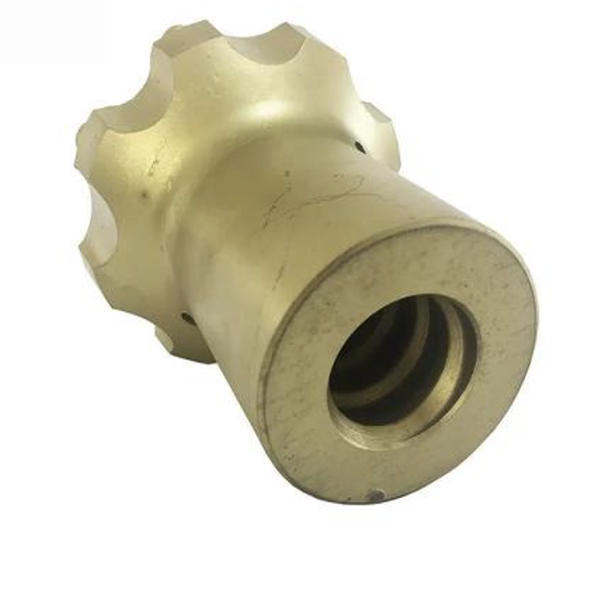
Not all bits are created equal. Low-grade carbide with inconsistent grain structure will wear unevenly and fail early. Steel bodies with inadequate heat treatment will fatigue-crack at the thread root or the flushing groove. A bit face geometry that creates stress concentration at the button seats — too little steel between buttons, or an overly aggressive protrusion profile for the rock type — is a design problem that no amount of careful operation will fix.
This is where supplier quality matters. A bit from a manufacturer that controls its carbide grade, heat treatment process, and face design for specific rock types will outlast a generic "one-size-fits-all" bit by a wide margin. The cheaper bit costs less on the invoice and more on the drill site.
Heat Is the Silent Killer
A button bit under full percussion and rotation generates serious heat at the rock interface. The flushing medium — water or air — pulls some of that heat away, but not all of it. The carbide buttons and the steel body expand and contract at different rates with every temperature cycle. Over thousands of cycles, thermal fatigue sets in. Micro-cracks form at the carbide-steel interface. The button loosens in its seat. One more impact and it's gone.
The fix isn't complicated: don't let the bit run dry, don't push feed pressure past the point where flushing can keep up, and give the bit a few seconds of flush-only cooling before you pull it out of the hole. Thermal management on a drill bit isn't an engineering problem — it's a habit problem.
The Pattern
Look at the four causes: environment, operation, manufacturing, and heat. The first two you control on site. The third you control at the purchasing stage. The fourth you control with your flushing parameters and your shift discipline. None of them are mysteries. All of them are fixable.