Eccentric Casing-While-Drilling: The Technique That Holds Back Collapsing Ground
Some holes don't want to stay open. You drill through a loose gravel layer, a fractured zone, or decomposed rock, and the moment the bit passes, the walls slump in behind it. The hole fills. The bit jams. The job stalls.
The old answer was to fight it — pull back, re-drill, add casing after the fact, hope it held. The modern answer is to never let the wall collapse in the first place: drill the casing down with the bit, in one pass. That's casing-while-drilling, and the eccentric bit is the tool that makes it work.
How an Eccentric Bit Works
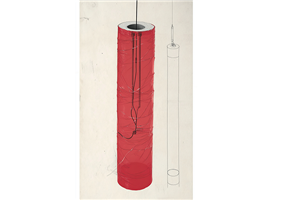
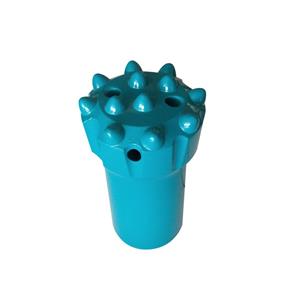
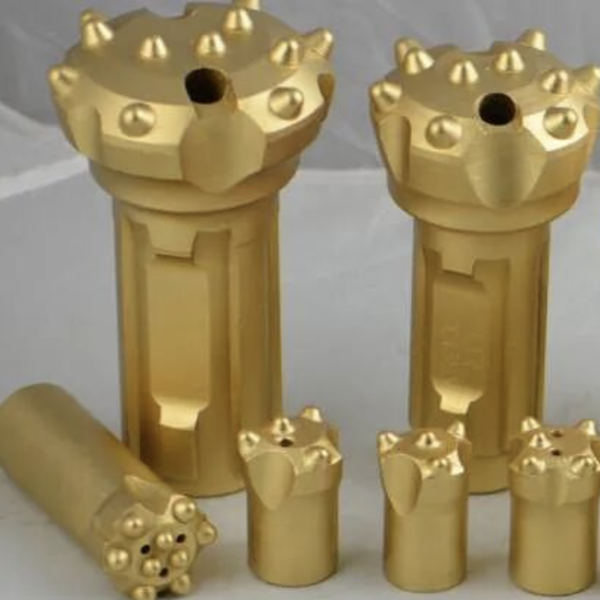
A standard DTH bit drills a hole slightly larger than its own diameter. A casing-while-drilling system uses an eccentric bit — a bit with an offset, swinging reaming wing that drills a hole larger than the casing diameter. The casing and casing shoe follow the bit down as it advances. The borehole wall is supported by steel casing from the moment it's cut. Collapse never gets a chance to happen.
When the casing reaches the target depth, the eccentric wing retracts — it folds back into the bit body. The retracted bit is then small enough to pull back through the casing, leaving the casing in place to hold the hole open. The technique turns the worst drilling conditions into a controlled, repeatable process.
The Operating Principle: Low, Low, High
Eccentric drilling has a different parameter philosophy than normal DTH drilling. Remember three things:
Low rotation speed. The eccentric wing is swinging out to cut an oversized hole. High RPM throws the wing out with more force than it needs and creates vibration. Keep the rotation slow and steady — the wing needs to swing, not flail.
Low feed pressure. The eccentric bit cuts an oversize hole with an offset geometry. Heavy feed drives the bit in too fast, the wing can't clear the cuttings, and the oversized annulus packs. Feed just enough to keep the bit in contact with the bottom — no more.
High return air velocity. The oversized annulus between the casing and the drill rods needs high air velocity to carry cuttings up and out. This is the critical parameter. If the return air slows down, cuttings settle, the annulus packs, and the casing jams. High air volume, always.
Reading the Ground
The formation dictates how fast you can go. Soft, competent ground allows steady penetration. Loose, fractured, or wet ground requires a lighter touch.
When you hit a particularly loose or heavily fractured zone, ease off the feed pressure and feed rate. The eccentric wing needs time to cut, and the casing needs time to follow. Drill a little, flush thoroughly, drill a little more. Pushing through a bad zone at full speed is how you pack the annulus and stick the casing.
The Retrieval Sequence That Makes or Breaks the Job
Pulling the center tool — the hammer and eccentric bit — back out through the casing is the most delicate part of the operation. Get it wrong and the eccentric wing won't retract, leaving the bit stuck in the hole with the casing.
The sequence:
Clean the hole thoroughly. Blow all cuttings out of the bottom and the annulus.
Stop rotation.
Lift the center tool slowly, just enough to raise it — the lifting force should be minimal, and the lift height should bring the eccentric wing's back edge into contact with the front of the casing shoe.
Reverse-rotate the string slowly while gently lifting. The reverse rotation swings the eccentric wing back into its retracted position.
When the tool starts to come up freely, the wing has retracted. Pull the center tool normally.
During the reverse rotation, be gentle. Too much reverse torque on a threaded string risks unscrewing a connection downhole — and that's a fishing job on top of everything else.
When the Wing Won't Retract
Sometimes the eccentric wing won't fold back because cuttings have packed around its pivot. The symptom: you reverse-rotate and lift, but the tool won't come free. Don't force it. Forcing a stuck eccentric wing is how you jam it permanently.
The fix: restore air flow, flush the hole again, and run the hammer briefly — a few seconds of impact shakes the packed cuttings loose from around the wing pivot. Then repeat the retraction sequence: lift, reverse-rotate, test. It usually comes free on the second or third attempt once the debris is cleared.
Why This Technique Matters
Casing-while-drilling with eccentric bits is the difference between a hole that gets completed and a hole that gets abandoned. In unconsolidated overburden, in fractured rock, in any formation where the walls won't stand on their own, conventional drilling means constant fighting — reaming, casing after the fact, lost holes, wasted days.
The eccentric system handles it in one pass. The casing follows the bit, the wall is supported continuously, and the tool retracts cleanly when the casing is set. It's not the right tool for every hole. But for the holes where the ground is fighting back, it's the tool that ends the fight.