Three Habits That Double Your Shank Adapter Life and Cut Your Replacement Bill in Half
Here's a number worth sitting with: a crew that goes through shank adapters every week is spending somewhere between three and five thousand dollars a year on a component that, with the right habits, should last months.
The problem usually isn't the adapter. It's the three things nobody bothered to check.
Match the Adapter to the Work, Not the Shelf
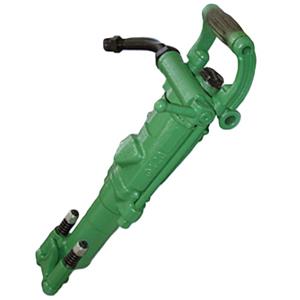
A shank adapter isn't universal. The dimensions, the alloy grade, the heat treatment — all of it is engineered for a specific class of rock drill and a specific range of hole diameters. Put a lightweight adapter on a rig that's punching large-diameter holes in hard rock, and you're asking a component designed for one stress envelope to absorb another. It won't end well.
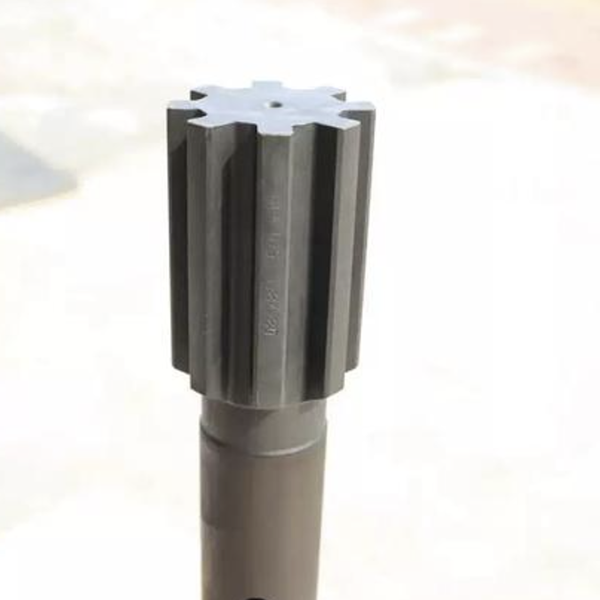
What you want is a shank adapter made from high-grade alloy steel with proper through-hardening. Surface hardness matters, but so does core toughness — if the heat treatment only skins the outside, the adapter will fatigue from the inside out. Look for adapters where the manufacturer specifies both the material grade and the heat treatment process, not just the part number.
And match the size. A common mistake I see is shops stocking one adapter size for convenience and running it across multiple rigs with different power classes. The adapter that works fine on a small jumbo will get pounded to pieces on a production drill. It's not about saving money on inventory — it's about not spending twice as much on replacements.
Lubrication Isn't Optional
The shank adapter slides inside a driver or guide bushing under thousands of impacts per minute. Without a consistent film of lubrication between those surfaces, you're running steel on steel at high frequency, and the friction heat builds fast. Once the surface temperature climbs past the tempering threshold of the alloy, the adapter starts softening at the contact zone — and from there, wear accelerates exponentially.
Air-oil mist lubrication through the drill's system is the standard, but it's only as good as the attention you pay to it. Watch the mist. If it thins out, if the oil level drops faster than expected, if the adapter comes out hotter than usual at the end of a round — something's off. Stop and check.
One practice that makes a real difference: when you finish drilling for the shift, don't just kill the power and walk away. Run the lubrication circuit for another thirty seconds to a minute. It flushes residual heat, coats the contact surfaces, and pushes out moisture that would otherwise sit on the steel and start corrosion overnight. Costs you nothing. Saves you plenty.
How You Start the Hole Determines How the Adapter Finishes
The first thirty seconds of every hole sets the tone. Rush the collar with too much impact and not enough feed, and the bit bounces. That bounce walks straight back up the drill string into the shank adapter, hammering the strike face and the splines with off-axis energy.
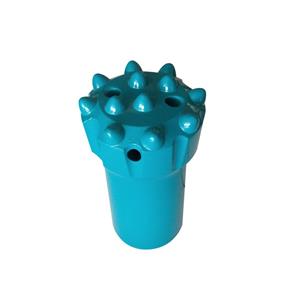
The right way: light pressure, low impact, keep the drill perpendicular to the face. Let the button bit establish its collar before you open up the impact. If the rig is angled even slightly — and on uneven ground it always is — correct it before you commit. Side loading a shank adapter by drilling off-angle puts bending stress through a component that was designed purely for axial percussion. That's how adapters bend. That's how they snap.
Between rounds, inspect. Check the strike face for mushrooming, check the splines for stepped wear, run your finger along the body for any ridge that shouldn't be there. A shank adapter that's starting to go will tell you — you just have to look. Swap it before it takes the driver or the piston with it, because those cost a lot more than the adapter ever will.