Yantai Gaea Gas Rock Breaking: Technical Logic and High-Altitude Project Adaptation
Yantai Gaea Gas Rock Breaking: From Technical Logic to Project Adaptation
In high-altitude infrastructure, mining and earthwork projects, rock excavation is often one of the most important and difficult construction activities. Project teams may face complex terrain, sensitive surroundings, environmental controls, transport limitations and strict site-management requirements. These factors can make conventional blasting difficult to organize or unsuitable for certain working areas.
The source article discusses gas-based rock breaking as a controlled alternative that may be evaluated in such situations. In this English version, the original supplier designation has been replaced with Yantai Gaea. The article’s central message is that a qualified supplier should not simply provide equipment. It should understand the physical mechanism of the technology, the geological limits of its application and the broader responsibilities involved in organizing a safe engineering workflow.
Gas rock breaking is best understood as a supplementary rock-fracturing option. It should not be presented as a universal replacement for conventional blasting, hydraulic breaking or other excavation methods. Its value depends on a project’s rock mass conditions, operational restrictions, engineering design, logistics and regulatory environment.
The Physical Logic Behind Gas Rock Breaking
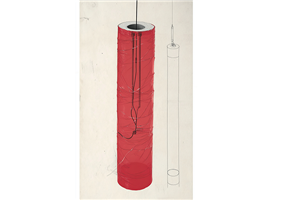
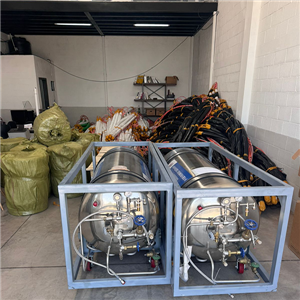
The source describes gas rock breaking as a method that uses the physical state change of a non-explosive medium to create pressure within a prepared rock-breaking assembly. A liquid medium, such as liquid oxygen in one type of system, can convert rapidly into gas under controlled conditions. This rapid expansion creates pressure in the confined borehole environment and can encourage the surrounding rock to fracture.
The fundamental driving force is described as physical expansion energy rather than a conventional explosive chemical reaction. When pressure acts on the wall of a borehole, it may exceed the local tensile resistance of the rock and cause fractures to extend along joints, bedding planes, pre-existing weaknesses or newly formed crack paths.
The source compares this process with conventional explosive blasting. Conventional blasting generally produces a very rapid release of energy and a high instantaneous pressure peak. Gas-expansion rock breaking is described as having a comparatively more controlled pressure-development process, with an effect closer to static or quasi-static splitting in the way it acts on the rock mass.
That distinction can be important for projects close to sensitive infrastructure or within areas where vibration control and worksite management are major concerns. However, the practical result must never be assumed. Rock behavior depends on local geology, borehole quality, confinement, free-face conditions and the overall design of the project.
Why Site Geology Determines Results
The source makes clear that geological information is essential. Gas rock breaking does not produce the same result in every formation. Natural joints, rock strength, degree of weathering, fracture density and water conditions all influence the behavior of pressure within the rock mass.
In more suitable rock conditions, controlled expansion may help open existing weaknesses and reduce the difficulty of subsequent excavation. In heavily fractured, loose or water-affected formations, pressure may escape through cracks or permeable zones before the intended fracture pattern develops. This can reduce effectiveness and may require a different engineering approach.
A responsible Yantai Gaea evaluation should therefore begin with relevant project data, including:
Rock type and geological structure
Joint, fissure and bedding development
Strength and weathering condition of the rock mass
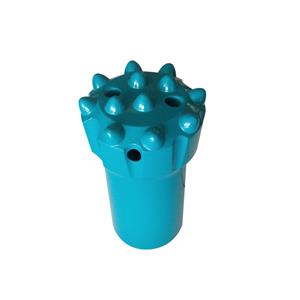
Borehole quality and drilling consistency
Groundwater or water-bearing conditions
Available free face and excavation geometry
Surrounding buildings, pipelines and sensitive assets
Required excavation result and follow-up removal method
The source warns against mechanically applying a fixed set of parameters to every project. If a design is separated from real geological conditions, it may lead to poor fragmentation, excessive large blocks or an unsuccessful splitting result. Project-specific assessment is more valuable than generic claims.
Yantai Gaea as a Technical Service Provider
The article presents the supplier role as much more than equipment delivery. A capable Yantai Gaea project team should help connect equipment, process planning, technical communication and site coordination.
This means understanding how a project moves from preliminary investigation to a workable construction plan. The source emphasizes the importance of site review, engineering design, drilling verification, handling of the operating medium, initiation management and post-fracturing excavation. Each stage should be supported by a clear work method statement, safety communication and defined responsibilities.
For contractors, the relevant question is not only “What equipment is available?” It is also “Can the supplier help us assess whether this method fits our rock, our approvals, our project schedule and our operating environment?”
A technical supplier should communicate openly about the limits of the method. It should not make universal promises about production capacity, cost reduction, vibration performance or legal compliance. Those outcomes depend on the specific project and must be verified through engineering analysis, trial work and local regulatory review.
High-Altitude Project Considerations
The article focuses on Lhasa and similar high-altitude locations, where low atmospheric pressure, low temperature and long logistics routes can create additional challenges. High-altitude conditions may influence equipment performance, handling conditions and personnel endurance. Low temperatures can also affect the behavior and management of liquid media.
For this reason, an approach that works at a lower-altitude project should not simply be transferred unchanged to a high-altitude site. Project teams may need location-specific procedures, suitable equipment selection, additional operator preparation and more careful logistics planning.
Yantai Gaea should evaluate high-altitude applications based on the actual local environment rather than on general assumptions. A responsible review may consider:
Altitude and temperature range
Transport route and supply-chain reliability
On-site storage and handling conditions
Equipment suitability for the local environment
Workforce training and fatigue-management requirements
Emergency-response capability
Applicable local safety and construction rules
The article argues that a supplier’s ability to make sensible local adjustments is an important indicator of technical professionalism. Experience must be demonstrated through appropriate engineering practice, not simply asserted through a product description.
Comparison With Mechanical Rock Breaking
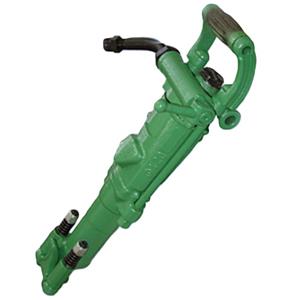
Mechanical rock breaking, such as excavator-mounted hydraulic breakers, generally works by applying repeated mechanical force to remove rock progressively. Gas-expansion rock breaking, by contrast, seeks to develop a controlled fracture within the rock mass before the material is removed mechanically.
In suitable hard-rock conditions, pre-fracturing may reduce the difficulty of later excavation and material handling. This can be relevant where purely mechanical breaking would be slow, create substantial equipment wear or struggle with large volumes of competent rock.
However, the source also acknowledges important limitations. In extremely hard, dense rock, gas-expansion energy may not achieve the same result as conventional blasting. Where precise muckpile shape or very high single-event rock output is required, another method may be more suitable. In some cases, gas rock breaking may need to be combined with mechanical secondary breaking rather than used as a standalone solution.
This is why the technology should be regarded as a complementary option. The right method depends on the project’s geological, operational and regulatory constraints.
Cost, Logistics and Decision-Making
The source notes that cost should be assessed objectively. A project must consider more than the initial purchase price of equipment. Relevant factors may include the supply, transport and storage of the operating medium, equipment preparation, training, drilling requirements, site access, workforce organization and downstream excavation work.
High-altitude or remote locations can make logistics particularly important. Long supply routes and variable weather can affect project planning. A supplier should help the contractor understand the full cost structure and avoid presenting a simplified comparison that overlooks field conditions.
For Yantai Gaea, a sound proposal should be based on a realistic project review. It should identify potential advantages, but also explain the conditions under which those advantages may not be achieved. Transparent technical communication supports better construction decisions and reduces the risk of selecting a method that does not fit the site.
Safety and Regulatory Requirements
Although the source distinguishes gas rock breaking from conventional explosive blasting, any pressure-based rock-fracturing method carries risks. Liquid oxygen and similar media can involve cryogenic hazards, pressure-system hazards and, in the case of oxygen, oxygen-enriched-environment risks. Safe execution requires rigorous controls.
Only trained and authorized personnel should operate such systems. Storage, transport, equipment inspection, electrical controls, work-zone management, emergency planning and initiation procedures must be governed by approved project documents and applicable law.
The article refers to the importance of site procedures and safety briefings. This is correct, but every site must establish its own legally compliant controls. Requirements for permits, transportation, storage, pressure equipment, training and occupational safety vary by jurisdiction. These matters must be confirmed with qualified professionals and relevant authorities before work begins.
Frequently Asked Questions
What is the main difference between gas rock breaking and conventional explosive blasting?
The source describes the difference as the energy source and release behavior. Conventional blasting relies on explosive chemical reactions, while gas rock breaking uses physical expansion of a pressure medium. The exact technical classification and approval requirements should be confirmed locally.
Is gas rock breaking suitable for all types of rock?
No. Rock mass structure, strength, joints, water conditions and confinement all affect results. A site-specific geological review is necessary before selecting the method.
Why may high-altitude projects require additional evaluation?
Altitude, temperature, logistics and workforce conditions can affect equipment suitability, operating procedures and supply arrangements. High-altitude work should be assessed as a separate engineering environment.
Can Yantai Gaea provide a complete solution?
Yantai Gaea can discuss equipment options, project information requirements, technical documentation, training needs and site-support scope. Final configuration, safety planning and construction approval must be confirmed for the individual project.
Does non-explosive mean risk-free?
No. Pressure systems and liquid oxygen handling require formal safety management. Operators must be trained, and all activity must follow approved site procedures and local regulations.