High-Position Drilling in Coal Mines: The Tooling That Makes or Breaks Gas Drainage
In underground coal mining, methane gas doesn't announce itself. It's colorless, odorless — and when it builds up in a goaf, you don't get a warning before it turns deadly. Every year, gas-related incidents remain one of the top threats to mine safety worldwide. And yet, the conversation almost always centers on the drill rig itself. What gets overlooked? The rock drill bits and drill rods that actually do the cutting.
Gas Drainage Isn't Just About Having a Rig — It's About Reaching the Right Spot
Here's the reality: after a coal seam is extracted, the roof strata collapse into the void, creating a goaf. That's where methane accumulates. If it isn't pulled out quickly, ventilation systems spread it to active working faces — and that's when things get dangerous.
High-position drilling solves this by boring upward from the entry into the roof strata, creating dedicated gas drainage channels before the methane ever reaches the work area. But here's the catch: these aren't simple vertical holes. You're drilling upward at angles through layered rock — sandstone, shale, sometimes fractured zones — often reaching 4 to 6 meters above the entry. The drill bit has to hold trajectory through transitions between soft and hard formations, and the drill rod has to transmit torque efficiently without excessive flex or wear.
If your tooling isn't right for the job, you'll know it fast. Bit wandering in fractured roof strata means the borehole misses the gas-rich zone entirely. Excessive rod wear from abrasive sandstone means mid-hole failures and lost tooling. And in an underground coal environment, a stuck drill string isn't just inconvenient — it's a safety hazard.
Why Diamond Directional Drill Bits Excel in High-Position Applications
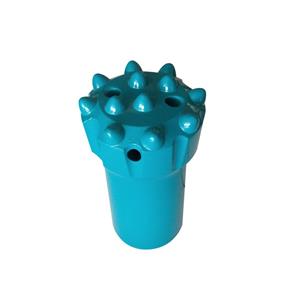
For roof-level gas drainage drilling, diamond directional drill bits have become the go-to choice for many operations. Here's why: unlike conventional PDC bits that can struggle with trajectory control in mixed formations, impregnated diamond bits maintain cutting efficiency across hard and soft transitions without sacrificing borehole straightness. When paired with a downhole mud motor and MWD system, they give you the directional precision needed to hit a gas accumulation zone that might only be a few meters thick.
The key spec to watch? Crown profile. A semi-round or parabolic profile tends to perform better in fractured roof strata, providing smoother torque response and reducing the kind of sudden loading that snaps rods. We've seen operations switch from flat-face bits to parabolic diamond bits and cut their rod failure rate by more than half — simply because the torque curve smoothed out.
Drill Rod Selection: Why Diameter Matching Matters More Underground
High-position drilling puts drill rods under stress that surface drilling simply doesn't. You're working at an angle, often in confined headroom, transmitting power upward through varying rock layers. If the rod diameter is too close to the bit diameter, cuttings can't evacuate properly — and in a gas drainage hole, blocked cuttings mean methane can't flow either.
A proper diameter differential — the drill rod being meaningfully smaller than the drill bit — gives you two things: reliable cuttings clearance and lower friction against the borehole wall. Underground, where every bit of resistance adds up, this translates directly to faster penetration rates and fewer rod changes. For long-hole gas drainage applications exceeding 100 meters, we generally recommend a diameter gap of at least 10-15 mm between bit and rod to maintain clean hole conditions throughout the full depth.
The Bigger Picture: Tooling Quality Determines Gas Drainage ROI
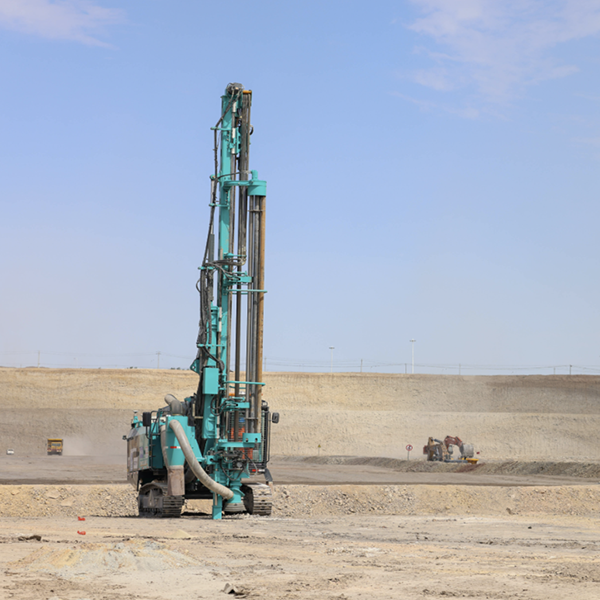
A high-position drill rig is a serious capital investment. But here's what mine operators learn fast: the rig itself isn't what determines whether your gas drainage program works. It's the consumables — the bits and rods — that make the difference between a hole that drains gas for years and one that collapses in months.
Cheap drill bits might save you a few dollars per hole on paper, but when a bit wanders off course and misses the gas zone, you've just drilled a hundred meters of useless hole. Factor in the lost time, the wasted rod wear, and the gas that's still sitting in the roof, and suddenly that "bargain" bit doesn't look so cheap.
The reality is that high-position gas drainage is precision work disguised as heavy industry. It deserves tooling that's built for the job — diamond directional drill bits for trajectory control, properly matched drill rods for smooth cuttings flow, and shank adapters that transfer energy without vibration loss. Get those three right, and your gas drainage program goes from a cost center to a safety asset.