Hydraulic Jumbo Drill Rod Failures: A Field Guide to What Your Threads Are Telling You
Three months into a tunnel project in western China, the site manager called me over to the jumbo. He was holding an R32 rod end, running his thumb over what used to be threads. The peaks were gone. Smooth as a wedding ring.
"How many meters on this one?" I asked.
"Maybe 400."
Four hundred meters. That's about half of what those rods should deliver under decent conditions. Something was eating his steel, and it wasn't just the rock.
If you run a hydraulic jumbo — tunneling, drifting, whatever the heading — you've probably seen something similar. A rod that wore out too fast. A thread that snapped clean at the root. A bend you couldn't straighten no matter what you tried.
Here's the thing about jumbo drill rod failures: they almost always leave clues. The trick is knowing which failure mode you're looking at, because the fix for each one is different. Let's walk through the five most common ones, starting with the one that kills more rods than anything else.
1. R32 Thread Wear — The Slow Death
This is the big one. The one you'll see most often.
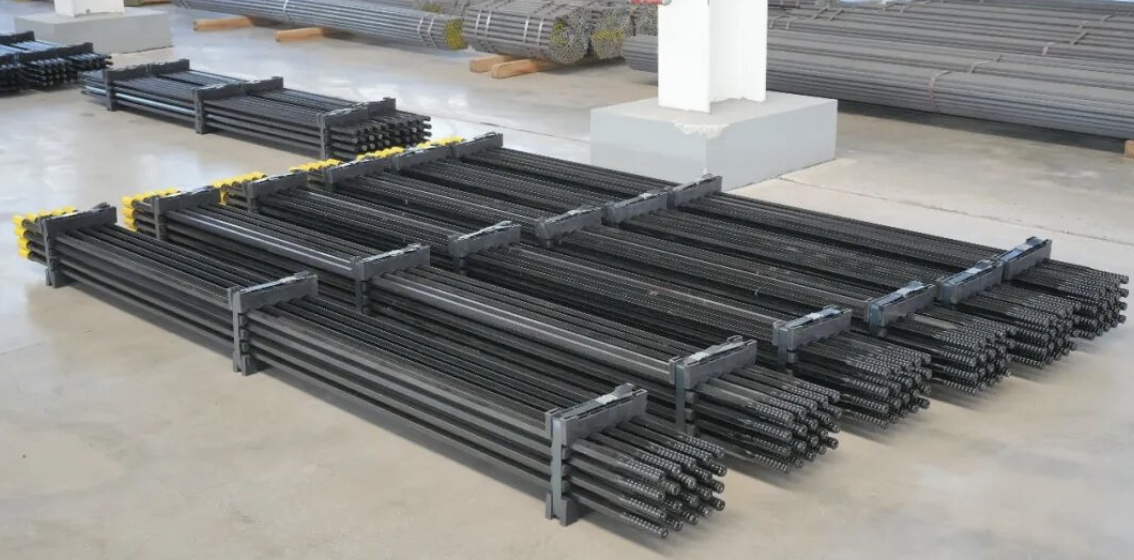
R32 thread wear on jumbo rods happens through two mechanisms that tag-team each other. It starts as fretting wear: microscopic movement between the rod thread and the bit, even when everything's torqued tight. The surfaces rub, tiny particles come off, and the fit gets just slightly looser.
Once that gap opens up — even a fraction of a millimeter — fretting gives way to impact wear. Now every blow from the hammer is slamming the thread faces together instead of transmitting cleanly through them. The wear rate jumps dramatically.
There's a third factor most people miss: heat. Under the combined shock and rotation of a high-power hydraulic drifter, the thread contact points can overheat locally. You're talking about enough temperature to soften the case-hardened surface, drop its wear resistance, and in severe cases create tiny melt pits. Those pits become crack initiators. Once a crack starts at a melt pit, the clock is ticking.
What you'll see in the field: thread crests getting thinner, flattening out toward the bit end. The first few threads take the worst of it. If you catch it early, you might get more life out of the bit end of the rod by rotating your inventory. If you don't, the thread profile degrades to the point where the bit fit gets sloppy, and impact wear finishes the job in a hurry.
2. R32 Thread Fracture — The Sudden One
Thread fracture is less common than wear, but when it happens, it stops your shift cold.
Metallurgical analysis tells a clear story. If you take a failed R32 section, boil it in hydrochloric acid to strip the oxides, and examine it under magnification, two zones light up: the thread root and the second thread from the face. These are where the fatigue cracks start, almost without exception. They're also where you'll find those melt pits I mentioned earlier.
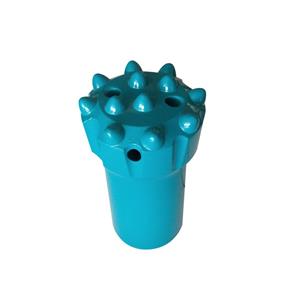
Why these two spots? Because when a button bit or reaming bit is working the face, it loads the R32 thread zone with everything at once: tensile stress from the pull of the feed, torsion from rotation, bending from hole deviation, and impact from the piston. The thread root at the bit connection is the narrowest cross-section carrying all of that. The second thread is where the stress wave reflects and concentrates. Simple physics.
There's a quality-control angle here too. If you're running bits and rods from different manufacturers — which happens all the time on job sites — the thread tolerances may not match. Too much exposed thread beyond the bit shoulder means the load distribution across the threads is uneven. The first engaged thread takes a disproportionate share, fatigues faster, and fails earlier than it should.
The fix isn't always "buy better rods." Sometimes it's "match your suppliers."
3. T38 / R38 Shank-End Connection Issues
Here's one that should make you stop and think.
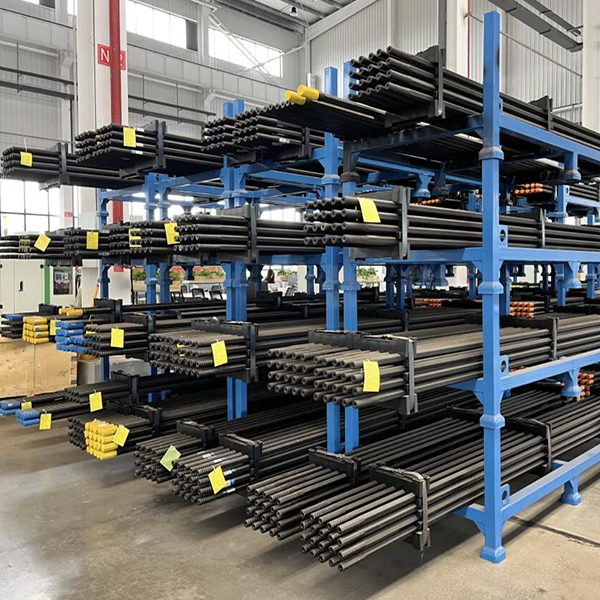
The R32 end of a jumbo rod is where the action is — it takes the abuse from the bit and the rock. The opposite end, where the rod couples to the shank adapter via T38 or R38 threads, lives a much easier life. It rarely fails. Wear there is minimal compared to the business end.
So if you are seeing fractures or abnormal wear at the T38/R38 connection, something is off at a system level. Don't just swap the rod and keep going.
Check three things:
Feed pressure on the jumbo. Too much or too little changes how the threads engage.
Hammer impact and rotation settings. Mismatched parameters send weird stress waves through the string.
Ground conditions. A sudden change in rock hardness or fracture patterns can overload connections that were fine yesterday.
The T38/R38 end is your canary. When it starts singing, the problem isn't the steel — it's the setup.
4. Rod Body Fracture — The Rare One
Rod body fractures are uncommon enough that when you see one, you should assume an external cause before blaming the metallurgy.
Look for: surface damage from handling or storage, gouges from contact with sharp rock, or corrosion pits that acted as stress concentrators. Also worth asking: did someone use the rod as a pry bar? (It happens more than anyone admits.) A rod body that snaps mid-span almost always has a story that started before the break.
5. Rod Bending — The Geological Problem
When a rod bends near the R32 end and won't straighten, the cause is usually geological.
Rock fissures, abrupt changes in formation hardness, or hole deviation can grab a rod and put a bending moment on it that steel wasn't designed to take. Once it yields, it's done. You might get it back into the hole, but it'll never drill straight again, and you're asking for a fatigue failure on the next shift.
The fix here isn't a better rod — it's better hole alignment discipline. Watch your collaring. Read the ground. If the formation is fractured, ease up on the feed. A bent rod is a symptom of the hole, not the steel.
The Bottom Line
Jumbo drill rod failures aren't random. Each failure mode points to something specific: a tolerance issue, a parameter setting, a ground condition, or a handling problem. Learn to read the damage, and you stop throwing rods at the problem and start fixing what's actually wrong.
Thing is, the rod is rarely the root cause. It's just the part that tells you first.