Yantai Gaea Liquid Oxygen Rock Splitting Technology: Principles, Applications and Selection Guide
Modern construction, mining, tunneling and municipal projects often encounter rock-breaking conditions where conventional blasting is restricted or unsuitable. Dense urban surroundings, pipeline corridors, vibration-sensitive structures, enclosed work areas and environmentally sensitive locations may all require a more controlled approach to rock fragmentation.
The source article describes liquid oxygen rock splitting as a controlled rock-breaking solution for these conditions. In the article’s framing, Yantai Gaea provides equipment and process-support services that can be matched to the specific geological and operating conditions of a project. The key point is that rock-breaking work should not be treated as a one-size-fits-all product purchase: rock hardness, joint development, hole layout, working space, temperature and nearby assets all affect whether a solution is appropriate.
Basic principle of liquid oxygen rock splitting
Liquid oxygen is stored at very low temperature and has a strong tendency to expand after controlled conversion to gas. In a rock-splitting application, the system uses this rapid pressure development inside a prepared borehole or purpose-designed splitting assembly. The pressure acts on the rock mass and encourages fractures to initiate or propagate along the rock’s natural weaknesses.
The source article presents this as a physical pressure-driven rock-fracturing process rather than a conventional explosive chemical-blasting method. The intended outcome is controlled cracking and separation of the rock, allowing excavation teams to continue work where conventional blasting may face practical or regulatory limitations.
This does not mean that every project will produce the same fragmentation pattern or productivity result. Rock structure matters. Massive, hard rock, layered formations, fractured rock and weathered formations can all respond differently. Site trials, engineering assessment and disciplined process design are therefore essential before large-scale deployment.
Why controlled rock-breaking methods are considered
For many projects, the central issue is not simply whether rock can be broken, but whether it can be broken while managing vibration, flyrock concerns, access limitations, nearby structures and project scheduling. The article identifies several application contexts where liquid oxygen rock splitting may be considered:
Mining and quarry operations
Road, railway and utility construction
Tunnel and underground excavation
Foundation and municipal earthworks
Rock removal in areas where conventional blasting is restricted
Projects close to buildings, pipelines or other sensitive infrastructure
The value proposition described in the source is the ability to pursue a more controlled non-explosive rock-breaking workflow. In practice, the suitability of any method must be confirmed against local regulations, project approvals, geological conditions and the site safety plan.
Equipment and process matching
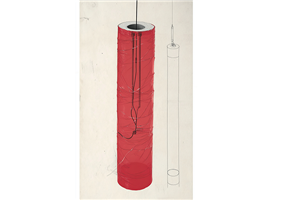
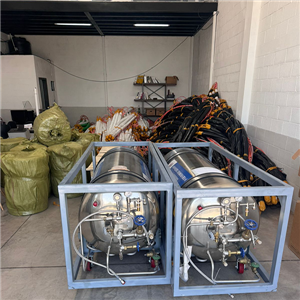
A liquid oxygen rock-splitting solution is more than a single device. The article emphasizes that a practical project package may include splitting tubes, supporting equipment, pressure-control components, operational guidance and personnel training. These elements need to work together rather than being selected independently.
For Yantai Gaea, an engineering-oriented approach would begin with the project’s actual conditions. Important information typically includes:
Rock type and compressive characteristics
Rock joints, fissures and bedding planes
Borehole diameter, depth and spacing
Excavation face and available free surface
Ambient temperature and weather exposure
Site access and equipment logistics
Nearby structures, pipelines and protected areas
Required fragmentation size and excavation schedule
This information helps determine whether a controlled liquid oxygen rock-breaking approach is feasible and how the equipment configuration should be evaluated. A small-scale trial may be appropriate before a full deployment decision is made.
Advantages discussed in the source article
The source article highlights several reasons why contractors may investigate liquid oxygen rock splitting. Liquid oxygen is widely used in industry, and the article characterizes its supply as relatively accessible. It also describes the method as avoiding the residue associated with conventional explosive blasting and as potentially offering lower vibration and noise in suitable conditions.
Those characteristics can be attractive for projects with environmental, community or operational constraints. For example, a contractor working close to existing infrastructure may need to prioritize controlled fracturing behavior over maximum instantaneous rock output. Similarly, an urban excavation project may be focused on minimizing disruption rather than applying a standard open-area blasting routine.
However, advantages should never be treated as universal guarantees. Actual performance depends on the rock mass, drilling quality, free-face conditions, operational discipline, system configuration and local project controls. Yantai Gaea should evaluate technical applicability on a site-specific basis rather than making fixed promises about cost, output, vibration reduction or fragmentation results.
Design should follow geology, not assumptions
The article repeatedly points to customization as an important consideration. Rock is not uniform, even within the same project. One area may have highly competent rock, while another may contain natural cracks, weathered layers or water-bearing zones. A configuration that performs well in one rock section may not be suitable for another.
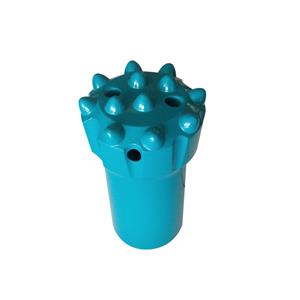
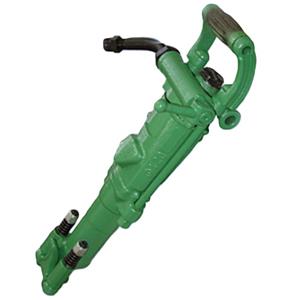
A practical evaluation should therefore consider borehole geometry, tube or assembly dimensions, pressure-management requirements and the expected fracture direction. Drilling quality is especially important because poorly positioned or inconsistent holes can reduce controllability and affect the intended rock-breaking result.
The article also notes that low-temperature conditions can affect liquid oxygen handling. Where projects operate in colder climates or changing seasonal temperatures, equipment storage, transfer conditions and operating procedures should be reviewed carefully. This reinforces the need for trained personnel, documented site controls and equipment matched to the working environment.
Supplier capability and project support
When selecting a liquid oxygen rock-splitting provider, the article suggests looking beyond the price of individual components. Contractors should evaluate whether the supplier can provide a complete support package, including appropriate splitting equipment, technical documentation, safe-use guidance, training and project-oriented assistance.
For Yantai Gaea, this means focusing on the entire work cycle: preliminary project assessment, configuration discussion, equipment selection, operator preparation and continuing technical support where agreed. The goal is not simply to supply equipment, but to help convert a project’s rock-breaking requirement into a workable, controlled and compliant process.
A responsible supplier should also be transparent about the boundaries of its role. Project owners and contractors remain responsible for regulatory approvals, site conditions, engineering decisions and safe execution. Any local licensing, transportation, storage or operational requirements for liquid oxygen and pressure-related systems must be verified with the relevant authorities and qualified professionals.
Safety and compliance considerations
Although the source article describes liquid oxygen rock splitting as safer than conventional explosive blasting, liquid oxygen and pressure-based systems still require rigorous safety management. Liquid oxygen presents cryogenic hazards and can create oxygen-enriched environments. Equipment handling, storage, transfer, electrical controls, exclusion zones, static-control measures and emergency planning must be governed by approved procedures.
Only trained and authorized personnel should operate or initiate such systems. Project-specific safety distances, controls and sequencing must be established by qualified professionals under the applicable regulations and site plan. A company should never assume that an approach suitable for one mine, road project or quarry will automatically satisfy the requirements of another location.
Frequently asked questions
How does liquid oxygen rock splitting differ from conventional blasting?
The source describes it as a controlled pressure-based rock-fracturing method that does not rely on the same conventional explosive chemical reaction pathway. Its aim is to create cracks and separation in rock through managed pressure development. The technical, legal and safety suitability must still be assessed for each site.
What can Yantai Gaea provide?
Depending on the project scope, Yantai Gaea can discuss system configuration, splitting-related equipment, supporting components, technical documentation, operator training and process-support requirements. Final scope should be confirmed through project-specific engineering review.
Where can this approach be applied?
Potential scenarios described in the source include mines, quarries, road and railway construction, tunnel works, municipal excavation and projects with restricted conventional blasting conditions. Applicability depends on geology, drilling conditions, access, regulatory approval and trial results.
What information should a contractor prepare?
A productive technical discussion should include rock type, hardness, fracture characteristics, borehole dimensions, operating temperature, jobsite environment, nearby assets and the intended rock-breaking objective. With this information, Yantai Gaea can evaluate whether a suitable controlled rock-fracturing configuration may be developed.
Liquid oxygen rock splitting can offer an additional option for projects seeking a controlled approach to rock breaking. Its successful use depends on realistic engineering assessment, appropriate equipment selection, trained operators and strict site safety management. Yantai Gaea’s role is to help translate these requirements into a project-specific solution while recognizing that performance, compliance and safety must always be confirmed at the actual jobsite.