Matching Drill Rods and Drill Bits: Diameter Difference Is the Key
In drilling operations, the drill rod and drill bit work together like a “golden pair.” The way they are matched directly affects drilling efficiency, borehole quality, tool life, and jobsite safety. Many people assume that as long as the drill rod and drill bit can be connected together, the combination is acceptable. In reality, there is much more to proper matching than simply making the connection fit.
Among all matching factors, the most important one is the diameter difference between the drill rod and the drill bit.
What Is Diameter Difference?
Simply put, diameter difference refers to the difference between the diameter of the drill rod and the diameter of the drill bit.
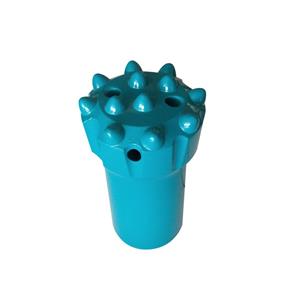
The final borehole diameter is not determined by the drill rod. It is determined directly by the drill bit diameter. In other words, the size of the hole depends on the size of the bit that cuts it.
According to basic drilling practice, especially in horizontal drilling applications such as coal mine water detection and gas exploration or drainage drilling, there is one very important principle:
The diameter of the drill rod must be smaller than the diameter of the drill bit.
This principle is essential for both smooth drilling and safe operation.
Why Is Diameter Difference So Important?
There are two key reasons why diameter difference matters so much in drilling operations.
1. It Helps Remove Rock or Coal Cuttings Smoothly
During drilling, the bit continuously breaks rock or coal, generating a large amount of cuttings and debris.
If the drill rod diameter is too close to the drill bit diameter—or even equal to it—there will be very little clearance between the rod and the borehole wall. In that case, cuttings may become trapped in the annular space between the rod and the hole wall and cannot be discharged smoothly.
Over time, this can lead to several serious problems:
reduced drilling speed,
poor hole cleaning,
increased drilling resistance,
bit sticking,
rod jamming,
higher risk of underground accidents.
A reasonable diameter difference provides enough space for cuttings to move out of the hole, helping maintain continuous and efficient drilling.
2. It Reduces Friction and Stress on the Drill Rod
As the drill rod rotates and advances inside the borehole, it inevitably rubs against the hole wall.
If the rod diameter is too large, the contact area between the rod and the borehole wall increases, which leads to:
greater friction,
higher resistance,
more rod wear,
increased mechanical stress.
A proper diameter difference leaves enough clearance between the rod and the borehole wall, which helps:
reduce friction loss,
lower torque load,
minimize bending stress,
prevent deformation or breakage of the drill rod.
This is important not only for protecting the drilling tools, but also for reducing downtime and avoiding unnecessary economic loss caused by tool failure.
Bigger Diameter Difference Is Not Always Better
Although diameter difference is critical, it does not mean that a larger difference is always better.
There is no single fixed standard that applies to every drilling condition. The correct diameter difference should be selected according to the actual working environment, drilling method, and formation characteristics.
Different drilling fields and applications may require different matching solutions.
For example, in coal mine drilling, common drill rod and drill bit combinations based on long-term field experience include:
Φ34 mm drill rod + Φ55 mm drill bit
Φ42 mm drill rod + Φ65 mm drill bit
Φ50 mm drill rod + Φ75 mm drill bit
These combinations provide a practical diameter difference that helps ensure smooth coal cuttings discharge while also protecting the drill rod during operation.
Diameter Difference Is Important, but Not the Only Factor
While diameter difference is the primary factor in drill rod and drill bit matching, it is not the only one.
Several other details must also be considered:
1. Connection Size Must Match
The joint dimensions of the drill rod and drill bit must be fully compatible. If they do not match correctly, it may cause unstable connection and poor load transfer.
2. Thread Type Must Be Compatible
The thread type must also match exactly. A mismatch can lead to:
abnormal torque transmission,
stress concentration,
premature thread wear,
joint breakage.
3. Tool Strength Must Match Formation Conditions
The strength, wear resistance, and material quality of the drill rod and drill bit should also be matched to the formation being drilled. If the tool specification is not suitable for the geological condition, premature wear or failure may occur even if the diameter difference is reasonable.
Scientific Matching Is the Key to Better Drilling
Matching a drill rod and drill bit is not just a matter of choosing corresponding sizes. It is a scientific selection process based on:
drilling technology requirements,
working conditions,
formation characteristics,
cuttings removal needs,
tool durability.
Understanding the importance of diameter difference is the first step toward making the right choice.
Conclusion
The relationship between the drill rod and drill bit is one of the most important factors in drilling performance. Among all matching considerations, diameter difference is the key.
A proper diameter difference helps:
improve cuttings discharge,
reduce friction and tool stress,
protect the drill rod,
increase drilling efficiency,
improve borehole quality,
reduce safety risks.
When combined with correct connection matching and formation-based tool selection, the right drill rod and drill bit combination can fully Play the value of this “golden pair” and provide reliable support for all kinds of drilling operations.