Mining Blasting Methods: What the Operation Must Control Before Breaking Rock
Mining blasting is one of the traditional methods used to break rock and ore. It can create a working face, reduce oversized material, and prepare broken rock for loading and transport.
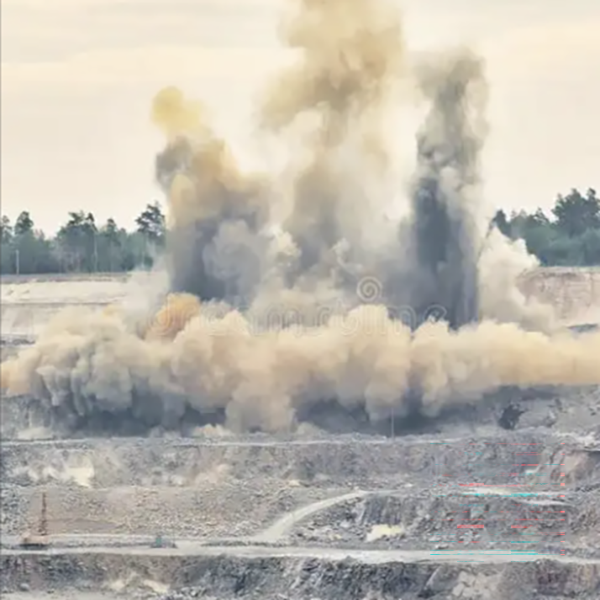
But blasting performance is never determined by explosive quantity alone. The result depends on the rock formation, drilling pattern, blast sequence, site restrictions, and the quality of the safety controls around the operation.
For mining companies evaluating a rock-breaking method, understanding these factors is the first step.
How conventional mining blasting works
Conventional blasting uses the chemical reaction of an explosive. An oxidizer and a reducing agent react rapidly, producing heat and gas. The resulting pressure wave acts on the surrounding rock and creates fractures.
The objective is not simply to produce the strongest possible shock. A workable blast must also deliver:
Acceptable fragmentation
Controlled movement of broken rock
Manageable fly-rock risk
Limited vibration
A practical loading and hauling condition
Compliance with local regulations
Too much energy can create excessive fines, fly rock, vibration, and damage outside the intended zone. Too little energy can leave large boulders and require secondary breaking.
Main categories of mining blasting
The correct method depends on the mining layout and the purpose of the blast.
Open-pit mining blasting is used to form benches, break ore for transport, and fragment waste rock for handling or disposal.
Common approaches include:
Deep-hole blasting for large benches and production volumes
Shallow-hole blasting for smaller rock-breaking tasks
Bench blasting, where holes are arranged along a step or face
Throw blasting, where the blast is designed to move material away from the face
Underground mining blasting is used to create stopes, drifts, and other excavated areas. It can also break ore and waste rock for underground transport.
Underground work may use deep-hole or shallow-hole patterns, staged blasting, throw blasting, and controlled filling-related operations. The available space, ventilation, ground support, and nearby infrastructure make underground blasting substantially different from open-pit work.
Support-related blasting can be associated with ground-support work, such as preparing locations for rock bolts or support structures. These operations require particularly careful control because personnel and support systems may be close to the work area.
Other blasting applications can support mine development, drainage, and ventilation work.
The parameters that affect the result
A blast design normally considers several connected variables.
Energy source: The type, specification, and quantity of the explosive affect energy release and fragmentation. More charge does not automatically mean better fragmentation.
Hole geometry: Hole depth, diameter, spacing, burden, and orientation determine how energy is distributed through the rock mass.
Initiation and sequence: The timing and order of initiation influence burden movement, vibration, and the final size distribution.
Rock conditions: Hardness, joints, bedding, water, and natural fractures may change the result even when the drilling pattern remains the same.
These variables should be evaluated together. Changing only one parameter without understanding the others can create an unstable result and make performance difficult to repeat.
Safety is part of the method
Mining blasting is a high-risk operation and must be managed by trained, authorized personnel under applicable regulations.
The basic safety framework includes:
Inspecting and securing the blast area before work begins
Establishing controlled access and exclusion zones
Using approved blasting materials and equipment
Ensuring personnel are trained in the relevant procedures
Controlling loading, transport, storage, and handling
Maintaining communication during the operation
Inspecting the area after the blast before re-entry
The exact distances, approvals, equipment, and procedures depend on local law and site conditions. A blasting method should never be selected only by comparing theoretical energy output.
Where a non-explosive method may fit
Not every rock-breaking project needs a conventional explosive blast.
Near buildings, highways, railways, power lines, historical structures, or environmentally sensitive areas, the main problem may be vibration, fly rock, permitting, or restricted access.
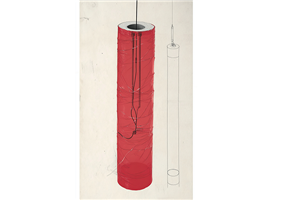
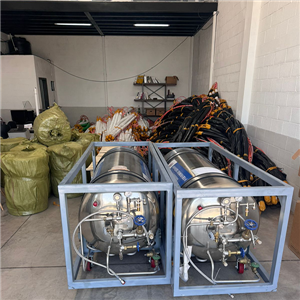
For these conditions, Gaea Rock's O2 Gas Energy Rock Splitting System offers a different approach. It uses liquid oxygen and a combustible absorbent inside a fracturing tube. After ignition, the liquid oxygen changes phase and expands approximately 860 times, creating pressure that fractures the rock.
The system is not an explosive. It is a physical phase-change rock-breaking method.
Compared with conventional blasting, the O2 system is designed for applications where operators need:
Much lower shock-wave intensity
Minimal vibration
No traditional explosive storage
Standard cargo export without potassium perchlorate
Lower disturbance near sensitive structures
Controlled rock splitting in restricted work areas
The system still requires proper drilling, tube installation, soil stemming, remote ignition, exclusion controls, and trained operation. “Non-explosive” does not mean “no safety procedure.”
Conventional blasting or O2 rock splitting?
Conventional blasting remains appropriate for many large-scale mining operations where regulations, site layout, production planning, and blast controls support its use.
An O2 rock splitting system may be better suited to locations where vibration, fly rock, explosive licensing, or transport restrictions create a bottleneck.
The practical question is not which method is universally better. It is which method fits the rock volume, surrounding assets, site access, safety requirements, and project schedule.
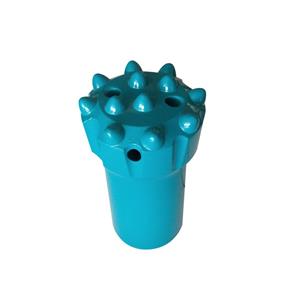
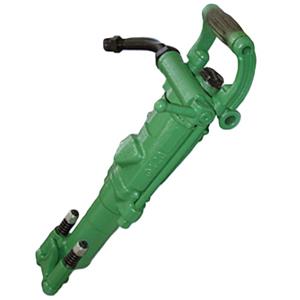
Gaea Rock supplies O2 rock blasting systems, fracturing tubes, liquid oxygen equipment, and related drilling tools for mining, quarrying, construction, infrastructure, and sensitive-area rock-breaking projects.