Mining Drill Rod Failures: Why Your String Is Only as Good as Its Weakest Thread
A friend of mine runs a sublevel stoping operation in Australia. Last year he showed me his rod consumption log — 320 rods over six months, about double what the mine next door was burning through. Same rock. Same rigs. The difference came down to one thing: nobody on his crew had been taught to read failure patterns.
"You just bin 'em when they stop working," he said.
And that's the problem. Mining drill rods — the kind you run in strings of ten, fifteen, sometimes twenty on a face drilling rig — don't usually fail without warning. They telegraph the problem. You just have to know what you're looking at.
Unlike tunneling jumbos, where a single rod takes the full brunt of the hammer, mining rig rods share the load across a long string. That changes the failure profile. Some failure modes you see on jumbos barely register in mining. Others, like internal thread wear and bending, become dominant because the string amplifies small defects across every coupling.
Here are the five failure types that show up on mining rigs, ranked by how often they actually happen underground.
1. Thread Wear — Internal Threads Go First
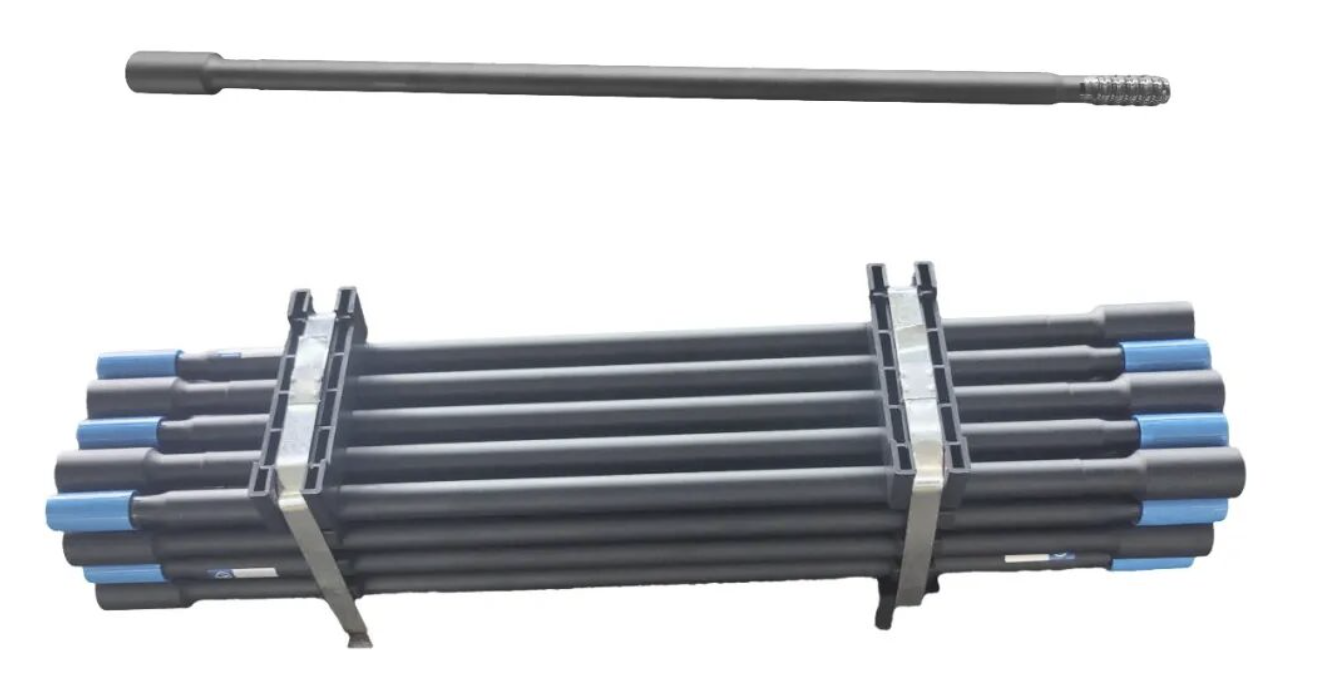
This is the number one killer, and here's the detail that surprises people: on mining rods, the internal thread (the box end) usually wears out before the external thread (the pin end).
Four things control how fast your threads wear:
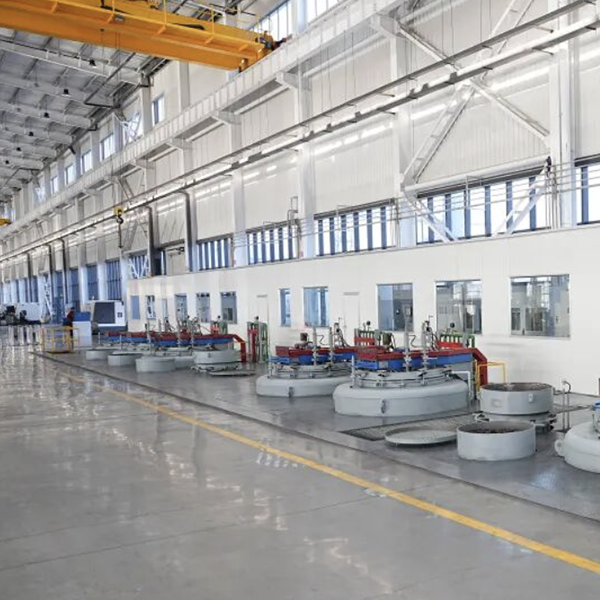
Heat treatment quality. This is the big one. Case depth, surface hardness, and the gradient between the hard case and the tougher core determine how long threads hold their profile. The ideal microstructure — high-carbon martensite at the surface, lower bainite in the core, with a wide, gradual transition zone between them — isn't easy to achieve. Cheap rods skip the nuance.
Thread finish and fit. Surface roughness on the thread flanks acts like sandpaper under load. Tight tolerance control on thread geometry means load distributes across more thread faces instead of concentrating on two or three.
Ground conditions. Fractured rock grabs rods. Hole deviation puts bending loads through the couplings. Every time a rod binds, the threads at the nearest coupling take a beating.
Maintenance habits. This one's operator-driven and entirely fixable: running dull bits increases hole deviation, which accelerates thread wear. Mixing old rods with new ones in the same string — where worn threads sit next to fresh ones — concentrates load on the tightest coupling. And using rods from different suppliers, whose thread tolerances may not match, is basically paying for accelerated wear.
Internal thread wear matters more on mining strings because every rod-to-rod coupling has a box end. Twenty rods means nineteen internal threads in the load path. If just one goes sloppy, the whole string starts eating itself.
2. External Thread Root Fracture — The Fatigue Limit
Most rods die from wear before they reach the fatigue limit of their threads. But when a rod keeps going past its service life without visible wear, the next thing to fail is usually the external thread root.
The thread root is a natural stress concentrator. Every impact from the hammer sends a stress wave through the string, and at each coupling, the wave reflects and superimposes. The thread root at the pin end sees peak tensile stress cycling with every blow.
Heat treatment determines the fatigue threshold. A rod with the right bainite/martensite transition can handle millions of cycles. One with a sharp hardness gradient or surface decarburization will crack early.
Operational factors push it over the edge: frequent rod binding, hole deviation, and dull bits all add bending stress on top of the axial impact. What would have been a pure fatigue crack turns into a combined-stress failure, and the rod snaps sooner than the meterage would predict.
3. Internal Thread Undercut Fracture
Every internal thread has an undercut — the relief groove at the base of the threaded section. It's there by design, but it's also the thinnest cross-section in the coupling.
Two things make the undercut fail. One: the external thread of the mating rod loads that zone with every blow, and being thin, it sees higher stress. Two: if the external surface of the box end wears thin from outside abrasion, the undercut becomes even weaker.
The practical fix is to look for rods with an extended internal thread design. A longer threaded section spreads the load over more thread area, reducing peak stress at the undercut. It's a simple geometry change that makes a measurable difference in string life.
4. Rod Body Fracture — The Quality Control Red Flag
Body fractures are rare on mining rods. When one happens in isolation, it's usually a material defect — an inclusion in the steel, a rolling flaw, a handling gouge that became a crack initiator.
But if you see a batch of body fractures, that's different. That's a heat treatment problem. Either the quench was uneven, the tempering was off, or there's a systematic issue with the steel grade. Don't just replace the broken rods — pull samples from the batch and send them for metallography. A batch of body fractures is telling you something about your supplier, not your operation.
5. Rod Bending — The String Amplifier
On a tunneling jumbo, a slightly bent rod is annoying. On a mining rig running 15-rod strings, it's catastrophic.
A bend that you'd barely notice on a single rod gets multiplied at every coupling. By the time you're ten rods deep, the string is whipping inside the hole, wearing every thread face, loading every coupling unevenly, and drilling a hole that isn't straight. That crooked hole then bends the next string even worse.
This is why straightness and concentricity are non-negotiable quality metrics for mining rods. A good manufacturer straightens the raw bar stock before machining, again after heat treatment (which always causes some distortion), and checks every rod before it ships. Storage and transport matter too — rods stored on uneven racks or shipped without proper support can arrive with a permanent set before they ever see a hole.
The Pattern That Saves Money
Here's the thing I've noticed across mining operations that actually track their rod failures: the ones with the lowest cost per meter drilled aren't the ones buying the most expensive rods. They're the ones who look at every failed rod and ask, "What was this one trying to tell me?"
Sometimes the answer is "buy better rods." More often, it's "sharpen your bits more often," "stop mixing suppliers in the same string," or "your heat treater has a problem with batch consistency."
The rod breaks. The rod doesn't lie.