Operating Procedures and Product Overview of Extension Drill Rods
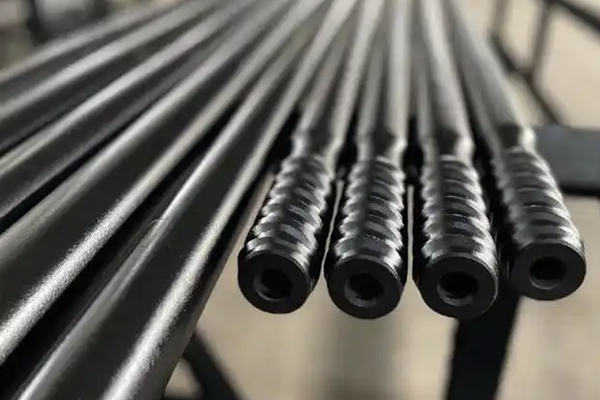
An extension drill rod is a steel tube with a threaded tail end. It is mainly used to connect surface drilling equipment to downhole drilling or reaming tools, or to bottom-hole assemblies. Its core function is to deliver drilling fluid to the bit and, together with the bit, support lifting, lowering, and rotation of downhole tools. During operation, drill rods are subjected to significant torque, torsion, bending forces, and vibration. High-quality drill rods can be reused repeatedly throughout drilling operations.
Standard Operating Procedures
Hole alignment
Direct handling of the rod is not required at this stage, but the hole position must be aligned accurately to prevent rod binding and ensure smooth follow-up operations.Lowering the drill rod
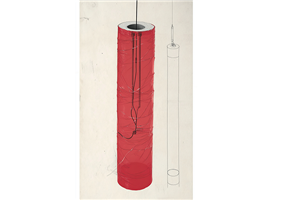
Using the weight of the rod and drilling assembly to overcome wall friction and drilling-fluid buoyancy, the rod is extended into the hole. The correct sequence is: lower the outer rod into position first, then extend the adjacent inner rod from inside the outer rod. Follow the principle of completing each step one by one, from outside to inside.Drilling operation
Apply appropriate feed pressure and rotate forward at a suitable speed, balancing drilling efficiency with borehole wall quality.Soil discharge and bottom closing
After drilling is completed, carry out spoil discharge. During bottom closing, operate smoothly to avoid rod binding and protect both the equipment and the drill rod.Special Precautions
When drilling with friction-reduction drill rods, strictly follow these five fixed steps in full: hole alignment, rod lowering, drilling, rod lifting, and soil discharge with bottom closing. Do not skip steps, change step order, or add extra steps arbitrarily. This is essential for standardized and safe operation.
The drill rod is a core component in drilling operations. It plays the key role of transmitting rig torque to the drill bit, enabling effective drilling progress. In borehole environments, the rod must withstand complex combined stresses, including tension, compression, torsion, and bending. Its quality directly affects drilling efficiency, safety, and operational stability, making it a critical piece of equipment for successful project execution.