Product Overview and User Guide for Geological Spiral Drill Rods
Product Overview and User Guide for Geological Spiral Drill Rods
1. Product Overview
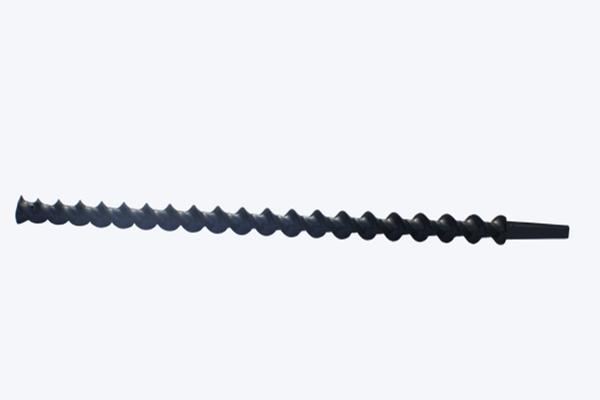
Geological spiral drill rods are developed from high-torque geological drill rod designs and are manufactured by welding either single-helix or double-helix flights using a prestressed winding process. The rod body is made from high-quality alloy steel tubing specifically designed for geological drilling, while the joints are made from premium alloy structural steel. After vacuum quench-and-temper heat treatment, both fatigue resistance and shear strength are significantly improved.
The product uses advanced friction welding technology, offering high bending strength and highly reliable weld integrity. The full production process is carried out with advanced CNC equipment, ensuring both high manufacturing efficiency and stable, consistent quality. This enables the strict straightness required for deep-hole drilling.
Its ultra-low helix flight design provides high torque, rapid cuttings discharge, good borehole shaping, and reduced risk of sticking, making it especially suitable for deep-hole drilling in soft coal seams and coal-like rock formations where water-assisted cuttings removal is less effective.
In terms of size compatibility, geological spiral drill rods with diameters of 73 mm and below can be directly matched with various fully hydraulic drilling rigs. Drilling and rod replacement can be completed by clamping the outer spiral surface directly with the rig, which simplifies operation and significantly reduces labor intensity.
For drilling in ultra-soft, high-pressure coal seams, large-diameter geological spiral rods of 90 mm, 113 mm, 133 mm, and 146 mm can be used in casing-assisted drilling processes, allowing convenient placement and installation of core tubes.
This product series provides reliable support for efficient deep-hole drilling in mines and fills a domestic gap in this field.
2. Instructions for Use
Drill rods must be maintained regularly. Maintenance intervals should be determined by operating conditions and ambient humidity, including periodic anti-rust oiling and dust protection.
Drill rods must be used within the rig’s rated drilling range. Select matching rod specifications based on drilling parameters and rig model.
This geological spiral drill rod series is made by friction welding mining-grade geological drill tubes with matching joints, providing good tracking performance and high tensile strength for efficient mine deep-hole drilling. In hard rock, coal seams, or other special environments, determine a reasonable drilling depth based on the rod material’s physical properties and parameters.
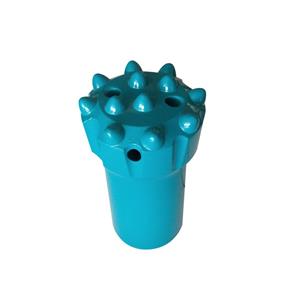
When used with drill bits, the bit diameter should generally be larger than the rod diameter. During drilling, continuously monitor rig and rod operating status. If sticking or seizing occurs, stop drilling immediately, or back-drill and then resume slowly to prevent rod bending and deformation.
For ventilation or water-passage operations through the rod, confirm all rod connections are tight before drilling. If sealing elements (such as O-rings) are installed, monitor their condition closely and replace them promptly if damaged or corroded. After drilling, clean and maintain all sealing elements.
Before drilling, connect drill rods manually and correctly to ensure tight engagement. Do not use the rig to force direct make-up, as this may damage the rods.
After use, if rod bend exceeds standard limits or thread damage prevents normal operation, the rod should be scrapped promptly or returned to the factory for repair.
In accordance with relevant standards, ensure drilling depth meets geological exploration requirements and avoid reaching the rod’s service limit, which may cause drop-off accidents.
In acidic or alkaline environments, take precautions against corrosion. After drilling, promptly clean the rod surface with clean water to remove corrosive residues.
Store drill rods in a dry place with multi-point bottom support. Do not use rods as load-bearing platforms for heavy stacking, and do not place them under crushed stone, coal piles, or in disordered stacks.
After rust removal, dust cleaning, and maintenance, install protective caps or seal rods in storage boxes to keep them in good service condition.