Recent Advances in Key Technologies for Underground Metal Mining
Underground metal mining is a complex system that includes development, stope preparation (ore definition and establishment), and extraction, and blasting is required at every stage. Therefore, achieving blasting that is both safe and efficient is a central research objective for mining engineers. Metal mines are now in a critical transition from shallow to deep workings, from easy to difficult conditions, and from high-grade to lower-grade ore, creating fresh challenges for theory, technology, and equipment. Research into the key technologies for underground mining has therefore become especially important. Current advances concentrate in five areas: drilling and blasting, material transport and hoisting, rock reinforcement, paste filling, and remote control. This review summarizes the development and recent progress in each area.
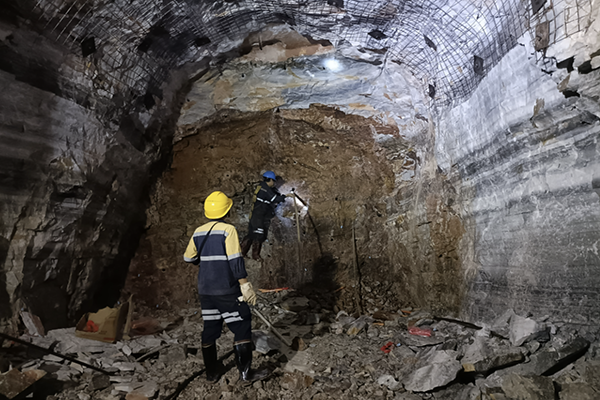
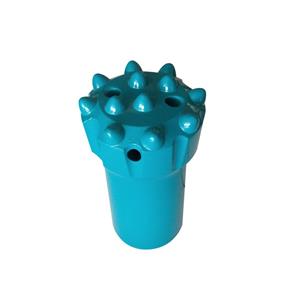
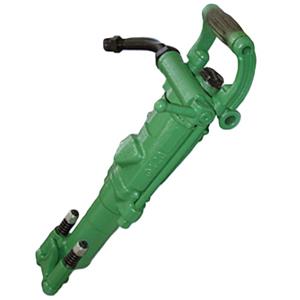
Drilling and blasting Drilling and blasting remain core technologies in metal mining but historically have also been a weak link. Improving drilling and blasting efficiency is vital to safe, productive underground mining. Over time the industry has progressed from manual drilling to pneumatic and hydraulic drills, to drilling jumbos (including rotary and down-the-hole rigs), and now toward drilling robots. The trend is away from simple mechanization toward automation, intelligence, and environmental protection.
A variety of drilling rigs adapted to different ground conditions have been developed domestically and internationally. In recent years, with improved drilling equipment, some countries (notably the United States and Canada) have adapted large-scale open-pit drilling/blasting methods for underground use: segmented intermediate-depth boreholes have, in some cases, been replaced by large-diameter staged deep holes, producing favorable results. For example, Sweden has developed an array of tunneling jumbos with high drilling efficiency, improved safety, and lower pollution; domestically, fully computer-controlled three-arm jumbos that integrate mobility, drilling, and charging operations have been developed, offering simple operation, high safety, and reduced cost. These systems improve drilling quality and efficiency while reducing labor intensity and operational risk, advancing automation, intelligence, and environmental performance.
Because underground conditions and the requirements for roadway excavation and mining differ, blasting methods remain diverse. Techniques such as small-differential-charge blasting, squeeze blasting, and contour (smooth-face) blasting are widely used and have improved blast outcomes in many situations.
Blasting technology is evolving toward precision blasting, green blasting, and intelligent blasting. Precision blasting relies on refined hole-pattern design, detailed explosive-energy studies, and blast-simulation modeling to achieve targeted rock breakage. Green blasting uses novel combustion agents to replace conventional explosives, eliminating harmful blast gases and significantly improving underground air quality. Intelligent blasting integrates smart blast design, intelligent equipment, predictive vibration modeling, and automated identification of uncharged holes to create an intelligent blasting system.
Beyond explosive methods, non-explosive rock-breaking techniques are gaining attention. Continuous miners are used for mechanical excavation in medium-hard and softer rock, delivering high productivity and favorable ground-control conditions. Physical fragmentation methods—such as high-pressure water jetting and thermal fragmentation—can overcome some limitations of pure mechanical cutting, producing little dust and no sparks and improving working conditions. However, high energy consumption, high cost, and severe tool wear have constrained broad adoption. Additionally, domestic development in information and AI technologies started later than in some other countries, so key intelligent systems for continuous hard-rock mining still largely rely on foreign technology. As a result, continuous mining for hard-rock deposits is not yet widely implemented domestically.
Material transport and hoisting Transport and hoisting systems are critical to underground production, integrating the mining process into a continuous system and ensuring normal operation. Ore transport has evolved from manual methods to rail-based systems and then to trackless (rubber-tired) systems; the current trend is toward trackless equipment as the primary transport mode, with tracked systems as secondary, driven by the development and maturation of trackless underground equipment since the 1960s.
Short-distance haulage inside stopes typically uses loaders, which offer convenient operation, reliable performance, high productivity, and maneuverability. Long-distance underground haulage commonly uses haul trucks; these are widely used abroad but less so domestically. As mining depth increases, hoisting distances grow and hoisting technology faces greater challenges, along with rising costs for lifting ores. Developing deep-shaft ore hoisting technology is therefore increasingly important. The overall trend is toward larger-scale systems with higher loads and greater automation.
In deep mining, many operations combine rail transport, belt conveyors, or trackless loaders with multi-stage shaft hoisting. For instance, the TauTona gold mine in South Africa uses a three-stage shaft hoisting system with inter-shaft transfer by conveyor or trackless equipment. Conventional open belt conveyors are simple in structure but prone to dust generation and spillage, which pollute underground air and reduce safety; they also have poor uphill performance. Newer enclosed belt conveyor systems—such as an enclosed-design solution developed by SiCON—prevent spillage and dust, achieve transport speeds exceeding 3 m/s, and handle inclines up to 36°. With proper adaptation, such systems show promise for deep-mine ore transport.
Hydraulic (water) hoisting is mainly used in deep-sea applications, and some researchers have explored its use in deep mines because it allows continuous operation and easier automation. However, applying hydraulic hoisting underground would require on-site comminution (crushing and grinding) systems at depth, making practical implementation difficult today. Innovative concepts such as maglev elevators for ore hoisting have also been proposed but require further detailed research. These new technologies and concepts are injecting fresh impetus into mine transport and hoisting, driving innovation in methods and equipment.
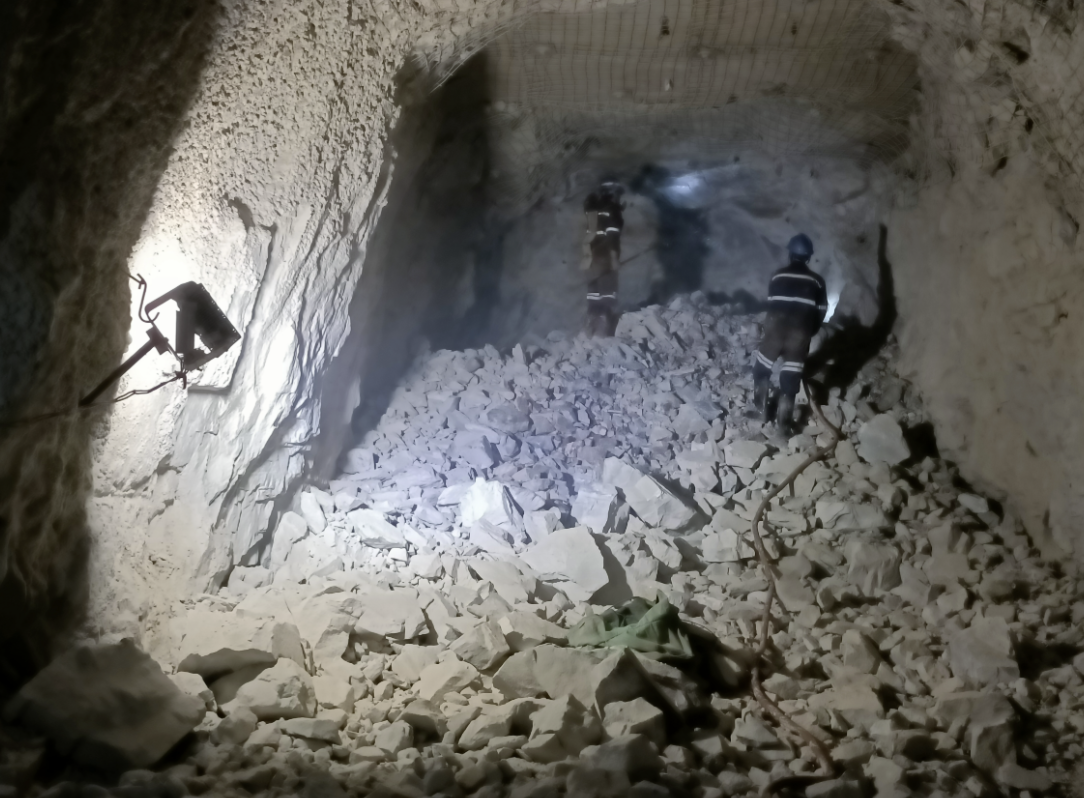
Rock reinforcement Rock reinforcement in metal mines focuses on weak, fractured, and high-stress strata. Support systems are categorized as passive or active. Passive supports (timber, masonry, steel arches) cannot alter the internal rock structure and only resist deformation. Active supports modify the rock mass to increase its inherent strength—examples include rock bolts and cable bolts, resin- or cement-grouted anchors, shotcrete with mesh, and composite systems such as bolts combined with shotcrete and mesh. Among these, cement-grouted bolt and shotcrete combinations have become primary methods for ground reinforcement in metal mines.
Full-length bolts and bonded bolts combined to create full-length bonded systems have greatly improved anchorage strength and show strong potential for field application. Shotcrete technology has evolved from dry-mix spraying to wet-mix spraying, improving working conditions and reducing rock flaking. Combining shotcrete with rock bolts effectively limits free deformation of the surrounding rock, redistributes stress, and prevents surface peeling and rockfall.
Advances in mechanization and equipment are accelerating adoption of modern bolt-and-shotcrete systems. Internationally, a variety of bolt jumbos, wet-spray rigs, and mesh-hanging machines have been developed. Domestically, tire-mounted and tracked bolt jumbos, mine-grade wet-spray machines, and two-arm wet-spray concrete rigs have been developed, improving efficiency, reducing labor intensity, and enhancing safety—advancing mechanization and initial steps toward intelligent operation. After several technological iterations, rock reinforcement has moved from passive single-support methods to active composite methods; future development is expected to emphasize mechanization and intelligence to further improve safety and productivity.
Paste filling Mining-generated solid waste, water and air pollution, and land occupation are serious environmental concerns. Paste-fill mining technology and equipment provide a promising approach to mitigate these problems. Paste filling converts tailings and other mine solid wastes into a saturated, non-bleeding, toothpaste-like structural slurry that can be used to fill stopes and tailings basins, addressing two major hazards—tailings storage and voided stopes—while supporting sustainable mining.
Compared with traditional hydraulic sand fill, paste fill offers three “no” characteristics: no stratification, no segregation, and no bleeding. An industrial-scale paste-fill test platform has been established—covering roughly 2,000 m² with more than 200 pieces of equipment—offering high precision, comprehensive functionality, and intelligent control. It enables full-process testing, parameter measurement, and engineering practice guidance. Notably, multi-diameter, multi-orientation, multi-flow loop-pipe test systems provide test results that better reflect field conditions than many traditional methods.
The common theoretical foundation across paste-fill process steps is paste rheology. Research focuses on constitutive models for paste rheology, using theoretical calculations, rheological experiments, and numerical simulation to meet engineering needs across four process stages: thickening (concentration), mixing, transport, and filling/curing. Thickening achieves a stable underflow concentration to prepare qualified paste; mixing ensures uniform material blending to support flowability and homogeneous mechanical properties in pipelines; transport aims for low energy consumption and reduced wear; filling targets uniform strength distribution and a high degree of stope fill and attachment to hanging walls. These four technologies correspond to the major technical challenges of paste filling. Paste-fill technology—characterized by safety, economy, environmental protection, and efficiency—is an important technical pillar for green metal-mine mining systems.
Remote control and automation Mining technology has evolved from manual to mechanized and now toward automated and intelligent operations. Remote control technology is a core enabler of automation and intelligence and will play an irreplaceable role in modern mining. Globally, remote control is a mature direction for underground mines and includes remote drilling control, remote charging control, and remote ore-handling control, among others. However, widespread deployment depends on a country’s overall industrial and technological maturity; full-scale adoption has not yet occurred domestically.
Key remote-control technologies center on three capabilities: remote sensing of the mining environment, remote operation of mining processes, and remote governance of mining systems. Together these enable automated perception and analysis, unmanned operations, remote dispatching, automatic early warning, and remote decision-making. Continued development and integration of sensing, communications, control systems, and AI are required to realize fully autonomous and remotely managed underground metal mining.
Conclusion The combined advancement of drilling and blasting, transport and hoisting, rock reinforcement, paste filling, and remote-control technologies is reshaping underground metal mining. Progress across equipment, materials, process control, and digital systems is driving safer, more efficient, and more sustainable extraction. Continued research, field trials, and integration of intelligent systems will be essential to meet the challenges of deeper, more complex, and lower-grade metal deposits.