Rock Drill Rod Connections: Tapered, Threaded, and DTH — What Works Where and Why
Every drill rod in the world has two ends, and the connection type at those ends is where the rod lives or dies. Pick the wrong connection for the application, and you'll spend your shifts fighting stuck rods, galled threads, and premature failures. Pick the right one, and the connections become the invisible backbone of a drilling program — you don't think about them because they just work.
Rock drilling uses three broad connection families: tapered connections for hand-held pneumatic drilling, threaded shoulder connections for hydraulic jumbos and surface drills, and DTH connections for down-the-hole hammer systems. Each has its own physics, its own failure modes, and its own rules for getting it right.
Tapered Connections: Simple Geometry, Demanding Fit
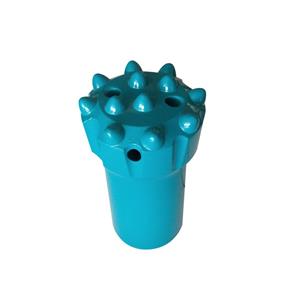
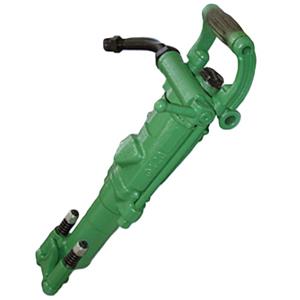
The most common connection in small-diameter hand-held drilling — think 22 to 42 mm button bits running on pneumatic jackleg drills — is the tapered connection. The bit has a tapered socket, the rod has a matching tapered shank, and they're driven together with friction alone. No threads, no retainers, nothing but the interference fit between two precisely ground conical surfaces.
The taper angle is shallow — typically 7 degrees included angle or 12 degrees, depending on the standard — which means the connection is self-locking. Axial force from the drill pushes the taper tighter. The bit stays on because the friction force between the two surfaces, multiplied by the wedging effect of the shallow angle, exceeds any force trying to pull it off.
The brilliance of the tapered connection is its simplicity. There are no threads to gall, no retainers to fail, no complex machining required. The downside is that everything depends on the precision of the fit. A taper that's even slightly off — a rod shank that's undersized from wear, a bit socket that's been hammered out of round — won't hold. The bit walks off during drilling, and retrieving a loose bit from the bottom of a hole is nobody's idea of a quick fix.
The taper needs to be clean before every connection. Rock dust, mud, or rust on either surface prevents full contact, and partial contact means the bit will work loose. A quick wipe with a rag is all it takes, but skipping it is the most common cause of lost bits in tapered drilling.
When the taper wears — and it does wear, because every blow of the hammer is a micro-slip between the two surfaces — the bit starts seating deeper onto the rod. Eventually the bit bottoms out in the socket before the taper is fully engaged. That's the retirement signal. Continuing to use a worn taper will ovalize the bit socket, and once the socket is out of round, a new rod won't seat properly either.
R-Thread and T-Thread Connections: The Shoulder Does the Work
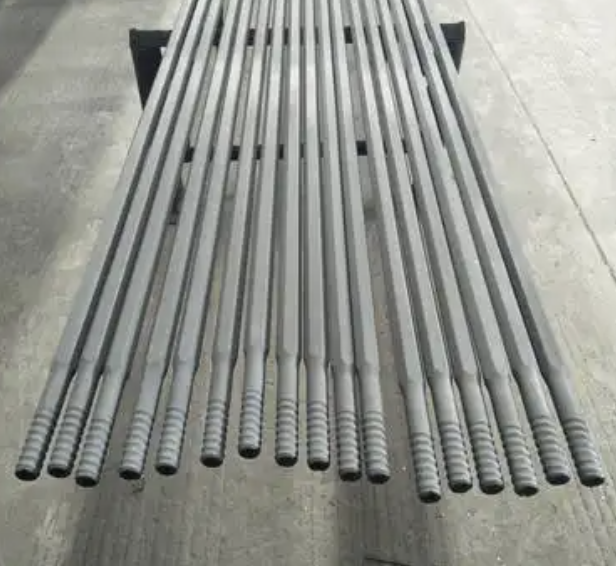
For larger-diameter hydraulic and pneumatic drifters — the kind used in tunneling, benching, and production drilling — threaded shoulder connections are the standard. The two most common profiles are R-thread (rope thread) and T-thread, both of which use a design principle that's worth understanding: the threads locate and tighten, but the shoulder faces carry the load.
In a properly designed shoulder connection, the thread flanks pull the pin and box together until the flat annular faces — the pin shoulder and box face — make full contact. Once those faces touch, further tightening compresses the shoulder faces against each other, and that metal-to-metal contact becomes the primary load path for compressive and impact forces. The threads mainly carry tension and torque.
This separation of duties — threads for tension, shoulder for compression — is why these connections survive percussive drilling. If the threads had to carry the impact load directly, the stress concentration at the thread roots would cause fatigue cracking within the first few hundred blows. By transferring the impact through the shoulder faces instead, the threads are largely shielded from the worst of the percussive loading.
The critical maintenance point: the shoulder faces must be clean, flat, and undamaged. A nick or dent on the shoulder prevents full contact, which means part of the impact load that should be going through the shoulder is instead going through the threads. That's the fast path to a thread fatigue failure. Inspect the shoulders every time you connect a rod.
Thread pitch matters too. Coarser threads — fewer threads per inch — make up faster and are less prone to cross-threading during hasty rod changes, but they provide less mechanical advantage for tightening. Finer threads give more precise make-up and greater clamping force for the same torque, but they're easier to damage and slower to connect. The choice between coarse and fine pitch is a trade-off between speed and precision that depends on the specific drilling application.
DTH Connections: Where the Hammer Lives
Down-the-hole hammer systems use a different connection philosophy entirely. The drill rod doesn't just transmit rotation and feed — it also channels high-pressure air through its center to power the hammer's piston. And the connection between the rod and the hammer has to handle all of that plus the percussive reaction force from the hammer's impact.
DTH rod-to-hammer connections typically use a shouldered, flat-faced design with a short threaded section. The threads are coarse and robust, designed for rapid make-up and break-out in the field rather than the high-torque sealing requirements of oil drill pipe. The shoulder face carries the compressive load from feed pressure, while the threads handle tension when tripping out and torque during rotation.
The pin end — the external threaded end — is usually on the rod, with the box in the hammer's backhead. This arrangement means the more vulnerable external thread is on the cheaper, more easily replaced component. If threads get damaged, you replace a rod section, not a hammer.
One DTH-specific hazard: the high-pressure air flowing through the connection can carry fine rock particles that erode the sealing surfaces over time. A connection that seals perfectly when new can develop leakage paths after extended service, and air leakage through the connection means less air reaching the hammer — which means less impact energy and slower penetration. Check for air leakage at the rod-to-hammer connection periodically by feeling for escaping air while the compressor is running but the hammer isn't cycling.
What to Match and Why
The connection type should match the drill, the hole size, and the ground. A tapered connection is perfect for small-diameter hand-held work because it's fast, simple, and forgiving of field conditions. A threaded shoulder connection is necessary for larger-diameter production drilling where the loads are higher and the consequences of a loose bit are more expensive. A DTH connection is required whenever there's a hammer at the bottom of the hole because the connection has to pass air as well as mechanical power.
Mixing connection types on the same drill site isn't a problem as long as everyone knows what goes with what. The problem starts when someone grabs a tapered bit and tries to run it on a threaded rod because "it kind of fits." It doesn't. The connection is the interface between power and rock, and if that interface isn't right, nothing downstream of it works properly.