Why Your Rock Drill Rods Keep Failing: The Four Factors No One Talks About
A few months back, I was on a call with a quarry foreman in Oman. He'd gone through more rock drill rods in six weeks than his last site used in six months. "They just snap," he told me. "Threads strip out, shafts bend, and I can't figure out why the other crew had zero problems."
I asked him one question: "What changed between sites?"
Turned out, everything. The rock, the rig settings, the water, even the way his crew handled the rods between shifts. None of it was the rods' fault — but all of it was killing them.
Here's the uncomfortable truth about rock drill rods: most of them don't wear out. They get taken out early by a handful of factors that are completely avoidable if you know what to look for.
1. The Steel Itself: What You Can't See Will Hurt You
Not all drill rod steel is created equal. The difference between a rod that lasts 1,000 meters and one that snaps at 200 often comes down to what's inside the metal — and you can't see it with the naked eye.
Low-grade steel with oxide inclusions, sulfide stringers, or internal voids might look fine on the rack. But put it under high-frequency percussion in hard rock, and those micro-defects become fatigue crack initiation points. Once a crack starts propagating, it doesn't stop. The rod goes from "fine" to "broken" with no warning in between.
This is one of those things where you get what you pay for. A rock drill rod made from clean, vacuum-degassed alloy steel costs more upfront. But when you compare it against three replacements of the cheaper stuff — plus the downtime, plus the labor to swap them — the math flips pretty fast.
2. The Jobsite Is Tougher Than You Think
Even the best drill rod won't save you if the conditions it's working in are working against it.
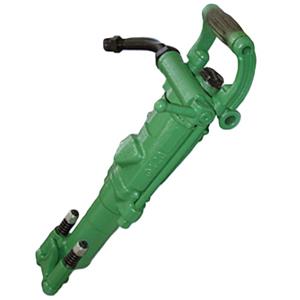
Take the rock itself. In granite, quartzite, or any high-silica formation, the impact stress on the rod multiplies. Every blow from the DTH hammer or rock drill sends a shockwave down the steel, and abrasive rock doesn't just resist — it bounces that energy right back. Add in fractured ground with fault zones and jointed layers, and you've got a recipe for jamming, twisting, and bending.
Then there's the rig setup. Three things I see go wrong constantly:
Impact pressure cranked too high — the rod is absorbing energy beyond its design limit. Feed force set too low — the bit loses contact with the rock face, and now you're dry-firing, which sends the recoil straight into the rod body instead of the rock. Rotation speed too fast on top of that, and you've got vibration harmonics that fatigue the steel in hours rather than weeks.
And the human factor? Dry-firing because nobody adjusted the feed. Running a rod that's already slightly bent because "it'll get through one more hole." Misaligning the rig so the rod enters at an angle and flexes with every blow. These aren't equipment failures — they're habits, and they cost more than any budget rod ever will.
3. Water Isn't Just Water
If your site has groundwater with even mild acidity, sulfates, or chlorides — and a lot of mining and quarry sites do — you've got an electrochemical corrosion problem running alongside your mechanical one.
Corrosion pits the surface of the drill rod. Those pits become stress concentrators. Under cyclic impact loading, stress corrosion cracking sets in, and the rod fails at loads well below its rated capacity. The scary part? You won't see it coming. The rod looks fine on the outside until it doesn't.
The fix isn't complicated: rinse rods after use, dry them, and if they're going into storage, a coat of rust preventive oil goes a long way. But on busy sites, this step gets skipped constantly.
4. The Mating Game: Rod-to-Bit Fit Matters More Than You Think
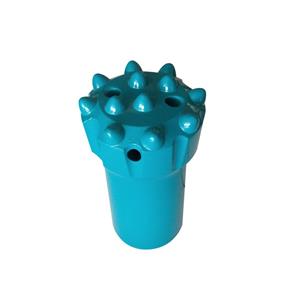
A rock drill rod doesn't work alone. It's part of a string — shank adapter at one end, button bit or DTH bit at the other — and if those connections aren't right, the rod pays the price.
Threads that are worn past tolerance, a rod-to-bit fit that's too loose or too tight, centerline misalignment between components — any of these creates localized stress that concentrates right at the connection point. That's where the fatigue crack starts, every time.
I've seen crews chase their tails replacing rods when the real problem was a worn shank adapter throwing the whole string out of alignment. Check your connections. If a rod threads on too easily or needs to be forced, something's off.
The Bottom Line
Most rock drill rods aren't worn out — they're killed early by a combination of bad steel, bad conditions, bad settings, and bad habits. Fix the things you can control: buy from suppliers who use quality alloy steel, dial in your impact and feed settings to match the rock, keep rods clean and dry between shifts, and check your connections before every run.
Do that, and you might be surprised how long a good drill rod actually lasts.