How Rock Drilling Evolved: From Hand Tools to Modern Drilling Rigs
Drilling is a foundation process for mining, tunnelling, infrastructure construction, blasting preparation, and ground support. Whether the work is described as drilling, borehole creation, or large-diameter production drilling, the goal is consistent: creating a controlled hole in rock safely and efficiently.
Early Rock Drilling
Before industrial power systems, workers created holes with hand tools such as chisels and steel bars. Rock was broken gradually through repeated manual impact. This method was labour-intensive, slow, and limited by human endurance.
The central principle of modern rock drilling developed from the same concept: repeated impact concentrates energy at the drill bit, breaking rock locally and allowing a borehole to advance.
Steam and Pneumatic Drilling
Early powered drilling used steam-driven reciprocating mechanisms. A piston moved inside a cylinder, and valve control reversed the direction of motion, allowing the connected drill steel and bit to impact the rock repeatedly.
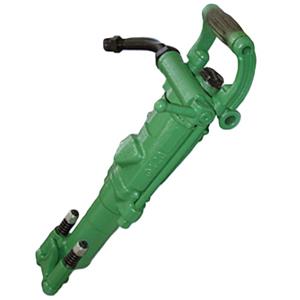
Compressed air later became a more practical power source for many applications. Pneumatic rock drills helped support larger-scale drilling in major tunnel and civil-engineering projects. Over time, improvements such as separated pistons and drill steels, hollow drill rods for flushing, rotation systems, and improved air-distribution valves increased performance.
From Hand-Held Tools to Mechanised Rigs
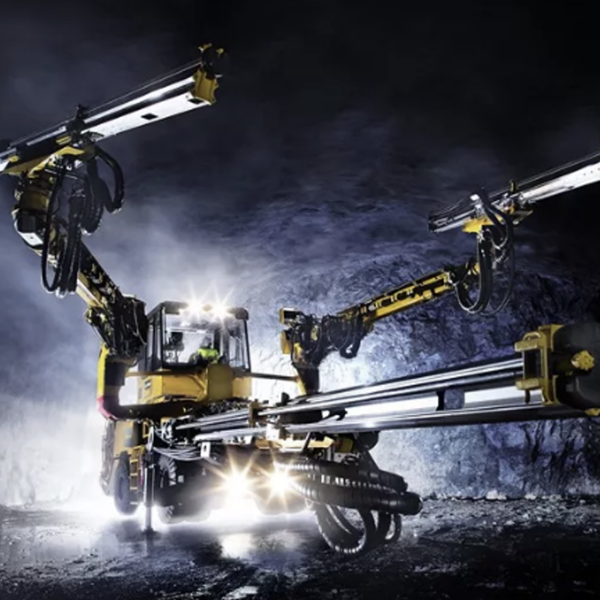
Early pneumatic machines were mainly hand-held. Leg-mounted rock drills later reduced operator effort and increased feed force. This opened the way for heavier support-mounted machines and, eventually, self-propelled drilling rigs.
Mechanised drilling reduced the dependence on manual force while improving productivity, repeatability, and drilling control.
Hydraulic Rock Drilling
As drilling depths increased, energy losses at drill-steel connections and challenging working conditions became more significant. Hydraulic technology provided a new way to power the reciprocating impact mechanism.
Hydraulic rock drills use pressurised fluid to drive the piston. Over time, the technology improved drilling speed, energy efficiency, and working conditions. Hydraulic systems also enabled integrated functions such as travel, feed, positioning, boom movement, and rod handling.
Modern Drilling Methods
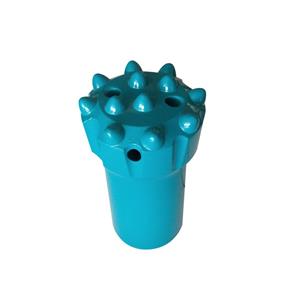
Modern drilling fleets may include top-hammer rigs, down-the-hole systems, and roller-cone machines. Each method is selected according to rock characteristics, borehole diameter, drilling depth, project objectives, and site conditions.
Top-hammer drilling transfers impact energy through the drill string.
Down-the-hole drilling places the hammer closer to the bit, reducing energy loss along long drill strings.
Roller-cone drilling uses weight and torque to crush rock continuously at the borehole bottom.
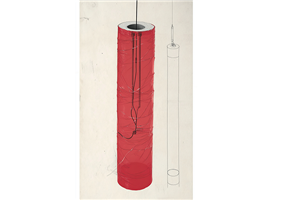
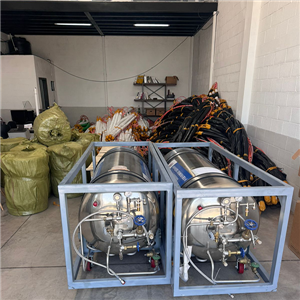
For projects needing controlled rock breaking where conventional blasting faces vibration limits, proximity constraints, or permitting challenges, the Gaea Rock O2 Gas Energy Rock Splitting System may be evaluated as an engineered alternative. It uses liquid-oxygen phase-change energy rather than conventional explosive formulations, subject to site-specific design, trained operation, and regulatory compliance.