Static Demolition Agents for Foundation and Rock Excavation
Static Demolition Agents for Foundation and Rock Excavation
Static demolition agents are used to break rock and concrete without conventional explosive blasting. They are often considered for foundation excavation, municipal construction, mining preparation, tunnel work, concrete removal, and projects near sensitive structures.
These agents are typically mixed with water and placed into pre-drilled holes. A chemical hydration reaction develops gradually inside the hole, producing expansion pressure against the surrounding material. When this pressure exceeds the tensile strength of the rock or concrete, cracks form and the material separates.
The source article describes static agents as an alternative for conditions where explosives or impact-breaking equipment are unsuitable. Potential applications include concrete foundations, bridge and tunnel works, rock loosening, shaft and pile excavation, trench work, stone cutting, and slope treatment.
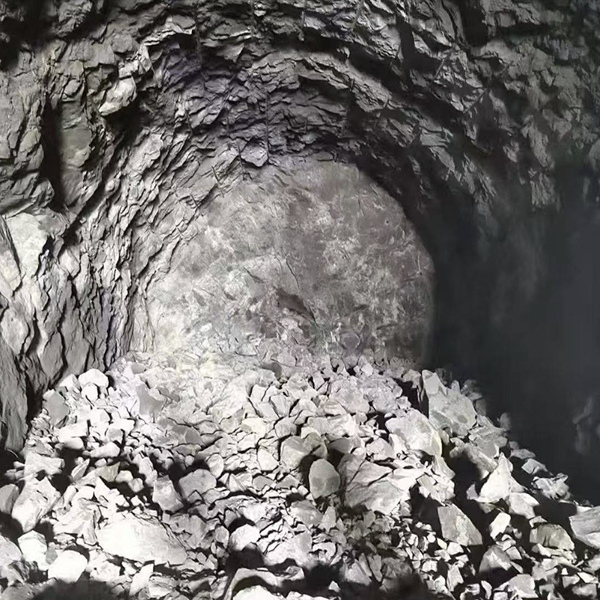
Controlled breaking is a major reason to consider this method. Where part of a rock mass or concrete structure must remain intact, a carefully designed hole pattern may help direct cracking toward the intended removal area. Actual crack direction and performance depend on material strength, joints, borehole diameter, spacing, depth, temperature, mixture quality, and curing conditions.
The article lists expansion pressure and reaction time as important performance indicators. Such figures should be treated as manufacturer or source claims and verified through product documentation and site trials. Temperature and moisture conditions can substantially affect reaction speed and cracking results.
Static demolition does not eliminate the need for safety planning. Contractors should assess the work area, inspect adjacent structures, establish exclusion zones, use appropriate personal protective equipment, and follow the supplier’s instructions for storage, mixing, and placement. Local construction and environmental requirements must also be confirmed before work begins.
For foundation and rock excavation projects, static demolition agents can provide a useful non-explosive option when controlled cracking and reduced disturbance are priorities. The final method should be selected only after evaluating geology, construction constraints, safety requirements, production targets, and total project cost.