Technological Innovation and Performance Strength of Water Well Drill Rods
Throughout the long history of human coexistence with nature, groundwater has remained a vital resource for survival. From ancient hand-dug wells to modern mechanized drilling, the water well drill rod—serving as a bridge between the surface and underground aquifers—reflects humanity’s ingenuity and persistence in exploring water resources.
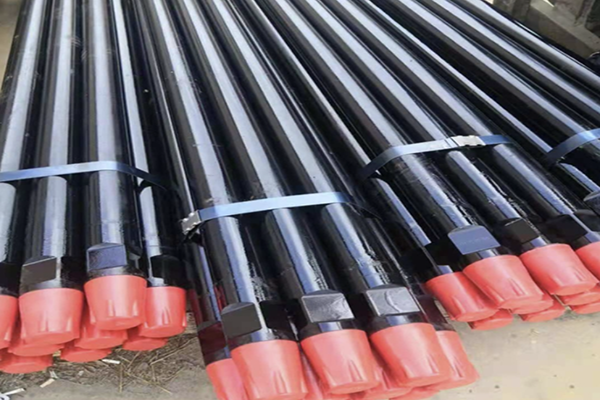
The core mission of a water well drill rod is simple but demanding: penetrate geological formations and reach the water-bearing layer. As one of the key components of drilling equipment, the drill rod drives the bit downward through rotation or impact, breaking through soil, rock, and mixed strata. To perform reliably in such complex conditions, the rod must combine high strength, wear resistance, and corrosion resistance.
Modern water well drill rods are typically made from high-strength alloy steel, while composite materials are used in select specialized scenarios. Their design must balance three critical requirements: tensile strength to withstand high torque from the rig without fracture, flexibility to reduce sticking risk in curved formations, and corrosion resistance to handle groundwater that may contain acidic or alkaline substances. Protective coatings and alloying treatments are commonly used to extend service life.
Manufacturing quality is equally important. Drill rods undergo precision forging, heat treatment, and surface finishing. In high-end products, friction welding is often used to join rod sections, ensuring joint strength matches the parent material and minimizing early failure caused by stress concentration.
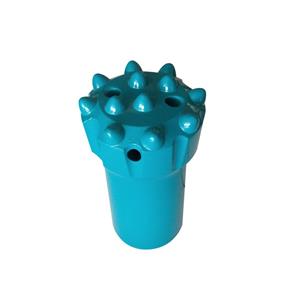
Field performance depends heavily on matching rod selection to actual geology. In soft formations, lighter rod models can improve drilling efficiency, while hard rock conditions require heavy-duty rods paired with diamond bits. Connection methods—such as threaded joints or quick-connect systems—also influence construction speed and operational reliability.
With the rise of IoT technologies, intelligent drill rods are becoming a major industry trend. Embedded sensors can monitor temperature, pressure, vibration, and other real-time drilling data, then transmit it to a control center. This enables operators to optimize drilling parameters, detect fatigue risks early, and identify abnormal formation behavior before it escalates into accidents.
Some smart drill rod systems can already use data analytics to automatically adjust penetration rate and torque, enabling adaptive drilling. This capability shows exceptional potential in extreme environments such as deep-sea exploration and polar drilling operations.
As global water stress increases, environmental performance is becoming central to drill rod development. On one hand, improving drilling efficiency reduces energy consumption. On the other, research is advancing recyclable materials and biodegradable coatings to lower post-use environmental impact. Specialized rod designs for arid-region water access and contaminated-source remediation are also emerging as key research priorities.
A water well drill rod is more than a metal component—it is a technical extension of humanity’s dialogue with the subsurface world. From bamboo poles in ancient times to today’s intelligent drill rods, its evolution demonstrates the deep integration of technology and nature. With continued advances in materials science and artificial intelligence, this underground bridge will become more efficient, more sustainable, and more capable of unlocking future water resources.