Water Well Drill Rods : Powerful Tools for Exploring Deep Underground Water Resources
A Practical Overview of Water Well Drill Rods
Throughout the long history of groundwater exploration and use, one tool has played a critical role: the water well drill rod. It may look simple, but it carries the essential task of connecting the surface to underground aquifers, making it an indispensable component in accessing valuable groundwater.
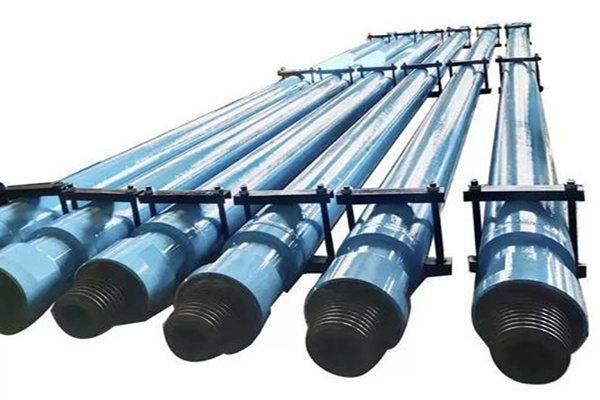
A water well drill rod is typically made of high-strength alloy steel, giving it excellent compressive and tensile performance. Its basic structure includes two main parts: the rod body and the connecting joint. The rod body serves as the primary load-bearing section, handling the stresses generated during drilling, while the connecting joint links multiple rods into a drill string long enough to meet different well-depth requirements.
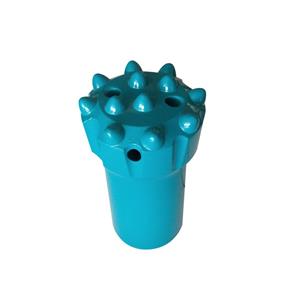
During drilling operations, the drill rod’s primary function is power transmission. Rotational force and axial pressure from the drilling rig are transferred through the rod to the drill bit, allowing the bit to break through rock, soil, and other formations as it advances downward. At the same time, the rod also supports drilling fluid circulation. Drilling fluid travels from the surface through the rod’s inner channel to the bottom of the well, where it cools and lubricates the bit, then carries rock cuttings back to the surface. This keeps the borehole bottom clean and helps ensure stable, continuous drilling.
The working environment of a water well drill rod is highly complex and demanding. Underground formations vary significantly and may include hard rock, loose sand, and mudstone layers. In hard rock drilling, the rod must withstand high rotational resistance and axial loads, which can lead to wear and fatigue fracture. In softer formations, problems such as borehole wall collapse or mud balling may occur, reducing efficiency and compromising safety.
Drilling fluid properties also affect rod performance. Highly corrosive drilling fluids can accelerate corrosion and wear, shortening service life. In addition, high-temperature conditions can alter the mechanical properties of the rod material and increase the risk of failure.
To ensure reliable operation and extend service life, regular maintenance is essential. Before use, each rod should undergo a full inspection, including visual checks, dimensional measurement, and non-destructive testing, to confirm that no obvious defects or damage are present.
During drilling, parameters should be controlled properly to avoid excessive loading. Drilling fluid performance must also be adjusted to minimize corrosion and abrasion. After operations, rods should be cleaned promptly, with mud and debris removed, followed by anti-corrosion treatment and application of rust-preventive grease.
Routine flaw detection is another critical step. Non-destructive methods such as ultrasonic testing and magnetic particle inspection can identify internal cracks or hidden defects early, allowing timely repair or replacement and reducing the risk of drilling accidents caused by rod failure.
As technology advances, water well drill rods continue to evolve. New materials have significantly improved performance. For example, high-strength, high-toughness alloy steels allow rods to endure heavier loads and harsher environments, while the emergence of composite drill rods has further reduced weight and improved drilling efficiency.
Design improvements are also moving toward greater usability and intelligence. Some rods use specialized connection systems that make assembly and disassembly faster and easier, reducing operation time and labor intensity. Meanwhile, smart monitoring technologies now enable real-time feedback on rod condition—such as stress, temperature, and wear—providing strong support for safer and more efficient drilling.
As a vital tool in groundwater development, the water well drill rod plays an irreplaceable role in securing water for production and daily life. A solid understanding of its structure, working conditions, maintenance practices, and development trends helps us better appreciate this powerful underground exploration tool and supports continued progress in water well drilling technology, ultimately improving access to high-quality groundwater resources.