Why Drill Rods Fail: The Main Loads Behind Wear and Breakage
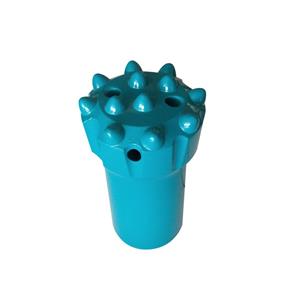
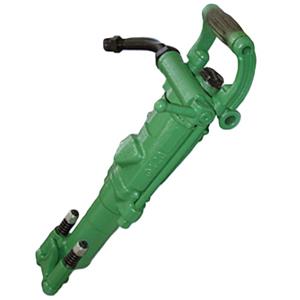
Drill rods transfer impact energy and rotational torque from the rock drill to the drill bit. In demanding rock-drilling conditions, they face repeated loading, friction, corrosion, vibration, and abnormal operating stress. Understanding these forces helps project teams select suitable drilling tools, reduce avoidable failures, and maintain drilling accuracy.
Alternating Axial Stress
Impact drilling creates repeated compression and tension along the drill string. Rock resistance transfers force back through the tool, creating high-frequency cycles that can lead to fatigue, cracking, and reduced service life.
Bending Stress
Drill rods are long and slender. Misalignment, feed pressure, rod deformation, drill-string weight, or off-centre impact can introduce lateral force. Over time, bending reduces energy-transfer efficiency and may cause permanent deformation, lower hole accuracy, or early failure.
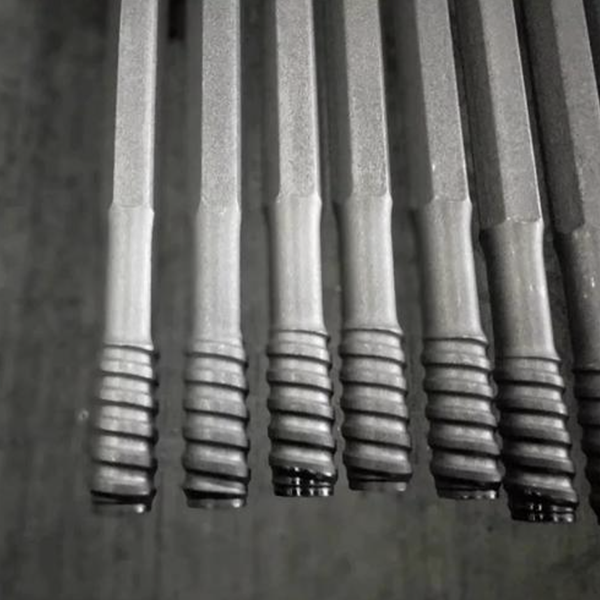
Torsional Stress
Continuous rotation is needed for rock fragmentation and cuttings removal. The drill rod must resist friction against the borehole wall and resistance from cuttings. Proper torsional strength and toughness are essential to prevent twisting and fracture.
Abrasion and Corrosion
Rock fragments and borehole-wall contact wear the rod surface, while flushing water and contaminants can corrode metal over time. These effects may reduce wall thickness, damage threads, and shorten usable tool life.
Abnormal Operating Conditions
Stuck tools, difficult retraction, empty striking, and other non-standard conditions can combine bending, tension, compression, and torsion. These situations should be managed under approved site procedures because excessive load can rapidly accelerate fatigue damage.
Maintenance Priorities
Reliable drilling depends on matching the tool to the rock conditions and equipment, inspecting straightness and thread condition, monitoring visible wear, and removing damaged components from service. Material quality and heat treatment matter, but correct operating practice remains equally important.
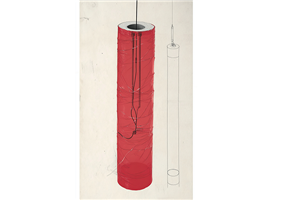
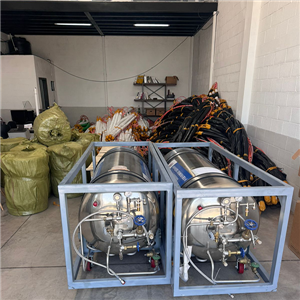
For projects where conventional blasting is constrained by vibration, site sensitivity, or nearby infrastructure, the Gaea Rock O2 Gas Energy Rock Splitting System may be evaluated as an engineered alternative. It uses liquid-oxygen phase-change energy rather than conventional explosive formulations, subject to qualified design, training, and regulatory compliance.