
- Gaea
- China
- 5 days
- 20000meter/monthly
Gaea's O2 Rock Blasting System offers a powerful alternative to conventional explosive blasting near residential buildings and sensitive infrastructure. Its low shockwave, controlled vibration and reduced fly-rock risk make it suitable for restricted rock excavation projects.
Alternative to Explosive Blasting Near Buildings | Gaea O2 System
Alternative to Explosive Blasting Near Buildings and Sensitive Areas
A Powerful Rock-Breaking Solution Where Conventional Explosives Are Restricted
Rock excavation near residential buildings, schools, hospitals, roads, railways, pipelines and power infrastructure requires more control than an ordinary blasting project.
Gaea's O2 Rock Blasting System provides a powerful alternative to conventional explosive blasting for projects where shockwave, ground vibration, fly-rock, explosive storage or disruption to surrounding communities creates a serious challenge.
The system combines strong in-hole fragmentation energy with a more controlled operating profile, helping contractors break hard rock in locations where traditional explosive blasting may be difficult, restricted or impractical.
Why Is an Alternative to Conventional Blasting Needed?
Conventional explosives can fragment large volumes of rock efficiently, but their use near occupied or sensitive areas may introduce significant project constraints.
These challenges commonly include:
Ground vibration affecting nearby buildings
Shockwave and noise close to residential communities
Fly-rock risks in restricted work areas
Explosive storage and transport requirements
Large exclusion zones that interrupt nearby operations
Public concern about blasting close to homes or infrastructure
Permit or operating restrictions in densely populated locations
Mechanical breakers and cutting equipment may avoid some of these issues, but they can become slow and expensive when excavating large quantities of granite, basalt, gabbro or other hard rock.
The Gaea O2 Rock Blasting System bridges the gap between high-energy fragmentation and controlled work near sensitive areas.
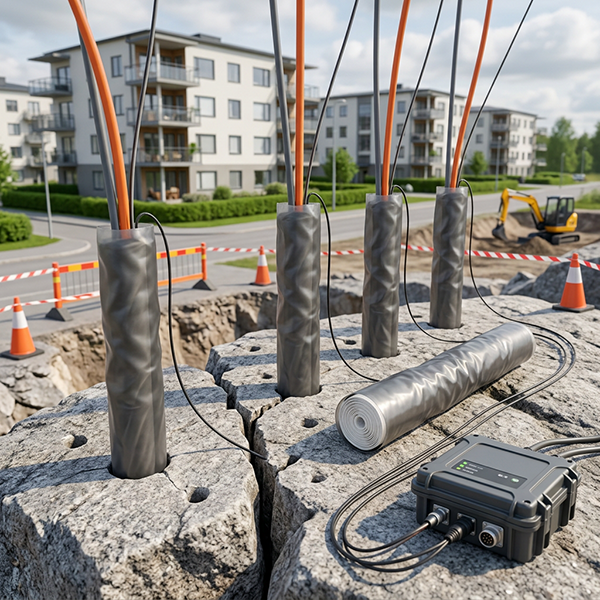
Designed for Rock Breaking Near Residential Buildings
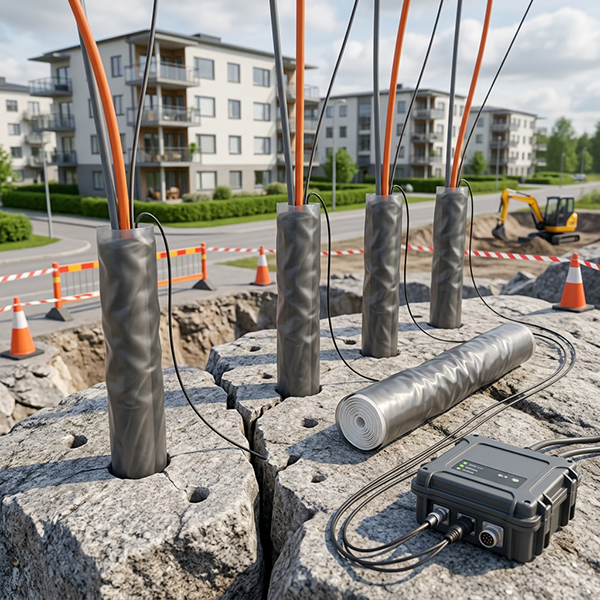
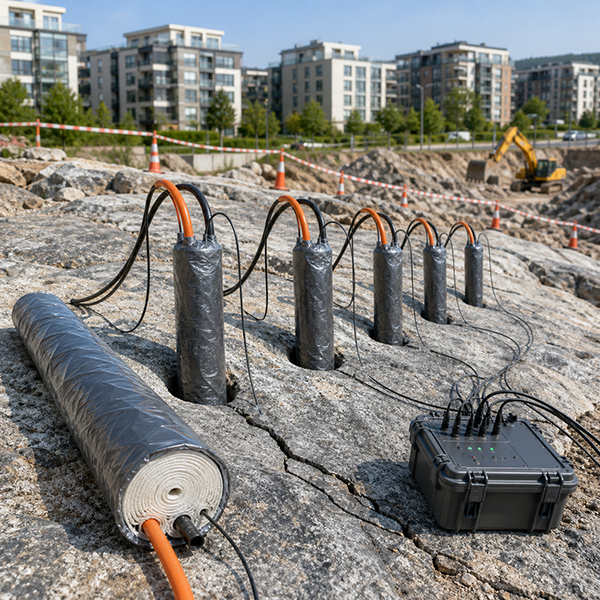
The O2 Rock Blasting System can be evaluated for foundation excavation, basement construction, urban redevelopment and road-cut projects close to occupied buildings.
Under tested project conditions, the system has achieved ground vibration of ≤0.3 cm/s at a distance of 20 metres. Its shockwave can be approximately 7% of that produced by conventional explosive blasting under recommended operating conditions.
These characteristics help project teams develop a more controlled rock-breaking plan while considering nearby structures, residents and ongoing operations.
Actual vibration and shockwave results depend on geology, borehole layout, system configuration, monitoring distance and site conditions.
Suitable for Sensitive Infrastructure Projects
Residential and Urban Construction
For rock excavation close to homes, apartment buildings, commercial properties or public facilities, the system helps reduce dependence on conventional explosives while maintaining effective rock fragmentation.
Schools, Hospitals and Occupied Facilities
Projects near locations that cannot tolerate major interruption require careful control of vibration, shockwave and work schedules. The O2 system can be configured according to the distance, geology and operating limitations of the site.
Roads, Railways and Bridges
The system is suitable for evaluation in highway widening, railway corridor construction, bridge approach excavation and rock cutting close to active transport routes.
Pipelines and Underground Utilities
Controlled rock breaking may be required near water lines, gas pipelines, communication cables and other buried infrastructure where conventional blasting presents additional risks.
Power Lines and Industrial Facilities
Gaea has practical application experience with rock breaking near high-voltage power lines and operating industrial areas, where project continuity and infrastructure protection are essential.
High Rock-Breaking Power Without Conventional Explosives
Working in a sensitive area does not remove the need for strong fragmentation performance.
Under comparable project conditions, the Gaea O2 Rock Blasting System can deliver 50–150% higher rock-breaking force than conventional explosives. It can be configured for hard rock including:
Granite
Basalt
Gabbro
Quartzite
Limestone
Sandstone
This makes it a practical alternative where hydraulic breakers alone cannot achieve the required production rate.
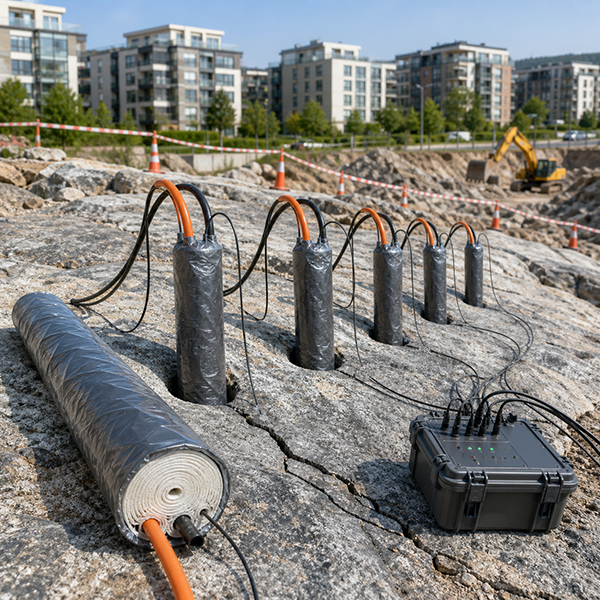
Lower Shockwave and Controlled Vibration
The Gaea O2 system uses a controlled combustion process with a velocity of approximately 200–300 m/s, compared with the much higher detonation velocity of conventional high explosives.
Its operating characteristics can provide:
Shockwave approximately 7% of conventional explosives
Ground vibration of ≤0.3 cm/s at 20 metres under tested conditions
Reduced fly-rock risk with the recommended project design
High fragmentation energy for hard-rock excavation
Greater flexibility for projects near sensitive structures
The final borehole pattern and system configuration should always be designed around the specific rock mass and surrounding environment.
Reduced Dependence on Explosive Storage and Transport
The Gaea O2 Rock Blasting System does not contain potassium perchlorate, which is a key difference from many CO2 gas rock-breaking systems.
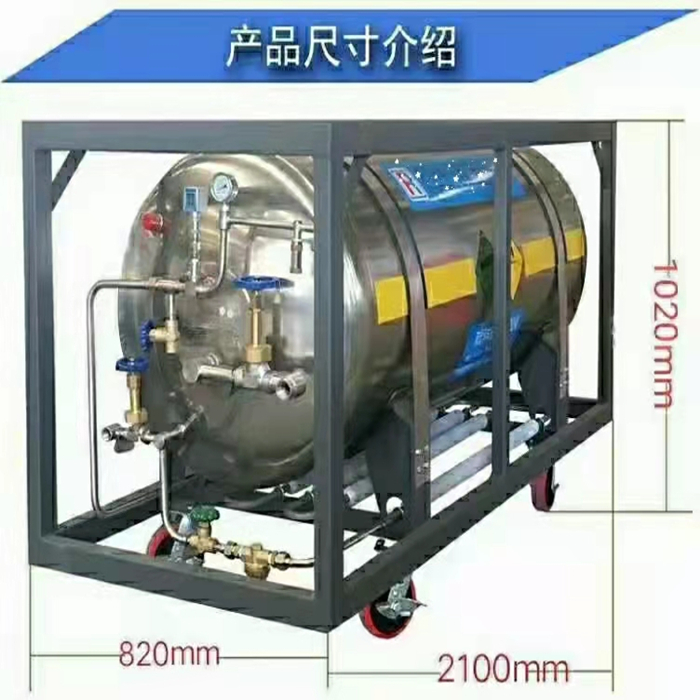
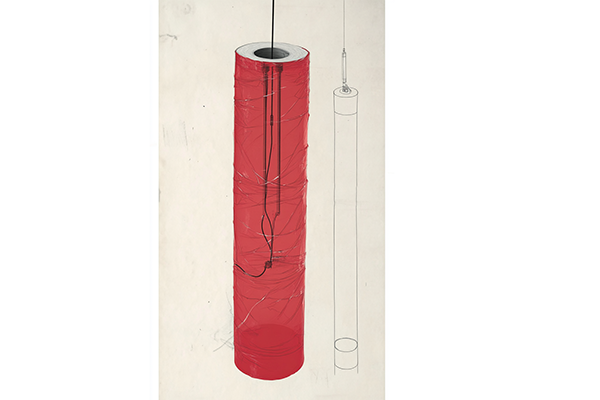
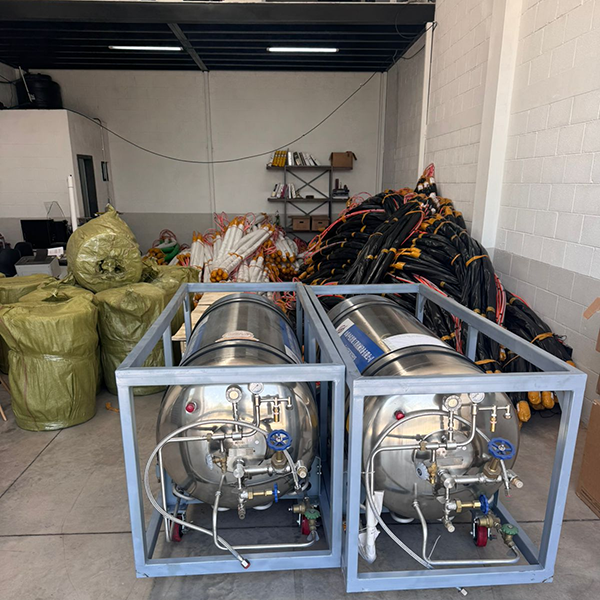
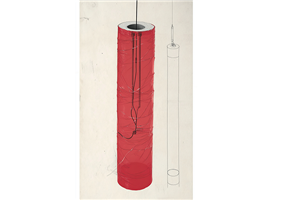
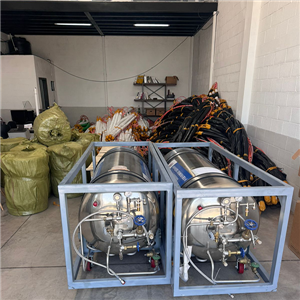
The consumable O2 splitting tubes can be transported as ordinary cargo under applicable transport requirements. Liquid oxygen is sourced, stored and handled separately at or near the project location according to local rules.
This arrangement can simplify international equipment delivery and reduce some of the logistical challenges associated with transporting conventional explosive materials.
Permit, storage and operating requirements vary by country and project location and must be confirmed locally.
Proven in Demanding Sensitive-Area Applications
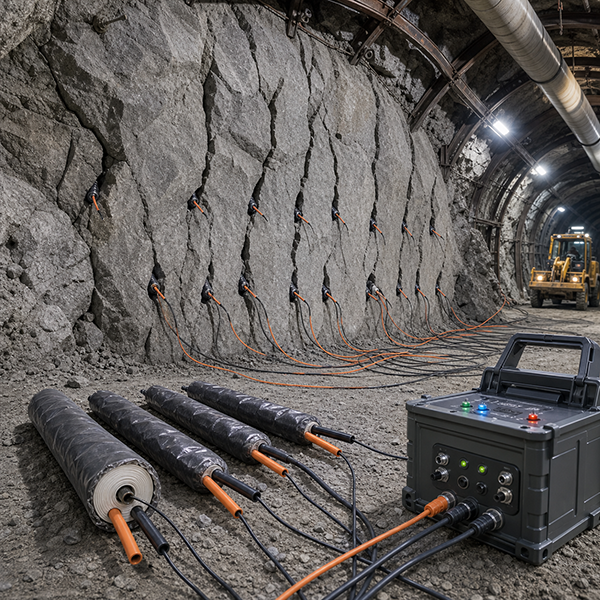
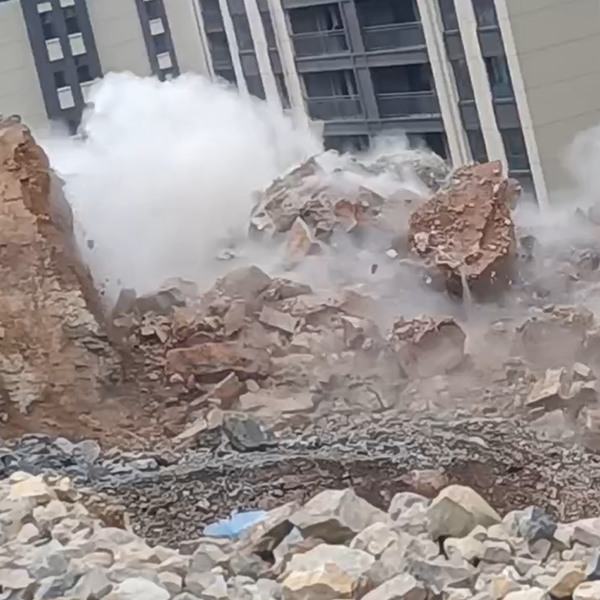
Gaea has demonstration footage of O2 rock breaking in challenging environments, including:
Beside a high-speed railway
Near existing buildings
Close to high-voltage power lines
Beside an operating road
Inside a tunnel environment
Adding these videos to this page will provide important first-hand evidence for customers and help Google understand the practical experience behind the product.
Use the following video heading on the page:
Watch the Gaea O2 Rock Blasting System Working Near Sensitive Infrastructure
How Gaea Evaluates a Sensitive-Area Project
Before recommending a system configuration, Gaea reviews the conditions that directly affect vibration control, fragmentation and nearby infrastructure.
Please provide:
Project country and location
Type and condition of nearby buildings or infrastructure
Minimum distance from the rock face to sensitive structures
Rock type, hardness or UCS data
Borehole diameter and proposed hole depth
Required excavation volume and fragment size
Site vibration or noise limits
Current rock-breaking method and project difficulties
Based on this information, Gaea can recommend a project-specific O2 rock-breaking configuration for technical evaluation.
Frequently Asked Questions
What is the best alternative to explosive blasting near buildings?
The appropriate method depends on rock strength, excavation volume, distance to buildings, vibration limits and project schedule. For suitable hard-rock projects, the Gaea O2 Rock Blasting System provides high fragmentation energy with lower shockwave and controlled vibration compared with conventional explosives.
Can the O2 system be used near residential buildings?
Yes. The system can be evaluated for rock excavation near homes, apartment buildings and commercial properties. A project-specific assessment is required to determine the borehole layout, system configuration, monitoring points and operating controls.
Does the O2 system completely eliminate vibration?
No rock-fragmentation method that releases significant energy should be described as producing zero vibration. Under tested conditions, the Gaea system has achieved vibration of ≤0.3 cm/s at 20 metres, but actual results depend on the project conditions.
Is O2 rock breaking faster than a hydraulic breaker?
For suitable large-volume or hard-rock excavation, the O2 system can provide faster fragmentation than hydraulic breaking alone. The most suitable method depends on rock strength, required fragment size, working space and production target.
Can this system be used near roads and railways?
Yes. Gaea has practical demonstration experience in rock-breaking environments near roads and high-speed railway infrastructure. Final use requires a site-specific technical assessment and compliance with local operating requirements.
Request an Alternative Blasting Solution for Your Project
Tell Gaea where the project is located, what structures are nearby, how far they are from the rock face, what type of rock must be removed and how much material needs to be excavated.
Our technical team will evaluate your site conditions and recommend a high-power O2 rock-breaking solution for use near buildings or sensitive infrastructure.
Performance figures are based on Gaea project experience and tested or recommended operating conditions. Results vary according to rock type, borehole design, system configuration, monitoring distance, project scale, site conditions and applicable local regulations.