
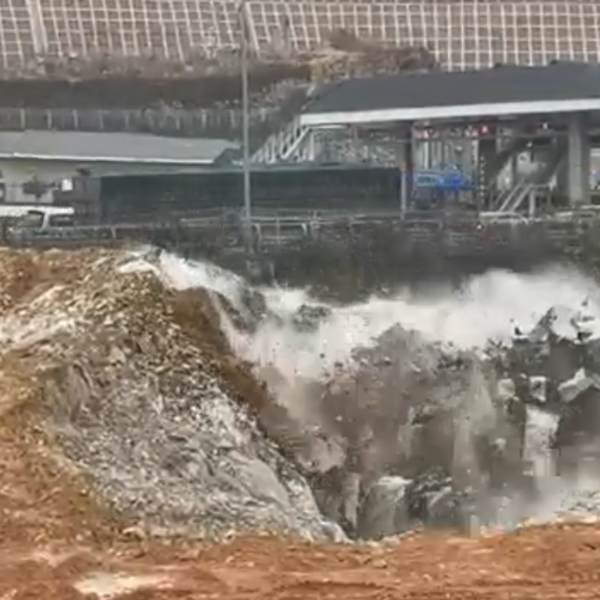
- Gaea
- China
- 20 days
- 20000meter/monthly
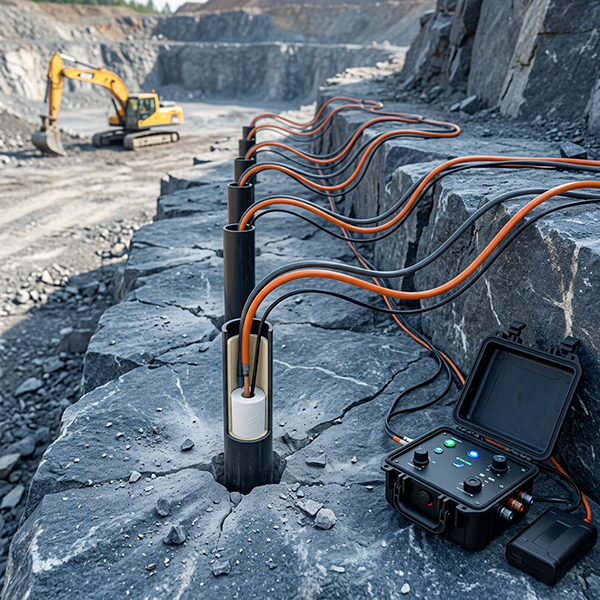
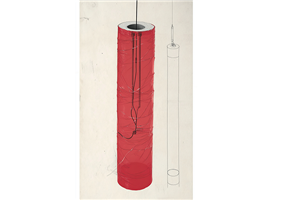
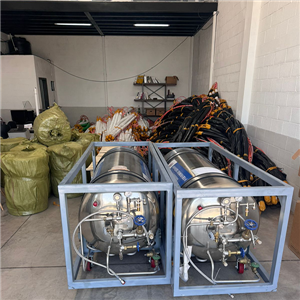
Gaea's O2 Rock Blasting System delivers high-power, low-vibration rock breaking for mining, quarrying, tunnelling and controlled demolition. With vibration of ≤0.3 cm/s at 20 m under tested conditions, it helps break hard rock near buildings, roads, railways and utilities.
Low Vibration Rock Breaking System for Mining and Demolition | Gaea
Low Vibration Rock Breaking Near Buildings, Roads and Infrastructure
A High-Power Rock-Breaking Solution for Vibration-Sensitive Projects
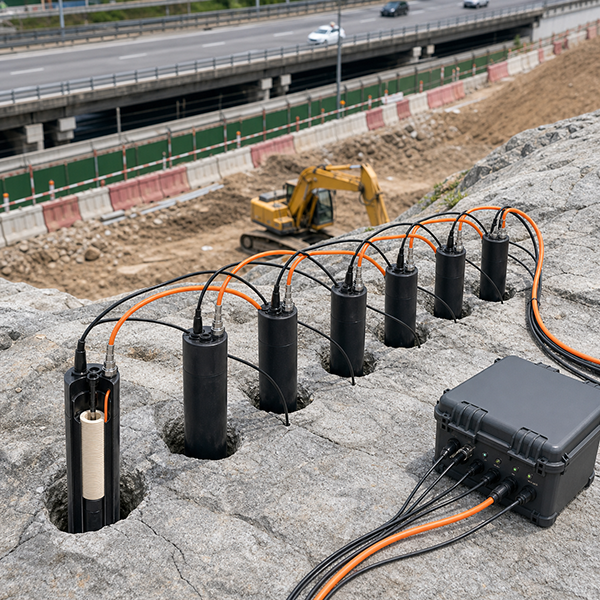
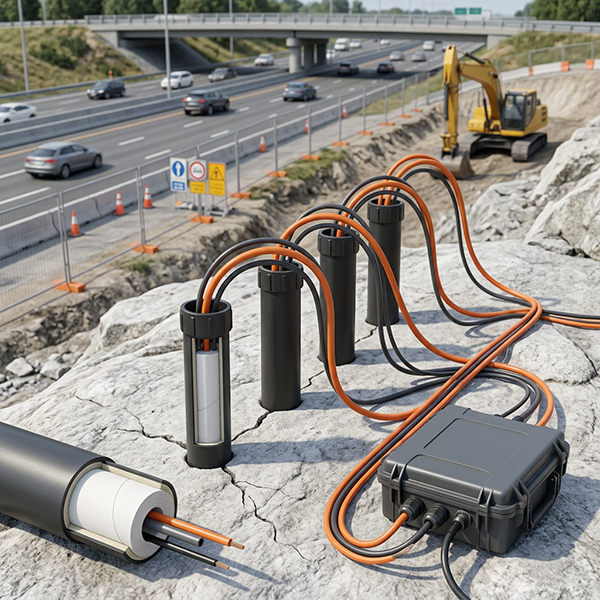
When rock excavation must take place close to buildings, railways, highways, bridges, pipelines or high-voltage lines, vibration control can determine whether a project can proceed.
Gaea's O2 Rock Blasting System is designed for high-energy rock fragmentation in projects where conventional explosive blasting may be limited by vibration, shockwave, fly-rock or site-access concerns. It helps contractors break hard rock while maintaining a more controlled operating profile around sensitive infrastructure.
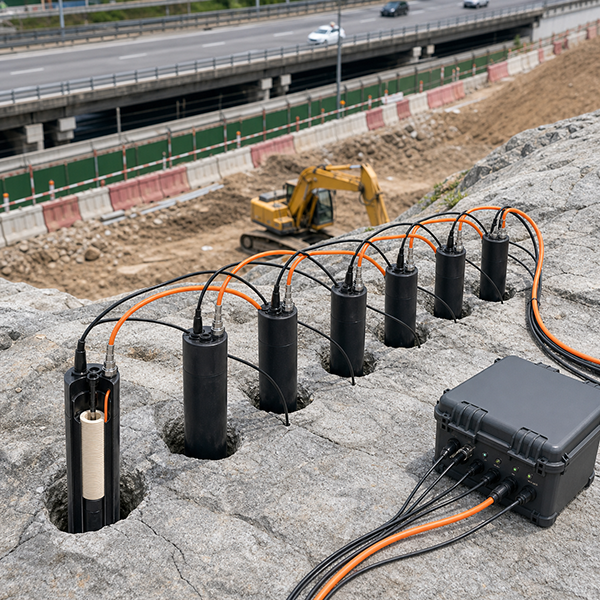
Designed for Projects Where Vibration Matters
Measured Low Vibration Performance
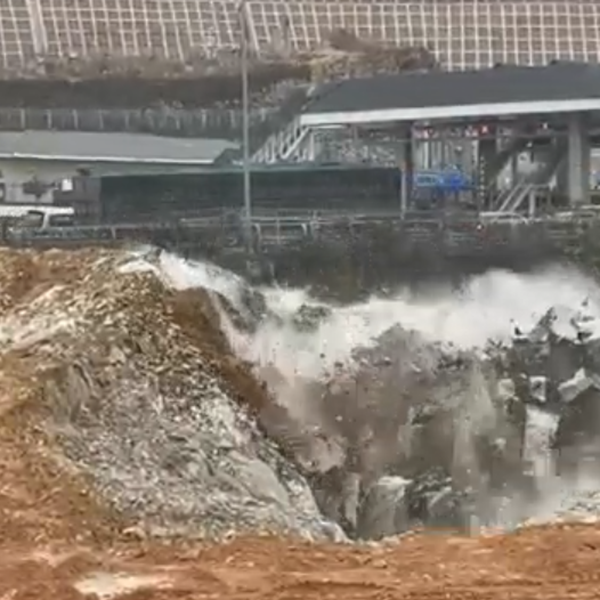
Under tested project conditions, the Gaea O2 Rock Blasting System can achieve ground vibration of ≤0.3 cm/s at 20 metres.
This makes the system relevant for excavation projects with strict vibration limits, including work close to occupied buildings, transport networks, industrial plants and public utilities.
Unlike pages focused on quarry production or underwater excavation, this solution page is specifically intended for customers whose main challenge is:
Working near existing buildings
Protecting nearby roads and railways
Avoiding disruption around power lines and pipelines
Meeting site vibration-control requirements
Maintaining excavation progress in restricted locations
Lower Shockwave for Sensitive Work Areas
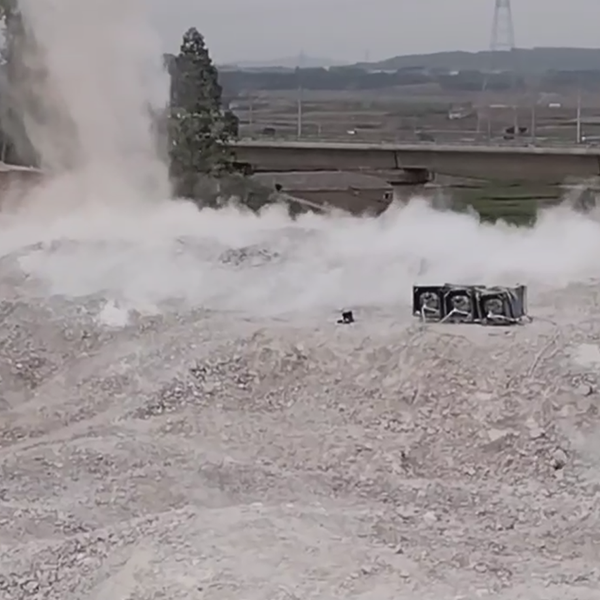
Under recommended operating conditions, the O2 Rock Blasting System produces shockwave at approximately 7% of conventional explosive blasting.
For contractors working in restricted locations, lower shockwave can support a more manageable exclusion-zone and site-control strategy. It is particularly useful where nearby operations cannot tolerate the effects commonly associated with conventional blasting.
Actual performance depends on rock conditions, borehole geometry, system configuration, monitoring distance and site-specific engineering controls.
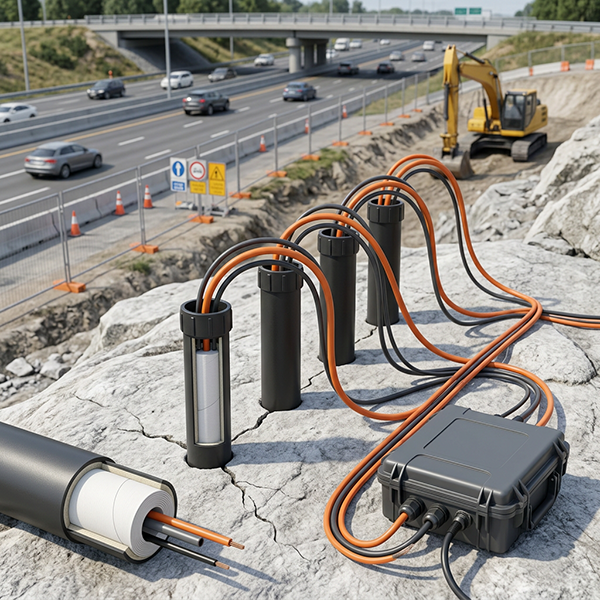
High Fragmentation Energy Without the Typical Vibration Challenge
Projects near sensitive infrastructure still need enough energy to fragment hard rock efficiently.
Under comparable project conditions, Gaea's O2 Rock Blasting System can provide 50-150% higher rock-breaking force than conventional explosives. It can be configured for granite, basalt, gabbro, quartzite and other hard-rock conditions where hydraulic breakers may be too slow for the required excavation volume.
This gives contractors a practical option when they need to balance:
Rock-breaking efficiency
Vibration control
Project schedule
Infrastructure protection
Public and site safety requirements
Applications for Vibration-Controlled Rock Excavation
The Gaea O2 Rock Blasting System can be evaluated for the following vibration-sensitive applications:
Rock Excavation Near Buildings
Suitable for foundation excavation, basement construction, urban redevelopment and industrial expansion projects where adjacent structures must be protected.
Road and Railway Rock Cutting
Relevant for highway widening, road-cut stabilization, rail corridor upgrades and excavation near bridges or retaining structures.
Tunnel Portals and Underground Access
Can be evaluated for tunnel entrances, shafts, underground stations and access routes where conventional blasting may create vibration concerns.
Utility and Energy Infrastructure
Suitable for projects close to high-voltage transmission lines, substations, pipelines, water facilities and communication infrastructure.
Restricted Quarry and Mining Areas
Useful for quarry benches and mining areas located near communities, public roads or production facilities where vibration management is essential.
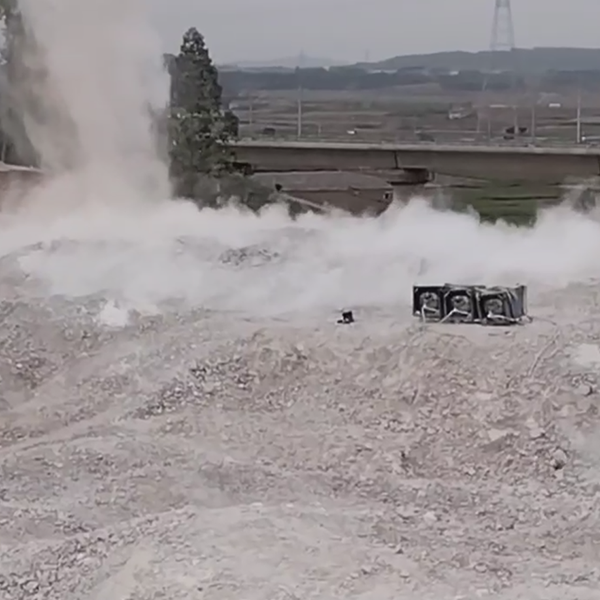
Project-Specific Vibration Assessment
Every vibration-sensitive project requires a configuration based on its actual conditions. Before recommending a system, Gaea can review:
Rock type and UCS strength
Borehole diameter, depth and pattern
Distance to buildings or sensitive infrastructure
Required vibration-control target
Bench height and excavation geometry
Expected rock volume and fragmentation size
Local operating, safety and monitoring requirements
This information helps Gaea recommend an O2 rock-breaking configuration suited to the specific project rather than offering a generic solution.
Why Choose O2 Rock Breaking Instead of Mechanical Methods?
Hydraulic breakers, ripping and diamond wire cutting can be appropriate for small-scale or highly selective work. However, they may become slow, costly or impractical when a project involves large volumes of hard rock.
The Gaea O2 Rock Blasting System is designed for contractors who need:
Faster rock fragmentation than mechanical breaking methods
Lower vibration than conventional explosive blasting
High energy for hard-rock excavation
A configuration tailored to the site and infrastructure constraints
A solution for projects with restricted conventional blasting conditions
Frequently Asked Questions
Can the O2 Rock Blasting System be used close to buildings?
Yes. It can be evaluated for projects close to buildings and sensitive infrastructure where vibration control is a key requirement. The final configuration must be based on a project-specific assessment of geology, distance, borehole design and local requirements.
What vibration level can the O2 system achieve?
Under tested project conditions, the system can achieve vibration of ≤0.3 cm/s at 20 metres. Actual results depend on the rock mass, borehole pattern, system configuration, monitoring location and site conditions.
Is this solution suitable for road and railway construction?
Yes. The system can be evaluated for road cuts, railway corridors, tunnel portals, bridge approaches and other projects where rock excavation must be completed near transport infrastructure.
Can it replace hydraulic breakers for hard rock?
For suitable large-volume hard-rock projects, the O2 system can provide a faster alternative to mechanical breaking methods. Gaea will review the rock strength, required output and site restrictions before recommending the right solution.
Request a Low Vibration Rock-Breaking Assessment
Provide your project location, rock type, borehole information, distance to nearby structures, vibration-control target and expected rock volume.
Gaea will review your project and recommend a low-vibration O2 rock-breaking configuration for your evaluation.
Performance figures are based on Gaea project experience and tested or recommended operating conditions. Results vary according to rock type, borehole design, system configuration, monitoring distance, project scale, site conditions and local regulations.