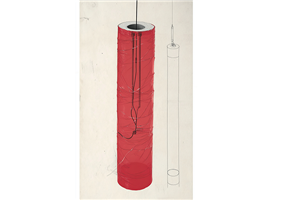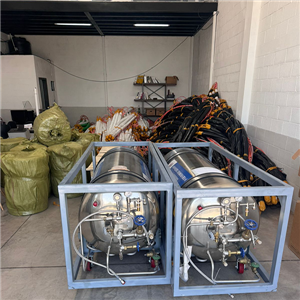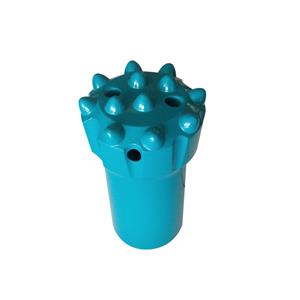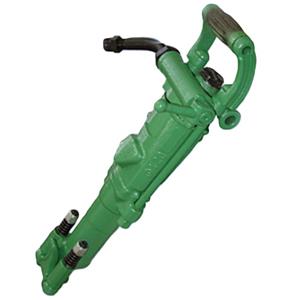
CO2 Rock Fracturing for Open-Pit Mining Projects in Hubei
CO2 Rock Fracturing for Open-Pit Mining Projects
Open-pit mines often face difficult rock conditions, uneven terrain, and demanding production schedules. In Hubei and other regions with complex geological conditions, project teams may evaluate several rock-breaking approaches before selecting a method that fits the site, local regulations, environmental requirements, and operational targets.
CO2 rock fracturing is one controlled rock-breaking method that may be considered alongside conventional drilling and blasting, hydraulic breaking, static splitting, and other excavation technologies. It uses a rapid gas-expansion event in a purpose-designed system to apply force to the surrounding rock. The method should be evaluated through site-specific engineering review rather than treated as a universal solution.
Case Context: Open-Pit Rock Breaking in Complex Terrain
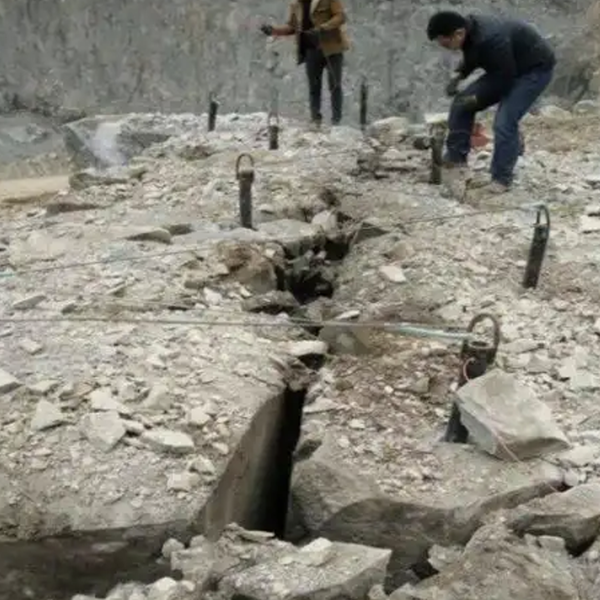
The source article describes a Hubei open-pit mining project involving hard rock and challenging terrain. According to the article, the project team carried out geological and rock-condition assessments before selecting a CO2-based rock-fracturing approach. It also reports that professional analysis tools were used to support project planning.
This planning stage is essential. Rock hardness, joint development, free faces, groundwater, access, excavation sequence, and nearby infrastructure can all affect the performance of any rock-breaking method. The same equipment may produce very different results in massive rock, fractured formations, weathered material, or confined work areas.
Why CO2 Rock Fracturing May Be Considered
CO2-based rock-fracturing systems are often discussed for projects where contractors want to carefully assess blasting-related disturbance. Potential application areas may include:
Selected open-pit mining operations
Secondary breaking of oversized rock
Road and railway earthworks
Foundation and slope excavation
Controlled rock removal near sensitive assets
Projects where conventional explosive use is restricted or requires additional review
The advantage is not automatic. A high-volume mine may still choose conventional blasting because of scale, established production workflows, and unit-cost considerations. Controlled gas-expansion technologies can be more relevant where site access, permitting conditions, vibration management, or operational flexibility are important factors.
Performance Claims Require Project Verification
The article describes the Hubei project as successful and suggests benefits related to site cleanup, environmental disturbance, and mining productivity. Such claims should be understood as source-specific observations, not universal guarantees.
Actual outcomes depend on many factors, including rock mass behavior, engineering design, equipment condition, operator competence, weather, logistics, local controls, and the desired fragment size. Before choosing a CO2 rock-fracturing method, a project owner should compare the complete excavation cost, including drilling, labor, transport, equipment mobilization, safety management, production pace, and post-break handling.
Safety and Environmental Management
CO2 rock fracturing still involves pressure-system risks and requires a controlled work environment. Work should be planned and supervised by trained, authorized professionals under approved engineering, safety, environmental, and emergency-management procedures.
Key project controls include competent geological assessment, equipment inspection, site isolation, operator training, regulatory compliance, transport and storage management, and communication with relevant local authorities. The method should never be represented as risk-free, nor should marketing claims replace formal project approval.
A Practical Decision Framework
For mining companies and contractors, the central question is not whether one technology is always better than another. The practical question is which method best fits a specific project’s geology, production objective, risk profile, environmental constraints, and compliance obligations.
A responsible evaluation can begin with site data, engineering review, and a controlled project assessment. This approach helps teams select between conventional blasting, mechanical breaking, CO2 rock fracturing, static splitting, or a combined solution based on evidence rather than assumptions.