How to Maintain a DTH Hammer and Drill Bit Before Small Problems Become Expensive
A DTH hammer rarely fails without warning.
Usually, the signs appear earlier: the drilling speed drops, air consumption rises, the hammer sounds different, or the bit comes out with an uneven wear pattern. The problem is that these signs are easy to ignore when a rig is still producing holes.
That is where maintenance matters. A DTH hammer is driven by compressed air and depends on rapid piston movement to transfer impact energy to the bit. Without inspection, lubrication, and timely replacement of worn parts, the drilling string gradually becomes less efficient and more expensive to operate.
Here is a practical field guide to DTH hammer and drill bit maintenance.
1. Inspect the hammer before drilling
Before using a new DTH hammer, or one that has just been serviced, check the complete drilling assembly.
Inspect the front and rear connections, outer casing, piston movement, bit connection, drill rods, drilling rig, and air compressor. Every connection should be secure before the hammer enters the hole.
The piston should move freely. The drill bit must match the hammer and be installed correctly. The air compressor must provide enough air for the hammer to operate properly.
Do not start drilling simply because the equipment looks clean. A loose connection or incorrectly installed bit can damage the hammer before the first hole is complete.
A used DTH hammer that has not been serviced should be lubricated and inspected before operation.
2. Lubrication protects the piston and internal parts
Lubrication has four main purposes:
Reducing friction and wear
Preventing rust
Resisting oxidation
Sealing internal clearances
The piston inside a DTH hammer moves at high frequency. If lubrication is poor, the piston surface can develop early fatigue cracks. Once those cracks appear, piston life falls quickly and operating costs rise.
Use a quality rock-drilling lubricant with good anti-wear, anti-rust, anti-oxidation, and anti-foam performance.
For dry drilling, a common reference rate is 0.114 liters of lubricant per hour for every 2 m³/min of compressed air. For example, if a 25.4 m³/min compressor supplies the hammer completely:
25.4 ÷ 2 × 0.114 = approximately 1.45 liters per hour
Wet drilling requires more attention. When water injection exceeds 7 L/min, a typical reference rate is 0.23 liters per hour for every 2 m³/min of air. Water can wash lubricant away, so additional oil may be necessary. If foam appears around the hole, the lubricant rate may also need to be increased.
These figures are starting points, not substitutes for the hammer manufacturer's instructions. Ground conditions, air pressure, water flow, and hammer design all affect the final setting.
3. Clean and maintain the hammer during service
Timely maintenance extends component life and reduces the risk of an unexpected shutdown.
Clean the DTH hammer parts regularly. When the outer casing becomes worn, or when internal wear causes the hammer performance to fall, stop and inspect the unit in detail.
If the components are still in good condition, apply lubricant and reinstall them in the correct order according to the assembly drawing. Store the hammer in a clean and protected location after servicing.
Do not wait until the hammer stops working completely. A gradual loss of penetration rate is often an earlier and cheaper warning.
4. What should be replaced during periodic overhaul?
After a DTH hammer has worked for an extended period, periodic overhaul should cover the following points:
Replace all internal O-rings, check-valve seals, and springs. This helps control air leakage and excessive air consumption.
Check the piston carefully. Maintain proper lubrication and remove sharp edges or burrs with an oilstone.
Confirm that the check valve is clear and returns to its correct position.
Measure wear on the outer casing and cylinder. Replace them when they are outside the permitted limits.
Follow the manufacturer's assembly sequence exactly.
Store the serviced hammer properly to prevent contamination and corrosion.
A correct assembly sequence is not a minor detail. One incorrectly installed component can change air distribution, reduce impact energy, and accelerate internal wear.
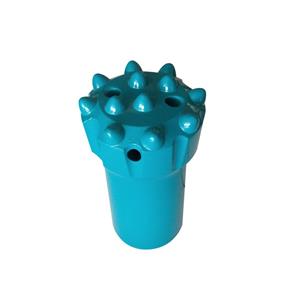
5. Inspect the drill bit after every hole
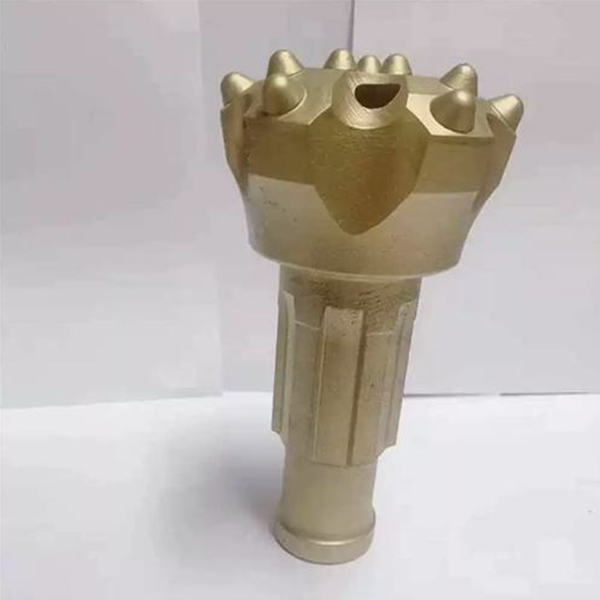
The drill bit is the cutting tool, so it is usually the first part of the DTH assembly to reach the end of its service life.
After each drilling cycle, inspect three areas.
Carbide insert wear: When the edge has worn to approximately two-thirds of the carbide column, continued drilling will reduce penetration efficiency. The bit should be reground. In many operations, a bit can be reground about three times before it reaches the end of its useful life.
Bit body wear: If the cylindrical section of the carbide insert projects approximately 3 mm outside the bit body, the bit should no longer be used. Continuing to drill can affect stability and accelerate damage.
Striking face wear: Inspect the rear face of the bit where the DTH hammer piston strikes it. If the impact indentation exceeds 1 mm, replace the bit. A badly worn striking face cannot transfer impact energy efficiently.
Running a worn bit to save one replacement often costs more through slower drilling, higher air consumption, poor hole quality, and additional stress on the hammer.
A simple maintenance rule for drilling crews
Before drilling: inspect the connections, piston, bit, rods, rig, and compressor.
During drilling: maintain lubrication, watch penetration speed, and pay attention to changes in hammer sound or air consumption.
After drilling: clean the hammer, inspect the bit, record wear, and decide whether the components are ready for the next hole.
Gaea Rock supplies DTH hammers, DTH drill bits, drill rods, and related rock-drilling tools for mining, quarrying, construction, and exploration work. Matching the hammer, bit, rod, air supply, and rock formation is the foundation of reliable drilling performance.