The Money You Lose While the Rig Is Parked: How to Store DTH Tools So They Live to Drill Again
When the rig shuts down — end of project, seasonal break, holiday shutdown — the tools come off and go into storage. Most of the time, they get leaned against a wall, thrown in a corner, or left on a pallet behind the shop. Nobody thinks about them until the next job starts, at which point someone grabs a hammer off the pile, screws it onto a string, and wonders why it doesn't run right.
A DTH hammer stored wet, uncapped, and forgotten for three months will cost more to repair than one that ran for three hundred hours and was put away properly. Storage isn't downtime for the tool. It's exposure time. Water, dust, rust, and handling damage are all working while the rig is parked.
Here's how to store DTH tools so they come out of the rack in the same condition they went in.
Drill Pipe: The Cheap Rubber Cap That Saves Thousands
Drill pipe looks indestructible. It's a thick-walled steel tube with big threaded ends. What could go wrong in storage?
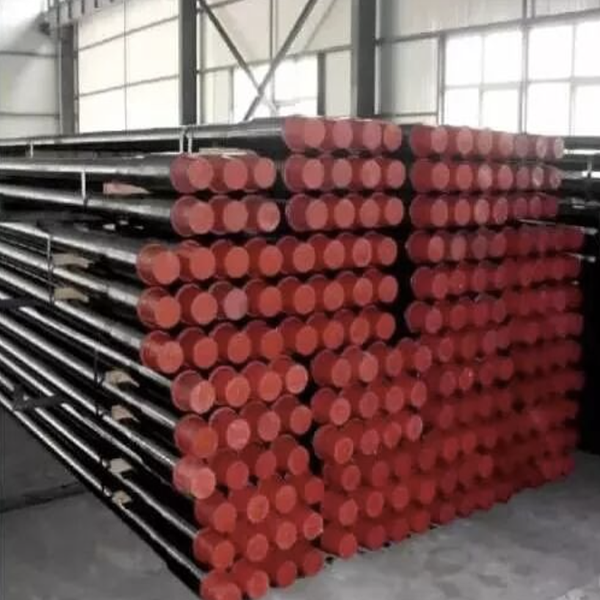
Two things. First, water left inside the bore after the last hole. Over weeks and months, standing water corrodes the internal surface. The rust particles that form will break loose the next time air flows through, and every one of those particles is headed straight for the hammer's internal clearances. Second, dirty or damaged threads. Threads that aren't cleaned and greased before storage develop surface rust. Threads that aren't capped collect dirt, grit, and shop debris in the thread form itself.
The storage procedure takes five minutes per pipe: blow out all water and debris with compressed air through the bore. Clean the threads — male and female — with a wire brush or solvent wipe. Apply a light coat of grease or thread compound to prevent corrosion. Snap a rubber cap over both ends. The caps cost pocket change and prevent everything from dust to mud wasps from getting inside.
While you're at it, check each pipe for straightness. A pipe with a slight bend can be straightened. A pipe with a significant bend should be tagged and set aside for evaluation — don't put it back in rotation without checking whether it's still within straightness tolerance. A bent pipe in a string amplifies deviation, increases torque, and accelerates wear on every component downstream.
DTH Hammer: Short-Term vs Long-Term Storage
A hammer that's going back into service next week needs a different preparation than one that's being mothballed for the season.
Short-term storage (days to a few weeks):
Remove all water from inside the hammer. Water left in the hammer body will corrode the polished surfaces of the piston, cylinder, and distributor. Pour approximately one liter of rock drill oil through the top connection — enough to coat all internal surfaces. Run compressed air through the hammer for about fifteen seconds to distribute the oil into every clearance and passage. Clean the exterior, including the threads at both ends. Cap the top and bottom connections with rubber caps. Store horizontally in a dry area — not on the ground, not against an outside wall where condensation forms.
Long-term storage (months or off-season):
Complete disassembly is the only proper way. Remove all moisture. Clean every part individually with solvent — piston, cylinder, distributor, check valve, chuck, wear sleeve. Do this indoors on a clean bench, not in the dirt outside the shop. Inspect each part. Light surface staining is acceptable. Any pitting, scoring, or visible wear past the manufacturer's limits means the part should be tagged for replacement when the hammer goes back into service.
Lubricate all parts with a suitable preservative oil — not so much that it pools, but enough to leave a visible film. Reassemble the hammer. Cap both ends. Store horizontally in a dry, temperature-stable environment. A hammer stored this way can sit for a year and come out ready to run.
Restarting a Hammer From Storage
This is the step that gets skipped, and skipping it is how a properly stored hammer still fails on its first shift back.
Before a hammer that's been in storage goes down a hole, disassemble it and inspect every internal part. Surface oxidation is normal — a light haze on steel surfaces from sitting. Polish it off with fine-grit sandpaper or emery cloth. Oxidized surfaces are rough on a microscopic level, and that roughness will chew up running clearances if the hammer goes straight into service without cleanup.
Clean every part again after polishing. Re-lubricate. Reassemble. Now it's ready.
The inspection step matters because storage can hide problems that developed before the hammer was put away. A piston that was starting to score on its last shift doesn't heal during storage — the corrosion creeps into the scored area and makes it worse. A check valve that was starting to stick will be fully stuck after months of sitting. Finding these during a bench inspection costs an hour of labor. Finding them at the bottom of a hole costs a day.
The Economics Nobody Tracks
Most drilling contractors don't track storage-related damage as a separate cost category. A hammer that runs rough after a restart gets blamed on "wear and tear" or "bad luck." But the failure mode — rust particles in the clearances, corroded piston surfaces, stuck valves — tells a different story.
The cost of proper storage is negligible: rubber caps, a can of grease, an hour of bench time. The cost of improper storage is the price of a hammer rebuild or replacement, plus the downtime when it fails in the hole. If you're going to the trouble of buying quality tools, put them away like they matter. Because when the rig fires up again, the hammer doesn't know it was in storage — it only knows whether it was stored right.