Selecting Steel for Hot-Insert Button Bits in Rock Drilling
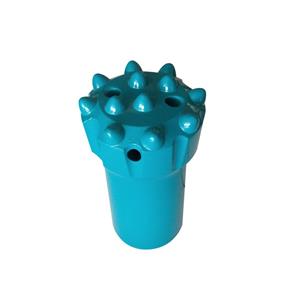
Threaded button bits are critical tools for hydraulic drilling rigs, mining operations, tunneling projects, and quarry applications. They must transfer high-frequency impact energy into hard rock while resisting abrasion, vibration, corrosion, and repeated loading.
A button bit is not simply a steel body with carbide buttons installed. Its performance depends on the interaction of bit geometry, carbide grade, button-retention method, body steel, heat treatment, machining precision, flushing design, and operating conditions.
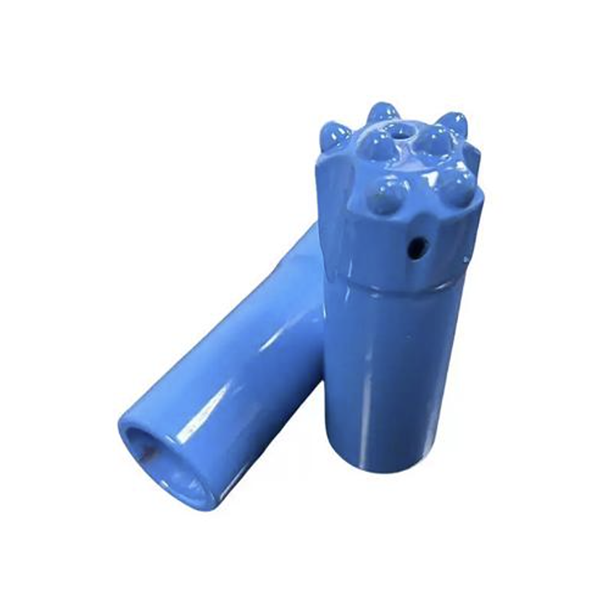
For demanding medium- and deep-hole drilling, hot insertion is widely regarded as an effective method for securing carbide buttons. However, hot insertion places special requirements on the steel used for the bit body. The material must provide sufficient expansion during heating, retain strength after cooling, support carbide buttons securely, and maintain toughness under impact.
This article explains the main button-retention methods, the material requirements for hot-insert button bits, and the manufacturing controls that help improve reliability.
Why Button Bit Bodies Matter
The button bit directly contacts and breaks the rock. It is exposed to repeated impact, abrasive cuttings, water or air flushing, drilling vibration, and corrosive mine conditions. In high-power drilling, the bit body and carbide inserts experience thousands of impact cycles per minute.
If the bit body has insufficient strength, button holes may deform and lose their holding force. If the body is too brittle, cracks can develop around button holes, flushing holes, or thread connections. If heat treatment is inconsistent, the bit may suffer from early fatigue failure, poor gauge retention, or button loss.
A high-quality button bit therefore needs a body steel that balances hardness, toughness, fatigue resistance, wear resistance, thermal stability, and machinability.
Main Carbide Button Retention Methods
There are three common methods for fixing carbide buttons into a rock drill bit body: brazing, cold pressing, and hot insertion.
Brazing
Brazing was one of the earliest button-retention methods. The carbide button is placed in a prepared hole and joined with a brazing alloy, often based on copper or silver.
This method can have relatively low requirements for button-hole precision and button size. However, the process requires careful heating control, clean joining surfaces, suitable braze alloy, and correct joint clearance. Poor brazing can cause voids, insufficient joint strength, cosmetic defects, and early button loss.
Brazed button bits may still be appropriate for some small-diameter or low-demand applications, but they are generally less suitable for high-impact threaded button bits used on modern hydraulic rigs.
Cold pressing
Cold pressing uses an interference fit. The carbide button is pressed into a smaller hole using external force. The difference between the button diameter and hole diameter creates the holding force.
Cold pressing is relatively easy to understand and can support efficient production. However, it can also create high local stress in both the carbide and the bit body. If the interference is incorrect, the carbide may crack during installation, or the body may develop damage around the button hole.
Cold-pressed bits can perform well in suitable applications, but long-term stability depends heavily on machining precision, material properties, interference control, and drilling conditions.
Hot insertion
Hot insertion uses the difference in thermal expansion between the bit body and carbide button. The steel body is heated, causing the button hole to expand. The carbide button can then be installed with lower mechanical force. As the body cools, the hole contracts and creates a secure interference fit around the button.
This method can reduce installation damage because the carbide and steel body are not subjected to the same high pressing load required by cold insertion. When properly controlled, hot insertion can provide stable button retention for high-performance threaded button bits.
The process must be carefully engineered. Heating temperature, hole diameter, button diameter, interference value, body-steel composition, cooling method, and heat-treatment condition all affect the final result.
Material Requirements for Hot-Insert Button Bit Bodies
A steel selected for hot-insert button bits should meet several requirements.
First, it must provide sufficient hardness and strength after heat treatment. The source article identifies a reference hardness range of approximately HRC 40-50 for the bit body in the heat-treatment condition. This should not be treated as a universal production specification. The correct target depends on the bit diameter, carbide size, rock conditions, and the manufacturer’s engineering standard.
Second, the steel must have good toughness. A body that is overly hard may crack around button holes or thread roots. A body that is too soft may deform under impact and allow buttons to loosen.
Third, it should have good fatigue strength and wear resistance. The bit body operates under repeated impact cycles and abrasive contact with drilling cuttings and the hole wall.
Fourth, the steel should offer useful thermal stability and a suitable coefficient of thermal expansion. These characteristics help the bit body expand predictably during hot insertion and retain button-holding force after cooling.
Finally, the material must be machinable. Threaded button bits require accurate machining of the thread, button holes, flushing holes, face profile, and chip-removal grooves. Poor surface finish or machining marks can become stress concentrators and lead to fatigue cracking after heat treatment.
Alloy Design Considerations
High-performance button-bit steels are commonly based on alloy systems containing combinations of carbon, chromium, nickel, molybdenum, vanadium, manganese, and silicon. Each element contributes different properties.
Carbon affects strength and hardness, but excessive carbon can reduce toughness and make the steel more difficult to process.
Chromium can improve hardenability, wear resistance, tempering stability, and corrosion resistance.
Nickel is often used to improve toughness, particularly impact toughness and low-temperature performance.
Molybdenum can improve tempering resistance and reduce susceptibility to temper embrittlement.
Vanadium can contribute to grain refinement and strengthening when controlled appropriately.
The source article discusses a historical recommended steel grade, Q45NiCr1Mo1VA, for hot-insert button-bit bodies. This should be considered a technical reference rather than a universal recommendation. Steel selection must be validated through metallurgical testing, process trials, and field performance data. Manufacturers should confirm that any material complies with their current drawings, quality system, customer requirements, and applicable standards.
Manufacturing Route and Quality Control
A controlled button-bit manufacturing route may include:
Blank preparation from bar stock or forged stock
Machining of the bit profile, flushing grooves, water holes, and thread
Heat treatment of the bit body
Precision drilling or reaming of button holes
Measurement and verification of hole dimensions
Carbide-button preparation
Hot insertion
Surface cleaning
Corrosion protection
Final inspection and packaging
The thread and button-hole surfaces deserve special attention. Tool marks, scratches, roughness, and surface defects can become fatigue initiation sites. The article emphasizes that machining defects may be amplified during heat treatment, creating early failure risks.
Button-hole precision is essential because hot insertion depends on a carefully controlled fit. Hole dimensions, roundness, surface condition, and location must be verified before buttons are installed.
Heat Treatment Controls
Heat treatment determines whether the selected steel delivers its intended properties. The aim is not simply to achieve hardness. The process must create a microstructure that provides toughness, strength, wear resistance, and fatigue performance at the required hardness level.
A controlled route may include stress-relief or stabilization treatment, preheating, austenitizing, quenching, and tempering. Protective atmospheres or vacuum processing can help reduce oxidation and decarburization.
Rapid or uneven heating can create thermal stress. Incorrect quenching can cause distortion or cracking. Improper tempering may leave excessive brittleness or reduce button-retention performance.
For this reason, heat-treatment parameters should be developed and approved by qualified materials engineers. Historical values and equipment examples from technical articles are useful references, but they must not replace current validation.
Conclusion
Hot insertion is a valuable button-retention method for threaded button bits used in demanding rock drilling applications. Its success depends on more than heating the bit body and installing carbide buttons. Reliable performance requires the right steel, controlled interference, precise button holes, stable heat treatment, clean machining, and rigorous final inspection.
When bit-body material and process control are matched to drilling conditions, hot-insert button bits can provide stronger button retention, better fatigue performance, longer service life, and lower drilling cost per meter.