Hydraulic Rock Splitters for Mining, Demolition, and Restricted Excavation
Hydraulic Rock Splitters for Mining and Controlled Excavation
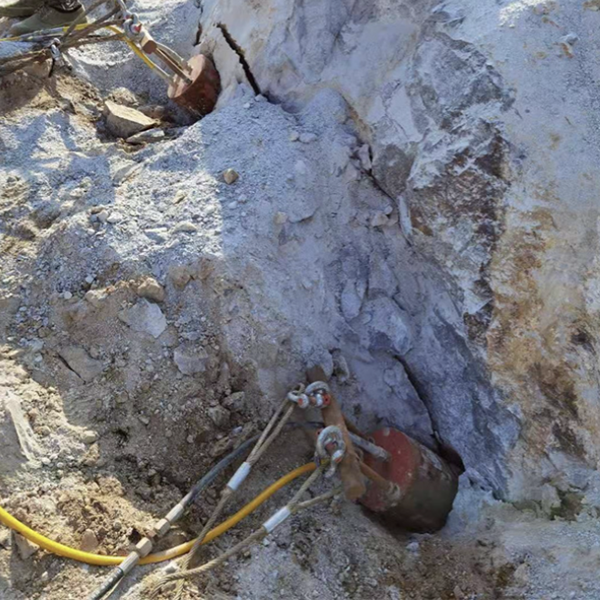
Hydraulic rock splitters are used to separate rock and concrete in mining, quarrying, infrastructure construction, foundation works, tunnel projects, and selected demolition applications. The equipment applies controlled hydraulic force to initiate fractures in the material, providing another option for projects that need to assess vibration, access, or work-zone constraints.
A hydraulic splitting system is not a universal replacement for every excavation method. The appropriate choice depends on rock type, structural condition, production target, site access, environmental requirements, local regulations, and the availability of trained personnel.
Application Areas
Hydraulic rock splitters may be considered for:
Metal and non-metal mining
Quarry block extraction
Foundation and basement rock excavation
Tunnel, trench, and pipeline projects
Highway and railway works
Reinforced-concrete removal and local structural modification
Indoor or narrow-space demolition
Emergency removal of large rock
In sensitive locations, project teams may consider controlled mechanical methods alongside conventional blasting, breakers, static splitting, and gas-expansion technologies. The final selection should be made through a site-specific engineering review.
Evaluating a Hydraulic Splitting Solution
Before selecting a rock splitter, contractors should examine the full project context. Important considerations include geological data, natural joints in the rock, excavation geometry, nearby structures, machinery access, production scheduling, and disposal arrangements.
Cost should also be assessed as a complete project cost. Equipment price alone is not enough. Drilling, labor, transport, maintenance, machine time, safety controls, supervision, and post-break material handling can all influence the final result.
The source article includes performance and cost statements; these should be treated as source claims rather than guaranteed outcomes. Real performance must be confirmed for the specific rock mass and worksite.
Selecting a Reliable Supplier
A responsible supplier evaluation should include manufacturing capability, technical documentation, service coverage, equipment quality control, relevant project experience, spare-parts support, and after-sales response. Customers should confirm that the supplier can provide clear technical boundaries and an appropriate support plan for the intended application.
Yantai Gaea can support preliminary technical discussions for projects considering hydraulic rock splitting. Equipment suitability should always be confirmed against the site’s engineering conditions and applicable compliance requirements.
Safety and Compliance
Hydraulic rock-splitting equipment uses high-force mechanical systems. All installation, operation, inspection, maintenance, and abnormal-condition management must be performed by trained and authorized personnel under a documented safety plan.
Project teams should follow manufacturer documentation, local workplace-safety rules, equipment inspection requirements, exclusion-zone procedures, and competent supervision arrangements. Claims relating to disturbance, environmental impact, productivity, or cost should be validated through project-level assessment rather than assumed in advance.