Improving Chisel Bits for Faster Rock Drilling and Longer Service Life
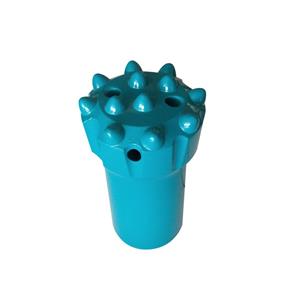
Chisel bits, also called blade bits or flat bits, remain widely used in rock tunneling and mining because of their simple structure, easy manufacture, and convenient regrinding. A conventional chisel bit uses a long straight cutting edge to break rock under impact and rotation.
However, this simple cutting geometry also has limitations. The outer corners of the cutting edge often wear faster than the center. In hard or fractured rock, these corners can chip, jam, or lose their ability to maintain a round hole. Uneven wear reduces penetration rate, increases regrinding work, and can shorten the useful life of the bit.
Improving the geometry of a chisel bit can help distribute cutting load more effectively, protect vulnerable corners, improve flushing, and reduce the total cost per drilled meter. One useful approach is to replace the single long cutting edge with a multi-edge arrangement that combines angled outer cutting edges and chip-breaking grooves.
Why Conventional Chisel Bits Wear Unevenly
During drilling, every point on the cutting edge contacts the rock differently. The center section of the edge generally travels a smaller circular path than the outer sections. The closer a point is to the outer diameter, the larger the area of rock it must break during each rotation.
As a result, the outer corners of a conventional chisel bit often carry more cutting and abrasion load than the center. These corners may also contact the sidewall of the hole, creating additional friction and side wear.
When the corners wear rapidly, several problems can appear:
Reduced ability to maintain full hole diameter
Higher risk of bit jamming
Poor hole roundness
More frequent regrinding
Higher cutting resistance
Greater risk of edge chipping
Reduced drilling efficiency
The goal of a modified chisel-bit design is to reduce the concentrated load on these vulnerable outer areas while improving rock-breaking action across the entire bit face.
From One Long Edge to Multiple Short Edges
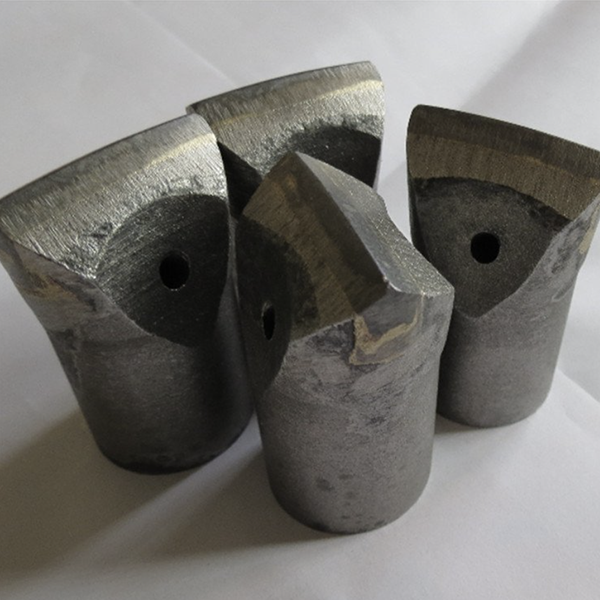
The source article describes an experimental approach in which the two easily worn corners of a chisel bit were ground into angled cutting edges. Small grooves were then added to each side of the cutting face. This changed a single long cutting edge into multiple shorter edges with different cutting directions.
In the reported design, a long primary edge was transformed into a multi-edge cutting system. The total effective cutting-edge length increased, while the load carried by each individual edge segment was reduced.
This geometry can improve performance in several ways.
First, the angled outer edges help protect the original corners. Instead of allowing the outermost corner to take all side abrasion, the angled surfaces guide contact and help spread force over a larger area.
Second, multiple short edges can create more rock-breaking points during each impact. Rather than producing one long linear indentation, the bit may create several intersecting or offset indentations. This can encourage rock to fracture more easily under combined compression, shear, and impact loading.
Third, the grooves can improve chip evacuation. If the groove geometry aligns with the flushing holes, air or water can move cuttings away from the bit face more efficiently. Better flushing reduces regrinding of cuttings, lowers temperature, and slows wear.
Potential Benefits of a Multi-Edge Chisel Bit
A well-designed modified chisel bit may offer several practical benefits.
Longer service life
By removing or reshaping the most heavily loaded outer corner sections, the modified geometry can reduce concentrated wear. The source article reports historical tests in which an angled-edge modification improved life after regrinding. These results should be treated as case-specific references. Actual life improvement will depend on rock type, drill power, flushing, bit material, regrinding quality, and operating conditions.
The basic engineering principle is sound: when cutting load is distributed more evenly, localized wear and damage can be reduced.
Higher penetration efficiency
A multi-edge bit can break rock through several contact zones instead of relying only on one straight edge. Different cutting directions may create a more irregular and fractured hole bottom, which can improve rock fragmentation under the same impact energy.
The article reports a significant average drilling-efficiency improvement in its comparative field tests. Contractors should verify such gains through controlled trials using the same rig, drill steel, air pressure, hole diameter, and rock formation.
Better guidance and hole shape
A conventional flat bit may struggle to maintain a centered and round hole if the cutting edge wears unevenly. A modified bit that produces a more stable, tapered hole-bottom profile may improve self-guiding behavior.
Better hole centering can be valuable in tunneling and blasting because hole deviation affects drilling accuracy, burden, spacing, charge placement, fragmentation, and overbreak.
Fewer jams and chipped corners
In hard, fractured rock, a conventional chisel bit may contact the hole bottom along a narrow line. This can leave the outer corners vulnerable to jamming or chipping.
A multi-edge configuration can increase the contact area and distribute load more broadly. When combined with effective flushing, this may reduce stuck-bit incidents and edge damage.
Improved flushing
The small grooves described in the source article can become part of the flushing path. When connected appropriately with the bit’s air or water holes, they help guide drilling cuttings outward from the cutting face.
Good flushing is essential in rock drilling. If cuttings remain at the hole bottom, the bit re-crushes broken material instead of breaking fresh rock. This increases energy consumption, heat, abrasion, and tool wear.
Regrinding Advantages
Regrinding is essential for carbide-tipped chisel bits. The challenge with a conventional bit is that heavily worn outer corners may require substantial material removal to restore the original profile. This can consume carbide, increase grinding time, and make it difficult to maintain consistent geometry without suitable gauges.
A modified bit may simplify regrinding because wear can remain more localized at the outer angled edges. In some cases, the center portion may need less material removal. This can reduce grinding workload and preserve usable carbide.
However, regrinding must be done carefully. Excessive heat can damage carbide or weaken the bond between carbide and bit body. Coarse grinding wheels can leave deep scratches that become crack initiation points. Rapid quenching in water after overheating can also create thermal shock and should be avoided unless the bit manufacturer specifies a controlled process.
Regrinding should be performed by trained personnel using correct equipment, cooling practice, inspection standards, and the bit supplier’s recommended geometry.
Practical Considerations Before Adoption
A modified chisel-bit design should be tested before large-scale use. The following factors should be evaluated:
Rock hardness, abrasiveness, and fracture condition
Drill rig impact energy and rotation speed
Hole diameter and required hole straightness
Air or water flushing capacity
Bit steel and carbide grade
Existing regrinding capability
Cost per meter drilled, including downtime and labor
Comparative penetration rate and bit life
The historical test data described in the source article provide useful ideas, but modern drill rigs, carbide grades, and operating conditions vary. Field trials should be planned, measured, and reviewed by qualified drilling personnel.
Conclusion
Chisel bits are simple tools, but small changes to cutting geometry can have a significant effect on drilling performance. By introducing angled outer edges, multiple short cutting edges, and properly placed flushing grooves, manufacturers and contractors may reduce corner wear, improve rock fragmentation, support better hole quality, and lower regrinding demand.
The best bit design is always application-specific. A successful modification must match the rock formation, drilling rig, flushing system, bit material, and maintenance practice. When validated through controlled field testing, improved chisel-bit geometry can become a practical route to longer service life and lower drilling cost.