Quarry Blasting Near Homes and Roads: How Complex Sites Require a Different Rock-Breaking Strategy
A granite quarry can have excellent stone and still be impossible to operate with a standard blasting plan.
The challenge becomes much greater when the quarry is surrounded by homes, factories, public roads, or other sensitive facilities. In that setting, the quarry is not judged only by production volume. Vibration, air overpressure, fly rock, dust, traffic disruption, and community response all become part of the engineering problem.
The question is no longer simply, “Can the rock be broken?”
It becomes: “Can the rock be broken without damaging the surrounding environment or losing the right to operate?”
Why a normal blast design may fail
A conventional blast pattern developed for an isolated quarry may not be suitable beside a residential area or industrial plant.
A design that performs acceptably in open ground can create unacceptable vibration when the same energy is released close to a building. A large air blast, poorly controlled stemming, or excessive charge concentration can also affect nearby structures and create complaints from residents.
The geology may be the same, but the operating constraints are completely different.
Complex quarry sites usually need a site-specific plan that considers:
Distance to houses and buildings
Location of roads and traffic routes
Condition of nearby structures
Slope stability
Ground vibration limits
Air overpressure
Fly-rock protection
Dust and noise control
Community communication
Monitoring and documentation
In many regions, regulatory approval and community acceptance can be as important as the technical blast design.
Precision initiation helps reduce disturbance
Where conventional explosives are legally permitted, electronic initiation systems can provide better timing control than basic initiation methods.
More precise timing allows the engineering team to manage the sequence of energy release and reduce the amount of charge acting at one moment. It can also improve fragmentation consistency and help reduce the risk of excessive vibration.
However, electronic detonators are not a standalone solution. They do not compensate for poor drilling, inaccurate hole placement, weak stemming, or an unsuitable energy distribution.
The full system still needs to be designed and verified by qualified blasting professionals under local regulations.
Every part of the drilling pattern matters
Complex sites require closer control of the drilling and loading design.
Hole diameter, depth, spacing, burden, stemming, charge distribution, and initiation sequence all influence the final result. A small change in the actual hole position can alter the burden and change how energy moves through the rock.
This is why quality control before charging is so important. The design should be checked against the holes that were actually drilled, not only against the original drawing.
For a sensitive quarry, engineers typically need to:
Verify hole location and depth.
Check deviation and actual burden.
Confirm that loading follows the approved design.
Inspect stemming and access control.
Monitor vibration and air overpressure.
Compare measured results with the site limits.
Adjust future work only through an approved engineering process.
Exact explosive quantities, loading procedures, and timing values must be determined by licensed professionals. They should never be copied from another quarry without a site assessment.
Monitoring is part of the engineering, not an afterthought
A complex quarry needs reliable monitoring equipment placed at representative locations.
Monitoring may include ground vibration, air overpressure, dust, noise, and structural response. The data helps determine whether the operation is staying within its approved limits and provides an objective record when concerns are raised.
Community communication also matters. Residents may notice a vibration that is technically within the limit but still feel uncomfortable if they were not informed in advance.
A responsible quarry should explain:
When work is scheduled
What controls are in place
Where monitoring equipment is located
How complaints will be recorded
Who will review unusual events
What corrective action is available
Trust is easier to maintain when the operator communicates before a problem occurs.
Consider a non-explosive alternative
Some sites are too restricted for conventional explosives, even after extensive optimization.
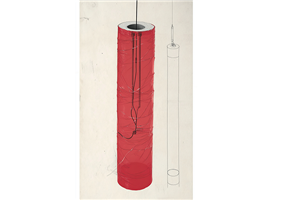
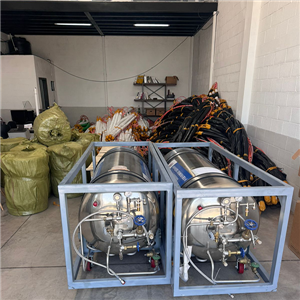
Quarries near homes, active highways, power lines, railways, and industrial buildings may benefit from a non-explosive rock-breaking method. Gaea Rock's O2 Gas Energy Rock Splitting System is designed for this type of controlled application.
The system uses liquid oxygen and a combustible absorbent inside a fracturing tube. After ignition, the liquid oxygen changes phase and expands rapidly, producing pressure that fractures the surrounding rock.
It is not an explosive. It is a physical phase-change rock-splitting process.
Compared with conventional blasting, an O2 system can help reduce:
Shock-wave intensity
Ground vibration
Fly-rock concerns
Explosive storage requirements
Transport restrictions associated with explosive materials
Disruption near sensitive structures
The system still requires proper drilling, tube placement, soil stemming, remote ignition, exclusion zones, and trained operators. Lower impact does not mean zero risk, and every project still requires a site-specific safety plan.
The right quarry plan balances four goals
A successful complex-environment quarry must balance:
Rock fragmentation
Environmental protection
Public and worker safety
Total operating cost
Focusing on only one of these can create a larger problem elsewhere. Maximum fragmentation may increase vibration. Minimum charge may create oversized rock and expensive secondary breaking. A low-cost method may cause delays if the surrounding community rejects the operation.
The best solution may be a carefully controlled conventional blast, a reduced-vibration design, or a non-explosive O2 rock-splitting system. The choice should be based on geology, distance, regulation, monitoring data, and the actual consequences of failure.
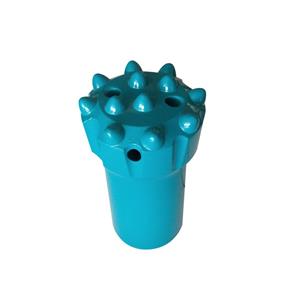
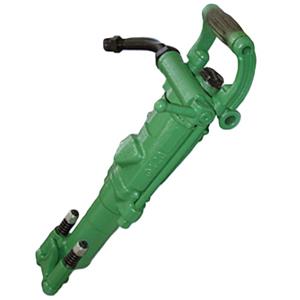
Gaea Rock supplies O2 rock blasting systems, fracturing tubes, liquid oxygen storage equipment, and drilling tools for quarrying, mining, construction, and infrastructure projects where controlled rock breaking is essential.