What Is CO2 Rock Fracturing and When Is It Used?
What Is CO2 Rock Fracturing?
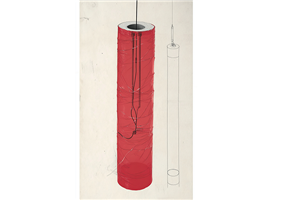
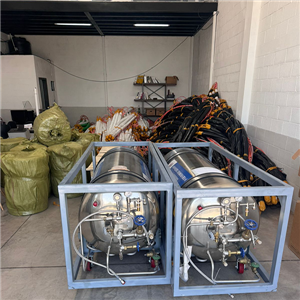
CO2 rock fracturing, often called carbon dioxide gas rock breaking, is a controlled rock-fragmentation method used in selected mining, tunneling, civil-engineering, demolition, and excavation projects. It is based on a managed gas-expansion event within a purpose-designed system, creating force that can help fracture rock or concrete.
The technique is often discussed as an alternative or complement to conventional explosive blasting, mechanical breaking, and static splitting. It should not be treated as a universal replacement for those methods. The right choice depends on geology, production targets, access conditions, work-zone constraints, environmental requirements, and local approvals.
Where CO2 Rock Fracturing May Be Relevant
CO2 rock-fracturing technology may be evaluated for:
Mine development and selected quarry work
Tunnel enlargement and rock removal
Road and railway earthworks
Foundation pits and trench-related rock excavation
Secondary breaking of oversized rock
Projects near structures, utilities, or sensitive facilities
Restricted work areas that require careful review of conventional blasting
In each case, a site-specific engineering assessment is essential. Rock strength, fracture development, water conditions, excavation geometry, available free faces, and nearby assets can strongly influence the results.
Potential Benefits and Practical Limits
The source article highlights CO2 rock fracturing as potentially useful where project teams want to manage ignition-related restrictions or limit disturbance. Such benefits must be verified on the specific site. Actual vibration, noise, fragmentation, productivity, cost, and environmental effects vary by project and should not be assumed from general descriptions.
The method also has practical limits. It may not provide the best productivity for every large-scale, uniform rock mass. A high-volume mine, for example, may favor conventional drilling and blasting because of equipment scale and established production methods. Conversely, a constrained excavation project may give greater importance to control, access, and regulatory factors.
Selecting the Right Rock-Breaking Method
A responsible evaluation should compare total project requirements rather than equipment price alone. Important factors include drilling requirements, labor, equipment movement, consumables, production rate, site preparation, safety controls, transport, supervision, and post-break handling.
Project teams should ask:
What are the rock mass conditions?
What production volume is required?
Are there sensitive structures or public areas nearby?
Which regulations, permits, and contractor qualifications apply?
Is the site suitable for controlled gas-based equipment?
Can the work be performed by trained and authorized personnel?
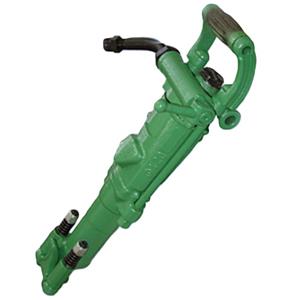
Would mechanical breaking, static splitting, conventional blasting, or a hybrid method better meet the objective?
Safety and Compliance
CO2 rock fracturing involves pressure-system hazards and requires professional management. It must be carried out only by trained and authorized personnel working under an approved engineering and site-safety plan. Equipment selection, inspection, transport, storage, exclusion zones, emergency arrangements, and local regulatory compliance all require careful attention.
The most practical use of CO2 rock-fracturing technology is therefore not a one-size-fits-all claim. It is a controlled engineering option that can be assessed alongside other rock-breaking methods to determine the best fit for a particular mine, tunnel, infrastructure, or excavation project.