Cost Comparison: Traditional Explosives vs O2 Rock Blasting System for Saudi Arabian Quarries & Construction Projects
Introduction: The Hidden Costs of Rock Blasting in Saudi Arabia
For quarry owners and construction contractors across the Kingdom of Saudi Arabia, rock blasting is a daily necessity — and a major headache. Whether you're extracting granite near Riyadh, excavating foundation rock for a Jeddah high-rise, or clearing terrain for one of the Vision 2030 mega-projects, the method you choose to break rock directly impacts your bottom line.
Most operators default to traditional explosives (ANFO, emulsions, dynamite) because it's what they've always used. But when you calculate the true total cost per cubic meter — including licensing, storage, certified personnel, insurance, and regulatory compliance — the picture changes dramatically.
This article provides an honest, numbers-driven comparison between conventional explosives and the O2 Rock Blasting System (Liquid Oxygen Rock Splitting Technology), based on real-world operating data from quarries and construction sites across the GCC region.
Chapter 1: Breaking Down the True Cost of Traditional Explosives
When a Saudi contractor says "blasting costs me SAR X per cubic meter," they're usually only counting the explosive material cost. Here's what they're not including:
1.1 Explosive Material Cost
At face value, this seems affordable. But read on.
1.2 Licensing & Regulatory Costs (Saudi-Specific)
In Saudi Arabia, the General Authority for Military Industries (GAMI) and the Ministry of Interior strictly control explosives:
For a medium-sized operation blasting 50,000 m³/year, this adds 0.86–2.10 per m³ in hidden costs — on top of the material cost.
1.3 Downtime & Delay Costs
Traditional blasting comes with built-in delays that most contractors don't track:
Waiting for permit approval per blast: 24–72 hours average
Site evacuation radius (typically 200–500m): stops all other work
Post-blast inspection before resuming work: 1–2 hours
Weather restrictions: wind direction, rain, extreme heat can halt operations
Nearby complaint investigations: residential or infrastructure proximity issues
Industry estimates suggest downtime adds another 15–25% to effective blasting costs.
1.4 The "Invisible" Cost: Opportunity Loss
When you're waiting for permits, evacuating personnel, or dealing with a neighbor's complaint about vibration damage:
Your excavators sit idle
Your trucks aren't moving material
Your project deadline slips
Penalty clauses may apply on fixed-schedule contracts (common in NEOM, Red Sea, and giga-projects)
Chapter 2: Introducing the O2 Rock Blasting System
What Is O2 Blasting?
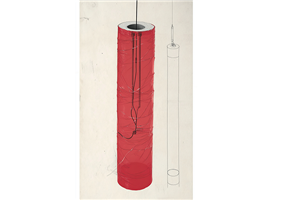
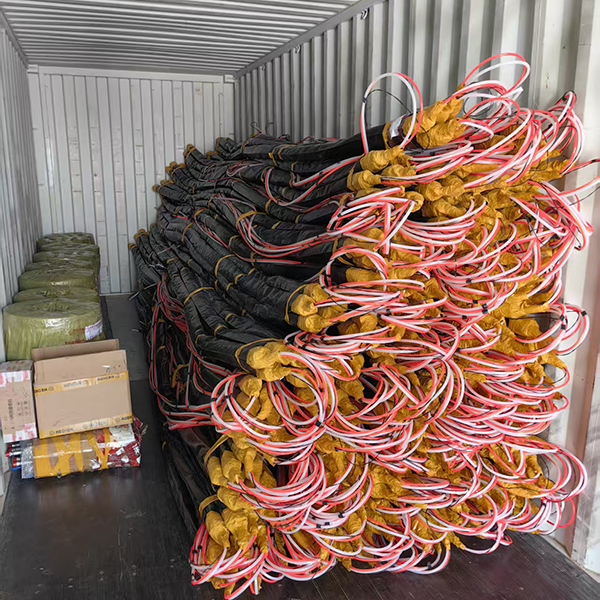
The O2 Rock Blasting System (also known as Liquid Oxygen Rock Splitting or LOX Blasting) uses liquid oxygen (LOX) as the gas expansion agent instead of chemical explosives. The system was developed by Yantai Gaea Rock Split Machinery Technology Co., Ltd. as a safer, more economical upgrade from earlier CO2 rock splitting technology.
How It Works (Simplified)
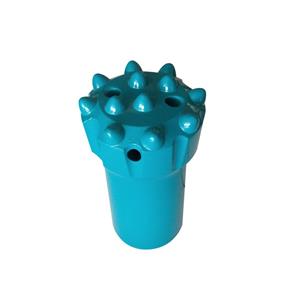
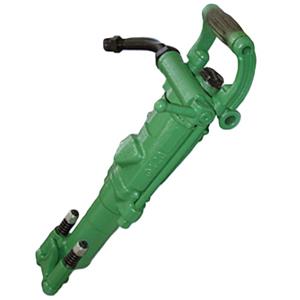
Drill holes into the rock using standard drilling equipment (same pattern as conventional blasting)
Insert paper splitting tubes (consumable, custom-length from 2–15 meters)
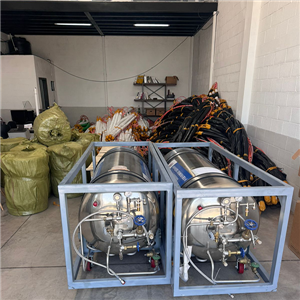
Connect to O2 filling tank via flexible hose
Fill with liquid oxygen (~6 kg per meter of tube)
Seal the hole with clay/sand
Initiate remotely — the oxygen rapidly expands, cracking the rock along controlled fracture lines
Key Technical Advantages
Chapter 3: Head-to-Head Cost Comparison
Let's put everything together for a hypothetical 50,000 m³/year granite quarry operation in Saudi Arabia:
3.1 Direct Cost Per Cubic Meter
3.2 Indirect / Overhead Cost Per Cubic Meter
3.3 Total Cost Comparison
Bottom line: Switching to the O2 system could save a mid-sized Saudi quarry operator over $370,000 per year.
Chapter 4: Beyond Cost — Why Saudi Contractors Are Making the Switch
4.1 Regulatory Freedom
Saudi Arabia's explosives regulations have tightened significantly under Vision 2030 safety reforms:
Longer approval timelines for new licenses
Stricter storage requirements (distance from roads, buildings, population centers)
Mandatory certified personnel for every blast operation
Increased inspections and audit frequency
Heavier penalties for non-compliance
The O2 system completely bypasses the explosives regulatory framework because it does not contain any classified explosive substances. Liquid oxygen is classified as an industrial gas — the same category used in medical and welding applications.
4.2 Safety Record
4.3 Versatility Across Saudi Project Types
The O2 system has been successfully tested and deployed in diverse Saudi conditions:
Chapter 5: Real-World Case Study — Successful O2 Testing in Saudi Arabia
[Note: Insert specific details here — location, rock type, volume, cost savings achieved, photos/video links]
Project Background:
Location: [Saudi Arabia — specific site]
Rock Type: [Granite / Limestone / Sandstone]
Project Scope: [X cubic meters]
Challenge Faced: [Describe why they needed an alternative]
Results Achieved:
Cost per m³ reduced by: [X]%
Blasting cycle time: Reduced from [X] hours to [X] hours
Regulatory burden: Eliminated explosives licensing requirement
Safety incidents: Zero
Client Testimonial:
"[Arabic or English quote from the Saudi partner/test client about their experience]"
Chapter 6: Common Questions (FAQ)
Is the O2 system legal in Saudi Arabia?
Yes. The O2 system uses liquid oxygen (industrial gas), not classified explosives. It complies with Saudi industrial safety regulations and does not require an explosives handling license.
What rock types does it work on?
The O2 system works effectively on granite, limestone, basalt, sandstone, marble, and virtually all hard rock types found across the Arabian Peninsula.
Do I need special drilling equipment?
No. Use your existing drill rigs. Standard hole diameters of 60–150mm work perfectly with the paper splitting tubes.
Where do I get liquid oxygen in Saudi Arabia?
Liquid oxygen is widely available from industrial gas suppliers throughout the Kingdom, including major cities (Riyadh, Jeddah, Dammam, Jubail) and industrial cities. The same suppliers that provide oxygen for welding and medical applications can provide LOX for the O2 system.
What is the minimum order quantity?
Contact us for tailored solutions — we supply everything from single-site trials to full-scale quarry operations across the GCC region.
How does it perform in extreme Saudi summer temperatures?
The system is designed for field use in hot climates. The filling tanks are insulated, and the rapid-fill-to-fire workflow means LOX doesn't sit in the tube for extended periods. Precautions for extreme heat (>45°C) are included in our operating training.
Conclusion: The Math Favors Innovation
For Saudi Arabian quarry owners and construction contractors, the equation is straightforward:
Traditional explosives = Higher material cost + Heavy regulatory burden + Safety risks + License dependency
O2 Rock Blasting = ~$1/m³ + Zero licensing + Superior safety + Complete operational freedom
With Saudi Arabia's construction and mining sectors entering an unprecedented growth phase under Vision 2030 — NEOM, the Red Sea Project, Qiddiya, giga-city developments, and highway/railway expansions — the demand for efficient, compliant rock breaking solutions has never been greater.
The contractors who adopt better technology today will win the biggest projects tomorrow.
Next Steps
Ready to explore whether the O2 Rock Blasting System is right for your Saudi operation?
? Email: admin@stonedemolition.com
? WhatsApp: +86 135 9953 8894
? Website: https://www.stonedemolition.com/product/o2-gas-energy-rock-splitting-system-co2-rock-blasting-system-rock-demolition
? العربية: https://ar.stonedemolition.com/
Request a free consultation or site assessment — we'll help you calculate the exact savings for your specific operation.
Tags: Saudi Arabia rock blasting, quarry cost comparison, explosives alternative Saudi, O2 rock blasting system, liquid oxygen rock splitting, mining equipment Saudi Arabia, Vision 2030 construction, NEOM rock excavation, demolition without explosives, GCC mining solutions