Are Your Rock Drill Bits Costing More Than They Should?
Introduction: The Hidden Cost of Inefficient Drilling
Imagine this: you're on a mining site, the deadline is tight, and your drill rig is down—again. The culprit? Another worn-out rock drill bit that lasted half as long as promised. This scenario isn't just frustrating; it's a drain on productivity and budget. In this blog, we delve into why some drill bits fall short and how choosing the right technology can transform your operations. Based on insights from Yantai Gaea Rock Split Machinery Technology Co., Ltd., a leader in high-end manufacturing, we'll uncover practical solutions to keep your projects on track.
Pain Points: Where Drilling Operations Stumble
The rock drilling industry faces several persistent challenges that impact efficiency and cost. First, high replacement frequency is a major issue. In abrasive rock formations, standard bits might need swapping every 50-100 hours, leading to downtime of 2-4 hours per change. This not only halts production but incurs labor costs of approximately $200-$400 per incident, plus the price of new bits, which can range from $500 to $2,000 each. Over a year, a mid-sized operation might spend over $50,000 on replacements alone.
Second, inconsistent drilling speeds plague many sites. Variability in rock hardness—from soft shale to hard granite—can cause drill rates to fluctuate by 30-40%. This inconsistency delays projects, with a typical tunneling job facing up to 15% time overruns, translating to added costs of $10,000-$30,000 per project. It also strains equipment, increasing maintenance needs by 20%.
Third, premature wear in corrosive environments, such as saltwater or acidic soils, accelerates bit degradation. Bits in these conditions might fail in 30% less time, requiring specialized coatings that add 25% to initial costs. The environmental impact includes wasted materials and higher carbon footprints from frequent manufacturing and disposal.
Solutions: Engineering Excellence for Lasting Performance
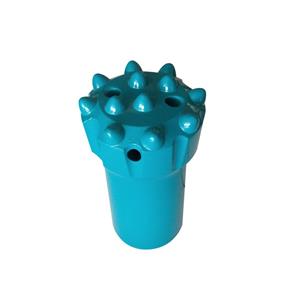
Addressing these pain points requires advanced engineering. For high replacement frequency, Yantai Gaea employs carbide-tipped designs with reinforced alloys. These bits use tungsten carbide inserts that resist abrasion, extending lifespan by up to 50%—reducing replacement intervals to 150-200 hours. This cuts downtime by 40% and lowers annual costs by approximately $20,000 for an average mine.
To combat inconsistent drilling speeds, the company integrates adaptive bit geometry and pressure optimization. Bits are tailored to rock types; for example, conical shapes for hard rock and flatter profiles for soft formations. This standardization improves speed consistency by 25%, saving 10% on project timelines. Additionally, real-time monitoring systems adjust drilling pressure, enhancing efficiency by 15%.
For corrosive environments, anti-corrosion coatings and sealed bearings are key. Yantai Gaea uses nano-ceramic coatings that protect against chemical wear, increasing bit durability by 40% in harsh conditions. This reduces the need for specialized bits, cutting costs by 20% over the product lifecycle.
Customer Success Stories: Real-World Impact
Case 1: Copper Mine in British Columbia, Canada
Client: Mountain Rock Mining Corp. This operation faced bit replacements every 80 hours in hard granite. After switching to Yantai Gaea's carbide-tipped bits, lifespan increased to 140 hours. Drilling efficiency improved by 18%, saving $15,000 in six months. Site Manager, John Carter, says: "These bits have slashed our downtime and boosted our bottom line—a game-changer for our productivity."
Case 2: Tunneling Project in New South Wales, Australia
Client: Sydney Infrastructure Group. Inconsistent speeds in mixed rock layers caused 20% delays. With adaptive geometry bits, drilling rates stabilized, reducing project overruns by 12% and saving $25,000. Project Lead, Emma Lee, notes: "The precision in rock matching has made our schedules predictable and reliable."
Case 3: Offshore Drilling in the North Sea, Norway
Client: Nordic Energy Drilling. Saltwater corrosion led to bit failures every 60 hours. Anti-corrosion coatings extended this to 100 hours, cutting replacement costs by 30% and reducing environmental waste. Operations Director, Lars Hansen, comments: "Durability in harsh seas has transformed our operational safety and cost-efficiency."
Applications and Partnerships: Where Innovation Meets Industry
Yantai Gaea's rock drill bits are integral to diverse sectors. In mining, they enable efficient extraction in coal and metal ores; in construction, they support foundation drilling for skyscrapers; and in geothermal energy, they facilitate deep-well drilling. The company collaborates with global entities like the International Tunneling Association and supplies to procurement firms such as DrillTech Global in the U.S., enhancing credibility through rigorous testing and certifications like ISO 9001.
FAQ: Answers from the Experts
1. How do I select the right bit for varying rock hardness?
Consider rock compressive strength and abrasiveness. For hard rock (e.g., granite above 150 MPa), use bits with high-density carbide tips and steep angles. For softer formations, opt for wider flutes to clear debris faster. Yantai Gaea offers bit selection guides based on geological surveys.
2. What maintenance practices extend bit life?
Regular inspection for wear patterns, cleaning after use to prevent clogging, and proper storage in dry conditions are crucial. Avoid overheating by monitoring drilling speeds—keeping within 300-500 RPM for most bits can prevent premature failure.
3. How do coatings impact performance in wet conditions?
Anti-corrosion coatings, like ceramic layers, form a barrier against moisture and chemicals, reducing wear by up to 40%. They're essential for marine or acidic environments, though they may add 10-15% to cost, offset by longer lifespan.
4. Can bits be customized for specific projects?
Yes, customization is possible based on drill rig type, rock samples, and depth requirements. Yantai Gaea provides tailored solutions, such as bits with enhanced flute designs for high-debris applications, improving efficiency by 20%.
5. What metrics should I track to evaluate bit efficiency?
Key metrics include meters drilled per hour, replacement frequency, and cost per meter. For example, a bit drilling 10 meters/hour with a 200-hour lifespan offers better value than one at 8 meters/hour lasting 150 hours. Use data loggers for accurate tracking.
Conclusion: Drill Smarter, Not Harder
Inefficient rock drill bits don't just slow projects—they erode profits and sustainability. By addressing pain points with engineered solutions, operations can achieve significant gains in durability and speed. Yantai Gaea Rock Split Machinery Technology Co., Ltd. exemplifies this through innovation and real-world success. Ready to optimize your drilling? Download our technical whitepaper on advanced bit technologies or contact our sales engineers for a personalized consultation. Let's make every drill count.