How to Benchmark Medium and Deep Hole Drilling Tool Life
Benchmarking is one of the most reliable ways to evaluate rock drilling tools. A drill rod, shank adaptor or bit may perform well in one mine but poorly in another because rock strength, abrasiveness, hole depth, flushing, drilling parameters and operator practice are different.
For medium and deep hole drilling, a useful evaluation must compare complete tool systems under the same conditions. The purpose is not simply to identify the longest-lasting component. It is to determine which combination delivers the lowest cost per drilled meter while maintaining penetration rate and hole quality.
Why Field Benchmarking Matters
Laboratory material data is useful, but it cannot fully reproduce the impact, rotation, bending, flushing and geological variation found in actual drilling. Field benchmarking shows how tools behave under real production conditions.
A structured test can compare:
Drill rod life in drilled meters.
Bit life and carbide wear.
Shank adaptor and coupling service life.
Penetration rate.
Hole deviation.
Number of tool failures.
Time required for tool changes.
Cost per drilled meter.
The most useful tests run different products in the same rock formation, on the same type of rig and with comparable drilling parameters. This reduces the risk of drawing conclusions from geology or operator differences rather than tool performance.
Define the Drilling Conditions First
Before testing begins, document the conditions clearly. Important factors include:
Rock type, strength and abrasiveness.
Fracturing, cavities, water and geological variation.
Hole diameter, direction and planned depth.
Drill rig model and rock drill model.
Impact power, rotation and feed settings.
Flushing medium and pressure.
Bit face design and carbide grade.
Rod diameter, thread system and coupling type.
Operator and maintenance procedures.
Without this information, service-life data may be misleading. A drill rod used in competent rock with good alignment cannot be compared directly with a rod used in fractured, abrasive and water-bearing ground.
Evaluate the Complete Drill String
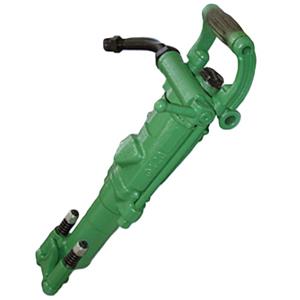
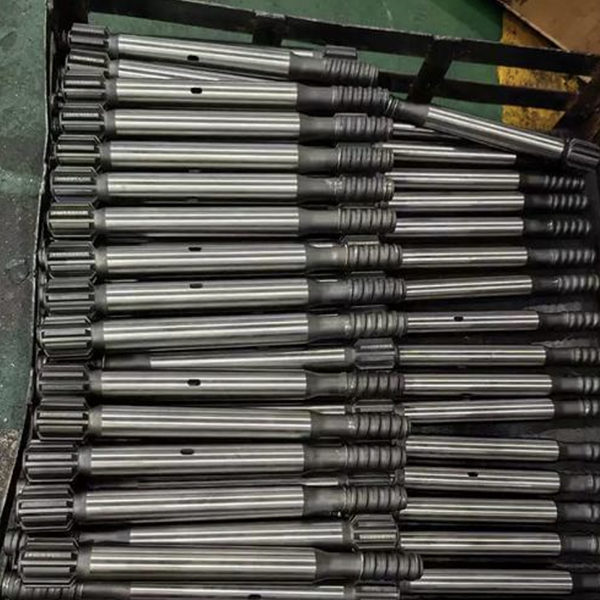
A drilling tool should not be evaluated as an isolated component. The bit, rod, coupling, shank adaptor and rock drill form a connected energy-transfer system.
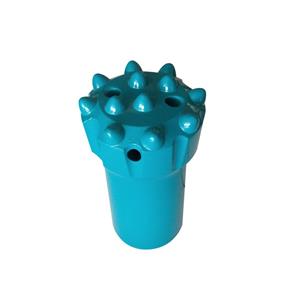
A bit with excellent carbide may not achieve good life if the rod is bent or the coupling is worn. A premium rod can fail early if the thread is mismatched or the bit causes excessive vibration. A reliable system requires compatible geometry, material quality and operating parameters.
For deeper holes, drill-string straightness becomes especially important. Small deviations at the start of the hole can become much larger at depth. Stiff rods, suitable rod diameter, accurate threads and appropriate stabilizing features all help control deviation.
Service Life Is More Than Meterage
Meterage is an important indicator, but it should not be the only one. A tool with high meterage may still be uneconomical if it drills slowly, requires frequent maintenance or creates poor hole quality.
A practical benchmark should consider three performance targets:
Tool quality and reliability
The rod, bit and shank should resist fatigue, wear, corrosion and connection damage.Penetration rate
The system should maintain stable drilling speed throughout the tool’s usable life.Hole straightness
The tool string should produce holes that support the planned blast pattern and minimize drilling deviation.
These factors influence one another. For example, a worn bit may reduce penetration rate and increase vibration. Increased vibration can accelerate rod fatigue and coupling wear. A bent rod can cause hole deviation and reduce bit life.
Use Historical Data Carefully
Older benchmark tests can provide useful engineering lessons, but historic meterage figures should not be treated as universal specifications. Modern rigs, tool materials, carbide grades, heat treatment and drilling methods have changed substantially.
The valuable lesson is the testing approach: compare tools under controlled field conditions, measure the entire drilling system and relate the result to total production cost.
A current benchmark program should establish realistic performance targets for the site’s own rock conditions and equipment. These targets can then be used for supplier comparison, maintenance planning and tool-design improvement.
Improve Results Through Design, Manufacturing and Use
Benchmarking often reveals that tool life is influenced by several linked areas:
Rod alloy composition and steel cleanliness.
Heat treatment and surface condition.
Thread profile and coupling fit.
Bit body strength and carbide retention.
Carbide grade and button layout.
Flushing effectiveness.
Feed force, rotation and impact settings.
Inspection, grinding and maintenance practices.
When failures occur, record the failure location and appearance. Repeated fractures near a thread root may indicate a connection issue. Frequent button loss may indicate a retention or bit-body problem. Rapid wear may point to carbide selection, flushing or drilling parameters.
Benchmark for Total Cost per Meter
The best tool is not necessarily the cheapest product or the component with the highest single-life meterage. The best system delivers reliable drilling, consistent penetration, acceptable hole deviation and low downtime.
A disciplined field benchmark program helps mines, quarries and contractors make better purchasing decisions. By comparing complete drill strings under real conditions, operations can improve tool selection, reduce failures and achieve lower drilling cost per meter.