China’s Blasting Industry: From Scale Expansion to Intelligent Integration
Over the past 15 years, China’s blasting sector has been moving away from broad, volume-led expansion toward a more regulated, technology-driven, and integrated operating model. The article uses data from one city as an industry observation, not as a nationwide statistical conclusion, but the direction is clear: higher compliance requirements, a growing underground market, stronger digital supervision, and increasing pressure for workforce transformation.
A Smaller but More Demanding Market
The article describes a reduction in blasting service providers and frontline personnel between 2013 and 2025. Material consumption also declined substantially from earlier peaks, with the adoption of electronic detonators, market conditions, and lower levels of engineering activity identified as contributing factors.
For contractors, this means success is no longer based mainly on project volume. Technical capability, compliance systems, qualified personnel, and operational reliability are becoming more important competitive advantages.
Underground Projects Are Becoming More Important
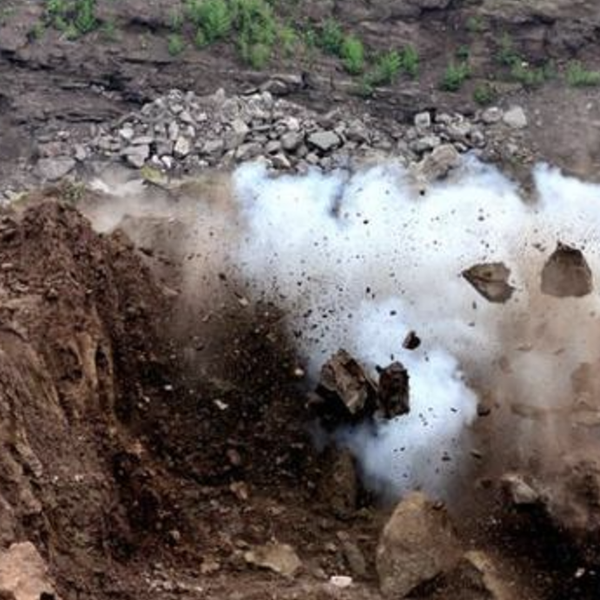
Environmental policy and resource depletion are reducing some open-pit mining activity. At the same time, underground mining, tunnel construction, hydropower development, and other underground infrastructure projects continue to create demand.
Underground work brings more complex conditions and tighter safety requirements. Companies need stronger engineering capacity, better risk management, and workers with the skills to operate in more demanding environments.
Workforce Structure Is a Strategic Issue
The article identifies two workforce concerns: an ageing frontline workforce and an insufficient supply of younger trained personnel. It also notes a gap between the education level of engineering staff and that of many frontline roles.
As digital monitoring, automated equipment, mechanisation, and intelligent operations expand, the sector will require more workers who can use technical software, understand integrated mining workflows, and work within stricter safety systems.
Integration and Compliance Will Reshape Competition
The industry is moving toward larger, more integrated service models that combine research, production, technical design, and project execution. This trend is reinforced by more detailed regulation of procurement, transport, project approval, and site operations.
Smaller operators with weak safety systems or limited technical capacity may face increasing pressure. In contrast, organisations that can demonstrate qualified teams, formal processes, digital management, and compliant delivery are better positioned for long-term participation.
Skills for the Next Phase
For professionals, the article recommends building capabilities beyond traditional blast-plan preparation. Relevant areas include drone surveying, vibration monitoring, digital borehole layout, blast simulation, mining-process knowledge, and recognised safety or engineering qualifications.
The broader lesson is that automation should be viewed as both a challenge and an opportunity. It can reduce exposure to hazardous tasks while creating demand for higher-value technical, supervisory, and data-driven roles.
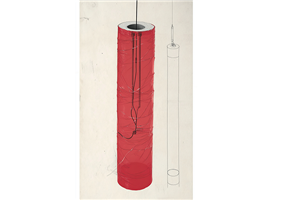
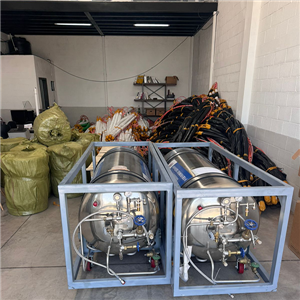
For projects seeking controlled rock breaking where conventional blasting is constrained by vibration, nearby infrastructure, or permitting conditions, the Gaea Rock O2 Gas Energy Rock Splitting System may be evaluated. It uses liquid-oxygen phase-change energy rather than conventional explosive formulations and should be applied only with site-specific engineering, training, and regulatory compliance.