Carbide for Rock Drilling Tools: Market Trends and Selection Outlook
Tungsten carbide is one of the most important materials in modern rock drilling. Whether a contractor is drilling blast holes in a quarry, advancing a tunnel, developing an underground mine, maintaining roads, or excavating for infrastructure, the carbide element at the cutting face performs the direct work of breaking rock.
For tool manufacturers and drilling contractors, the market for rock drilling carbide is shaped by more than material volume. It is influenced by drilling methods, machine power, hole diameter, rock conditions, manufacturing quality, infrastructure demand and the need to reduce total cost per drilled meter. The direction is clear: customers increasingly expect longer service life, more reliable penetration and a carbide grade matched to a specific drilling application.
Why Carbide Matters in Rock Drilling
Rock drilling tools can be broadly grouped by how they break rock. Top-hammer tools transmit impact energy through the drill steel to the bit. Down-the-hole systems place the hammer close to the bit and are widely used for medium and large blast holes. Rotary crushing tools, road-milling picks, raise-boring tools and tunnel-boring cutters apply different loading methods, but each depends on hard, wear-resistant cutting elements.
In all of these applications, cemented carbide contacts the rock directly. The carbide must resist high compressive loading, repeated impact, abrasion, heat and, in many cases, corrosion or flushing-water exposure. A tool can have a well-designed steel body and accurate threads, but drilling performance will be limited if the carbide is unsuitable for the formation or poorly secured in the tool body.
The main objective is not simply maximum hardness. Very hard carbide can provide excellent wear resistance but may be more vulnerable to impact damage in difficult ground. Tougher grades can withstand impact and shock better but may wear faster in abrasive formations. Successful product design balances hardness, toughness, grain structure, cobalt binder content, carbide geometry and insert retention.
Major Rock Drilling Tool Segments
The rock drilling carbide market covers several distinct tool categories.
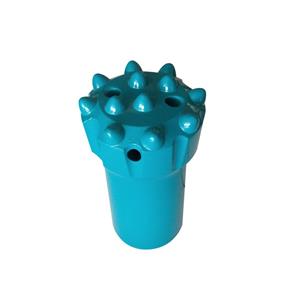
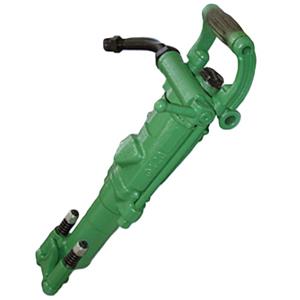
Light rock drills commonly use integral drill steels, taper rods and smaller chisel or button bits. These tools remain important in small quarry operations, construction sites, shallow-hole work and applications where manual or lightweight equipment is practical. Chisel inserts are simple and economical, while small button bits can offer more stable drilling and longer operating intervals in suitable rock.
Hydraulic jumbo drilling is an important segment for underground mines, tunnels and hydropower projects. These applications generally use button bits with precise thread connections and drill steels designed to transfer high-frequency impact energy. The carbide buttons must survive repeated blows while maintaining gauge, flushing capability and hole accuracy.
Surface hydraulic drilling uses larger button bits for quarrying, open-pit mining and civil works. Hole diameters are commonly greater than those used by light rock drills, and operators often place strong emphasis on bit life, penetration rate and predictable consumable cost.
DTH drilling is another major driver of carbide demand. Low-pressure DTH tools have traditionally served smaller and medium-sized quarry blast holes, while higher-pressure DTH systems are increasingly selected for deeper, larger-diameter holes where straightness and energy transfer are important. As air pressure and impact energy rise, requirements for button strength, retention and grade consistency also become more demanding.
Beyond conventional drilling, carbide is used in coal-cutting picks, road-milling teeth, roller-cone bits, trenching tools and tunneling equipment. These applications expose carbide to different combinations of abrasion, impact and heat, so they require their own grades and geometries.
From Volume Competition to Performance Competition
Entry-level rock drilling products are often highly competitive on price. This is particularly true for common small-diameter bits, where many suppliers can manufacture broadly similar products. In these segments, low-cost carbide grades and recycled raw materials may be attractive from a purchase-price perspective.
However, low initial price is not the same as low operating cost. Poor carbide quality may lead to premature button breakage, rapid gauge wear, lost penetration rate, excessive resharpening or unplanned bit changes. These problems can increase equipment idle time and labor costs, especially when drilling is part of a tightly scheduled blasting, tunneling or production cycle.
The market is therefore moving toward a clearer distinction between commodity tools and performance-oriented tools. Contractors with demanding productivity targets increasingly evaluate cost per meter, bit life, drilling speed, hole quality and downtime rather than unit price alone.
For manufacturers, this creates an opportunity to compete through reliable carbide grades, accurate machining, controlled heat treatment, better button retention and technical service. A bit that drills consistently through the planned service interval can be more valuable to the end user than a cheaper alternative that requires frequent replacement.
Infrastructure and Mechanization Drive Demand
Infrastructure development continues to support demand for drilling consumables. Tunnels, hydropower projects, railways, highways, urban transit systems, quarry operations and mine development all require reliable rock excavation. As projects become larger and more mechanized, the share of hydraulic jumbos, surface drill rigs and high-pressure DTH equipment tends to increase.
This equipment shift changes the carbide market. Mechanized rigs use higher power and often operate longer shifts, so drilling tools experience more demanding loading conditions. Tool reliability becomes more important because failure can interrupt a production cycle or delay downstream blasting and excavation.
The practical result is rising demand for higher-quality button carbide in segments such as hydraulic tunneling bits, underground mining bits, surface drilling bits and high-pressure DTH bits. At the same time, smaller manual-drilling tools remain relevant in many markets, especially where operating conditions, investment levels or job scale favor lightweight equipment.
What Buyers Should Evaluate
Selecting carbide drill bits should begin with the drilling application, not a generic product catalogue. Key factors include:
Rock hardness, abrasiveness and fracture pattern.
Drilling method: top hammer, DTH, rotary or cutting.
Hole diameter and required depth.
Impact energy, air pressure, rotation speed and feed force.
Desired penetration rate and acceptable cost per meter.
Availability of bit sharpening, maintenance and technical support.
Carbide grade, button geometry and gauge protection design.
Manufacturer quality control for carbide, steel body and heat treatment.
A reliable supplier should be able to discuss these variables rather than only quote a bit diameter and price. Application guidance is especially valuable where a site is changing drill rigs, moving into harder formations or trying to reduce tool consumption.
The Long-Term Outlook
The future of rock drilling carbide will depend on efficient use of tungsten resources, stronger tool design and more precise application matching. Demand is likely to favor products that improve drilling productivity while reducing wasted material, premature failure and unnecessary downtime.
For manufacturers, the path forward is to improve carbide consistency, steel quality, processing control and testing capability. For drilling contractors, the most effective purchasing strategy is to assess complete drilling performance: bit life, meterage, penetration, hole quality and operating cost.
High-quality carbide is not simply a material inside a drill bit. It is a central part of the drilling system, linking machine power to rock-breaking performance.