Chisel Drill Bits in China: Carbide Inserts, Market Features, and Applications
Chisel Drill Bits in China: Carbide Inserts, Market Features, and Applications
Chisel drill bits, also known as flat carbide drill bits or cross-type flat-insert bits in some markets, have a long history in rock drilling. They remain widely used with pneumatic leg drills for road tunnels, railway tunnels, mining development, and other projects that require economical rock excavation.
Although button bits have gained market share in recent years, chisel drill bits continue to serve a practical role where low tool cost, simple manufacturing, and straightforward field use are important. Understanding their carbide insert design, production characteristics, and suitable applications helps buyers select the right drilling tools for their projects.
What Is a Chisel Drill Bit?
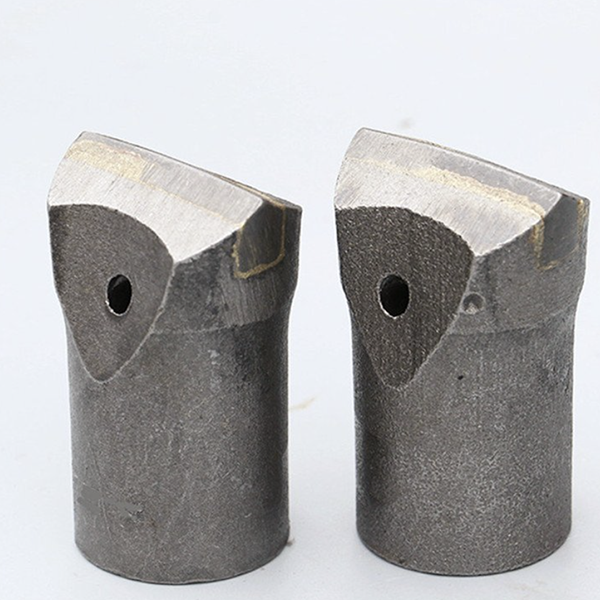
A chisel drill bit uses a flat tungsten carbide insert fixed across the cutting face of a steel bit body. During drilling, the rock drill delivers impact energy through the drill steel, while rotation causes the carbide edge to crush and shear the rock surface.
This design is simple compared with multi-button bit designs. It requires fewer carbide inserts and can be manufactured using relatively basic equipment. As a result, chisel drill bits are often available at a lower purchase price than small-diameter button bits.
The source article describes chisel-type flat carbide bits as a rock drilling tool with nearly a century of application history. In China, the most common sizes mentioned are approximately 38 mm to 42 mm in diameter, which are commonly associated with pneumatic rock drilling applications.
Carbide Insert Size and Consumption
The carbide insert is a major cost component of a chisel drill bit. Its grade, dimensions, weight, brazing quality, and wear resistance affect bit performance and service life.
According to the source article, common flat carbide inserts for Chinese chisel drill bits are approximately 13 mm × 9 mm, with an individual insert weight of around 65 to 70 grams. The article also notes that one metric ton of carbide inserts can produce roughly 14,000 drill bits, and annual carbide consumption for this product category is estimated at approximately 1,500 tons.
These values should be treated as industry reference information rather than universal product specifications. Actual carbide use depends on bit diameter, body geometry, insert dimensions, drill type, rock conditions, and the manufacturer’s product design.
For buyers, the key consideration is not only the total carbide weight. Carbide quality and brazing reliability are equally important. A low-cost bit with poor insert material or weak brazing may fail early, creating higher replacement cost and lost drilling time.
Production and Market Characteristics
Flat carbide drill bits are relatively easy to produce. The required manufacturing equipment is limited compared with more advanced drilling-tool production lines, and the processing method is straightforward. This has contributed to a large number of manufacturers and significant price competition in the Chinese market.
Because carbide inserts represent a major portion of the product cost, manufacturers may use different carbide grades for different applications. The selected material should match the intended rock drill and the rock being drilled. Hard, abrasive rock generally requires stronger wear resistance, while other drilling conditions may prioritize impact toughness or lower cost.
The source article notes that many chisel drill bits in the market use recycled tungsten carbide powder or medium- and lower-grade tungsten carbide materials. This does not mean every product has the same quality. Buyers should evaluate the supplier’s carbide source, insert consistency, heat treatment, brazing process, and quality-control system.
Common Applications in Tunnel Rock Drilling
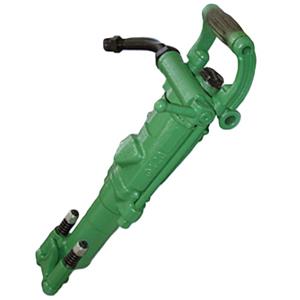
Pneumatic rock drilling tools remain common in road and railway tunnel construction. In these applications, chisel drill bits are often selected because they are inexpensive and easy to replace. Some contractors use them as consumable tools for short drilling cycles, especially where production conditions favor low initial cost.
Typical use cases include:
Road tunnel excavation
Railway tunnel drilling
Small-scale mining development
Foundation and construction rock drilling
Projects using pneumatic leg drills
Applications where fast tool replacement is preferred
Correct matching remains essential. The bit diameter, shank or taper connection, drill steel, flushing system, rock drill power, and rock condition must be considered together. A low-cost bit can become expensive if it causes poor penetration, excessive tool breakage, or frequent downtime.
Chisel Bits Versus Small Diameter Button Bits
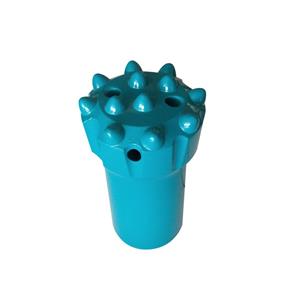
Small diameter button bits have replaced part of the traditional chisel-bit market because they can offer improved drilling performance and wear resistance in many conditions. Button designs use multiple rounded carbide inserts, which can provide a more stable cutting structure and better resistance to abrasive wear when correctly designed.
However, chisel drill bits still have value. They remain attractive where purchase price, simple manufacturing, and pneumatic drilling compatibility are the main priorities. The best choice depends on the total cost of drilling rather than the unit price of the bit alone.
For tunnel rock drilling, buyers should compare penetration rate, bit life, replacement frequency, drill steel wear, carbide failure rate, and labor requirements. A quality tool-selection program should test suitable bit types under actual site conditions and use the results to guide purchasing decisions.