How to Choose CO₂ Rock Fracturing Equipment for Mining: Three Key Factors
How to Choose CO₂ Rock Fracturing Equipment for Mining
Choosing CO₂ rock fracturing equipment starts with understanding the project, not just comparing prices or a single advertised parameter. Rock conditions, production targets, available machinery and safety requirements all affect whether a system is suitable.
For mine operators and contractors, three connected factors provide a practical evaluation framework: safety and reliability, production performance, and total cost and adaptability.
1. Safety and Reliability
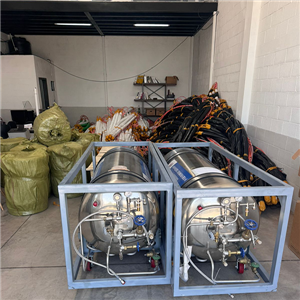
A CO₂ fracturing system includes pressure-containing components and supporting equipment. Buyers should ask for the technical documentation for the exact model, including material specifications, inspection requirements, safety features and maintenance instructions.
It is also important to understand the supplier’s training and support arrangements. A well-defined inspection program, qualified personnel and an approved site safety plan are central to reliable operation.
CO₂ rock fracturing should not be described as risk-free. Pressure release, flying fragments and gas accumulation require site-specific controls. In underground or poorly ventilated areas, CO₂ accumulation can create an asphyxiation hazard.
2. Production Performance and Rock Fracturing Results
A system must match the rock mass and the project’s desired output. Rock strength, natural joints, groundwater, confinement and available free faces can influence how fractures develop and how the resulting material is handled.
When comparing options, consider the complete working cycle: preparation, equipment positioning, inspection, rock breaking, material removal and maintenance. A high advertised parameter does not necessarily translate into higher site productivity.
Ask suppliers for documented results from projects with comparable geological and operational conditions. Those results should be reviewed as references, not guarantees.
3. Total Cost and Adaptability
The initial equipment price is only one part of the investment. A full cost evaluation should also consider:
CO₂ supply and transportation
Supporting machinery and labor
Consumable and replacement components
Equipment inspection and maintenance
Training and technical support
Downtime and material handling
Site controls and regulatory compliance
Some systems contain reusable components. Their service life and replacement requirements depend on the product design, inspection results and manufacturer instructions.
Match the Equipment to the Application
Different projects place emphasis on different requirements.
For hard-rock mining or underground development, equipment compatibility, available space, ventilation and geological assessment deserve particular attention. For work near electrical infrastructure or other sensitive facilities, the project team should assess vibration, noise, flyrock and the protection of nearby assets.
Seasonal or intermittent projects may place greater weight on transport, deployment and maintenance costs. In all cases, suitability must be confirmed for the actual site rather than assumed from a general application list.
Questions to Ask Before Purchase
Before requesting quotations, prepare a description of the rock type, project volume, worksite layout, available equipment, production schedule and local restrictions. Then ask suppliers for:
The formal technical specification for the proposed model.
Details of safety components, inspections and maintenance.
Compatibility with the planned supporting equipment.
Consumable and reusable-component requirements.
Verifiable references from similar geological conditions.
Training, technical support and after-sales service terms.
Yantai Gaea can use this information to discuss a suitable equipment configuration. Final specifications, service scope and commercial commitments should be confirmed in the quotation and contract.